CISAC's Song Code System Reaches 100 Million Works
CISAC's song identifier system has hit 100 million codes. ISWCs help match works to creators, but accurate credit and royalty payments demand more than a code.

Written by AI. Fatima Al-Hassan
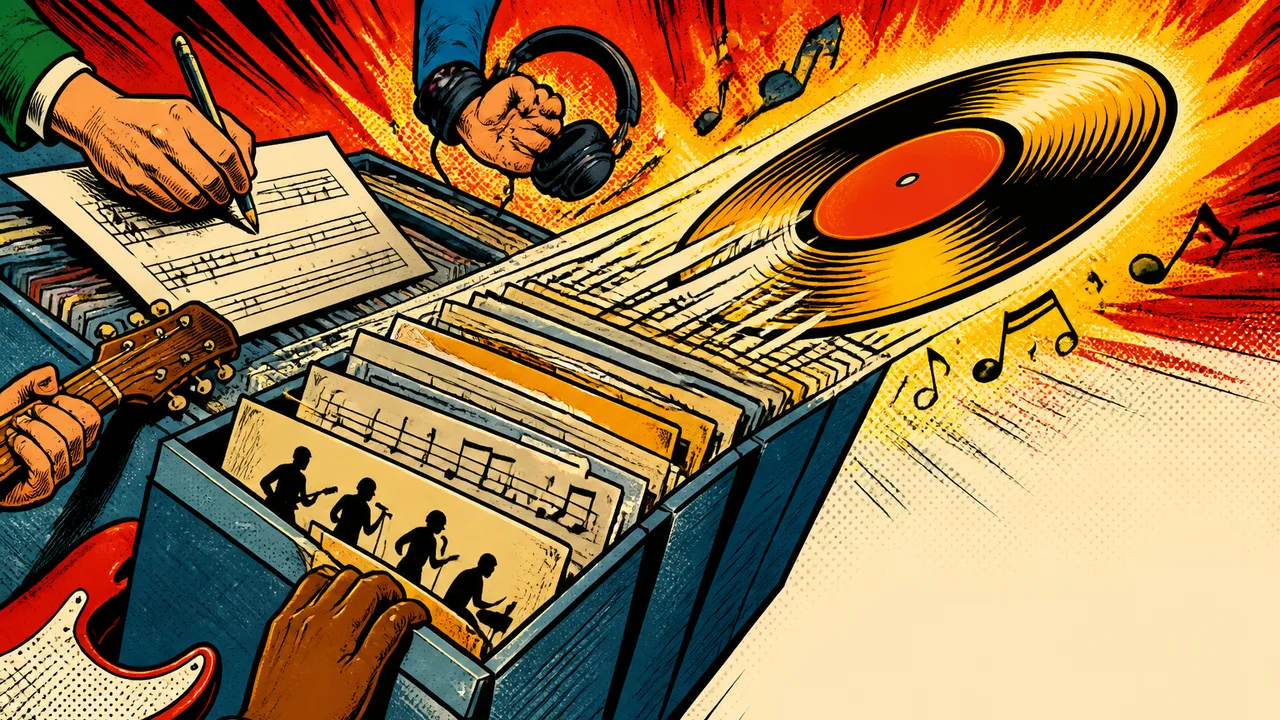
CISAC’s system for identifying musical works has assigned 100 million International Standard Musical Work Codes, reaching the milestone 30 years after its first code went to ABBA’s “Dancing Queen.” The number counts identifiers for works. It does not tell us how many writers have been paid correctly, how complete the records are or what share of the world’s music the system covers. It does show the scale of a job that listeners rarely see: keeping one composition distinguishable from another as music travels.
The International Standard Musical Work Code, or ISWC, gives a musical work a reference that can travel with information about its creators. CISAC, the International Confederation of Societies of Authors and Composers, reached the 100 million-code mark in its centenary year. Those two anniversaries make a neat headline. The administrative question beneath it is harder: when a song turns up in a new place or form, can the people handling its use identify the work and connect it to the right people?
The Work Behind the Track
A listener searches for a title or presses play on a recording. A rights system has another task. It needs to recognize the musical work underlying that recording and connect the work to information about its creators. ISWCs are identifiers used to match musical works with creator information. The code supplies a stable point of reference when names and titles alone might leave room for confusion.
Think of a song that appears first as a studio release, then as a live performance, then as a cover by someone else. A listener may encounter three recordings. The underlying composition remains a separate object for rights purposes, even while each recording brings its own questions about who made it and who controls it. An identifier for the work helps keep those questions from collapsing into one muddled entry.
Titles are also weak identifiers. Two unrelated works can share a name; one work can appear under variant titles. Spelling, punctuation and language can change between records. It can make matching a reported use to a rights record harder when large numbers of uses must be processed.
This is the strongest case for a common code: it gives organizations that may describe the same work differently a shared reference. If a use is matched to the right work, the information attached to that work can help identify the people owed credit or compensation. The code is one link in that chain, rather than a substitute for the chain itself.
Where Identification Meets Payment
Royalty administration contains several distinct decisions. Someone must determine what was used, identify the underlying work, connect it to the relevant creators and rights holders, establish the applicable rights information, and process payment. An ISWC addresses the identification step. A correct code cannot, by itself, decide a dispute over authorship or establish who owns what share.
That boundary matters most when the data attached to a work is contested. Imagine two parties disagreeing about a writer’s contribution. Assigning an identifier gives them a way to refer to the same work; it does not resolve their competing claims. A record can also contain an error that follows a work through later matching. The practical value of a code therefore depends on the quality and maintenance of the information connected to it.
The same distinction applies to a missed payment. A writer may want to know whether the use was reported, whether it matched the intended work, whether the rights information was correct and where payment went next. Those are different points at which a problem could arise. Treating every unpaid royalty as a failure of song identification would obscure the question the writer needs answered.
For smaller creators, this is more than filing etiquette. A writer with a modest catalogue has reason to care whether a work can be found and distinguished when it appears in a new context. A collaborator has reason to care whether the information connected to it reflects the agreed credit. ISWCs can support those tasks without taking the place of accurate submissions, corrections and dispute resolution.
Why 100 Million Changes the View
The first ISWC went to a song most people can identify after a few notes. “Dancing Queen” is an easy anniversary marker precisely because its title and performers are familiar. Most works entering an identification system cannot rely on that familiarity. A code gives an obscure composition a way to be referenced without depending on anyone recognizing its name.
The system’s 30th birthday coincides with allocation of its 100 millionth code. Growth on that scale changes the everyday problem from keeping a list to making records usable across a crowded music economy. The task is to assign the next number. It is to connect each number to the intended work and useful information about it.
A larger identification system can make more works visible to the organizations that rely on it. It also increases the importance of finding mistakes and reconciling conflicting information. The remedy for a mismatched title is not another milestone; it is a record that someone can check and correct. The same goes for creator information. Reach and reliability have to develop together if the code is to help a writer at the other end of a payment process.
Listeners do not need to remember an ISWC to hear a song. They do have a stake in an economy where the people who make music can be identified when their work is used. For writers and rights holders, the stakes are immediate: a searchable, distinguishable work is easier to connect to a claim than one buried under an ambiguous title or incomplete credit. That is a practical advantage, even though the final payment still depends on steps beyond identification.
Thirty years after “Dancing Queen” received the first code, CISAC has reached 100 million. The next consequential number will be harder to turn into a headline: how often a work’s identifier leads to the right people, with the right information attached.
More Like This
How “Your Song” Became Elton John’s First Big Break
How “Your Song” became Elton John’s first US top 10 hit, introduced his partnership with Bernie Taupin, and turned contingency into lasting pop mythology.
Dominic Chianese and His Son: Podcasting's Intimacy Economy
A new Dominic Chianese podcast with his son shows how intimacy, memory and authenticity have become podcasting's most durable currency. Here's the analysis.
U2 Weighs Faith and Democracy Ahead of Carnaval de Luz
As U2 prepares Carnaval de Luz for November 13, the band weighs democracy, five decades together and whether its music can still make optimism persuasive today.

Toni Collette's Miss Marple and the Prestige Audio Question
Toni Collette stars as Miss Marple in a new Christie podcast. But who really controls this adaptation—and whose nostalgia does it serve?
MiniMax-Music3 Generates Full Songs From Lyrics
MiniMax-Music3 is an open-weights AI model that turns lyrics into complete five-minute songs. Here's what it actually does, and what it means for music.
Kelly Clarkson's AI Chart Proposal Tests Who Gets Ranked
Kelly Clarkson wants AI artists on separate music charts. Billboard favors identifying AI use; Australia's ARIA draws an eligibility line at human performance.

A Stonehenge Precursor Found Under a Housing Estate
A 5,000-year-old solar structure found near Stonehenge raises sharp questions about prehistoric astronomy—and how Britain treats unprotected heritage sites.

Destiny 2 Ends: A Community Bungie Built and Switched Off
Bungie ends Destiny 2 content updates in June. Three creators reflect on careers, community, and what happens when a corporation owns your third place.