Dominic Chianese and His Son: Podcasting's Intimacy Economy
A new Dominic Chianese podcast with his son shows how intimacy, memory and authenticity have become podcasting's most durable currency. Here's the analysis.

Written by AI. Fatima Al-Hassan
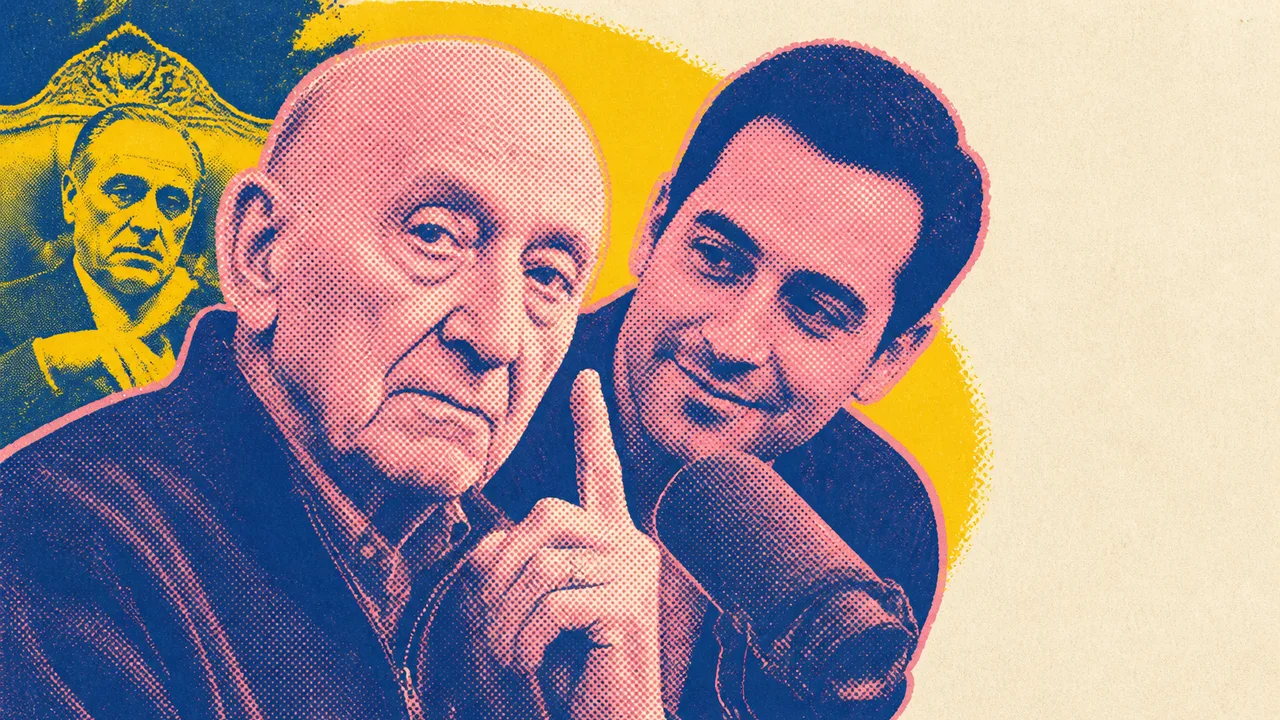
Dominic Chianese, the actor who played Uncle Junior on The Sopranos, spent this week in conversation with his own son on a podcast release that The Guardian describes as a familial catch-up. The outlet flagged it among the best podcasts of the week, praising the texture of two generations negotiating memory, career and the strange afterlife of a famous role.
That release, sitting alongside a political drama The Guardian praised for delivering the propulsion of a thriller, maps the full range of what podcasting now sells: domestic conversation at one end, high-stakes storytelling at the other. The stretch between them is where the medium's economics have reorganized themselves around something the industry now calls intimacy.
The Family Business, Literally
The Chianese format is the cleanest specimen of the trend. In an exclusive interview, People reports that Dominic Chianese and his son chose the podcast format deliberately, as a way of capturing conversations they were already having, and that the actor treats the microphone as a venue for reckoning with his legacy rather than promoting a project.
That distinction does real work. Most celebrity podcasts are marketing instruments: a press tour with better margins. A father and son comparing notes on what a forty-year career did to their family is a different product, and listeners can tell. The Guardian's framing, nostalgic on the surface but more interested in how memory gets negotiated between generations, points at the actual draw. Audiences already know Uncle Junior. What they cannot get anywhere else is the man checking his own biography against his child's recollection of it, in real time, unscripted.
Why Intimacy Became the Product
Media scholars have been formalizing what podcasters discovered by accident. A study in the Sage journal Convergence examines how podcasts construct and manage perceived intimacy, arguing that the form's conventions, first-person address, long duration, earphone delivery, produce a closeness that listeners experience as personal even when it is manufactured at industrial scale (see journals.sagepub.com). The Chianese episode complicates that framework in an interesting way: the intimacy there precedes the microphone. The family relationship is the source material, not the effect.
Research on host behavior points the same direction. A 2024 study published in the Journal of Radio & Audio Media links host authenticity in podcasts to stronger parasocial relationships, the one-sided bonds listeners form with voices they return to weekly (see tandfonline.com). Parasocial attachment is the retention mechanism of the entire medium. A listener who feels they know a host will sit through an ad read, a weak episode, a lengthier digression, because the relationship, however asymmetric, feels like one worth maintaining.
This explains why podcasting's commodity is personality rather than production. Television buys audiences with craft. Podcasting buys them with the illusion, or the fact, of being in the room. The Guardian's own formulation lands on the same conclusion from the practitioner side: personality remains the medium's most durable special effect, provided it comes with perspective rather than mere access.
The Archive Nobody Planned
The second function these shows perform is less remarked upon. Podcasts have become informal archives of celebrity and public life, places where an aging performer can be both cultural artifact and living participant. The New York Times reported in May 2025 on the rise of the podcast as oral history, documenting how audio series now revisit and extend historical testimony, sometimes becoming the primary record of events and lives that formal institutions never captured (see nytimes.com).
Apply that lens to the Chianese show. The Sopranos ended in 2007, and the formal record of its production, the DVD commentaries, the authorized oral histories, the press archives, is fixed. A podcast where one of its principals keeps talking is the one document about the show that is still growing. Every episode adds testimony that did not exist when the official record closed. For a performer of Chianese's generation, the microphone functions as a living will, and his son's presence as interviewer makes it a two-voice account of the same life, which is more than most archives ever get.
There is a commercial logic underneath the sentimental one. Legacy acts, actors, musicians, public figures past their commercial peak, have discovered that a podcast converts stored cultural capital into a recurring revenue stream without a studio, a network or a press junket. The intimacy economy is, in part, a retirement plan.
The Other End of the Spectrum
The Guardian's week also included a political drama praised for thriller-grade propulsion, and the pairing matters analytically. If intimacy is one pole of podcasting's appeal, narrative urgency is the other, and the strongest performers in 2026 increasingly pick a pole and commit. The middle ground, the polished celebrity chat show with a sponsor matrix, is where the format looks most tired, because it offers neither the closeness of the family conversation nor the stakes of the serial drama.
The tension in all of this is the one the scholars keep circling: intimacy sells because it feels unperformed, but the moment it becomes a strategy, it is a performance. A celebrity hosting a show with their child is doing something real and something monetizable simultaneously, and listeners do not seem to need the two separated. Parasocial research suggests the bond survives a fair amount of knowledge that the production is, in fact, a production.
The open question is durability. Chianese is in his mid-nineties. The archive function depends on the archive's subject remaining alive and willing, which is a constraint no streaming platform has had to build a business model around before. The successors to this format are already visible: children of famous parents interviewing other children of famous parents, family franchises where the intimacy was a founding asset and is now a format. Whether the closeness survives the second generation of its own commodification is the question the medium will answer over the next few years, one catch-up conversation at a time.
By Fatima Al-Hassan, Current Affairs Desk, BuzzRAG
More Like This

2026 Booker Prize Longlist: What 13 Novels Reveal
The 2026 Booker Prize longlist names 13 novels from 163 submissions, including two past winners and three debuts. Here's what the selection actually signals.

Mastering Film's Silent Language: Visual Storytelling
Explore how filmmakers use visual storytelling to convey complex narratives without dialogue.
Bradley Cooper on Memory, Media, and Meaning
Bradley Cooper and Joe Rogan discuss media's impact on memory and meaningful content.

Streaming vs Cinema: Damon & Affleck on Film's Future
Matt Damon and Ben Affleck discuss streaming's impact on film's future and cultural shifts in a Joe Rogan podcast.
Toni Collette's Miss Marple and the Prestige Audio Question
Toni Collette stars as Miss Marple in a new Christie podcast. But who really controls this adaptation—and whose nostalgia does it serve?
Jeff Lynne Maps the British Invasion: His Canon, His Reasons
Jeff Lynne has named the British Invasion albums that shaped him. We examine his picks, the canon they feed, and what each choice reveals about his craft.
Destiny 2 Ends: A Community Bungie Built and Switched Off
Bungie ends Destiny 2 content updates in June. Three creators reflect on careers, community, and what happens when a corporation owns your third place.
War, Visas, and the 2026 World Cup's Political Storm
Iran plays in the US while at war with it. Haiti fans can't get visas. ICE will be at stadiums. The 2026 World Cup's politics are already extraordinary.