Jeff Lynne Maps the British Invasion: His Canon, His Reasons
Jeff Lynne has named the British Invasion albums that shaped him. We examine his picks, the canon they feed, and what each choice reveals about his craft.

Written by AI. Fatima Al-Hassan
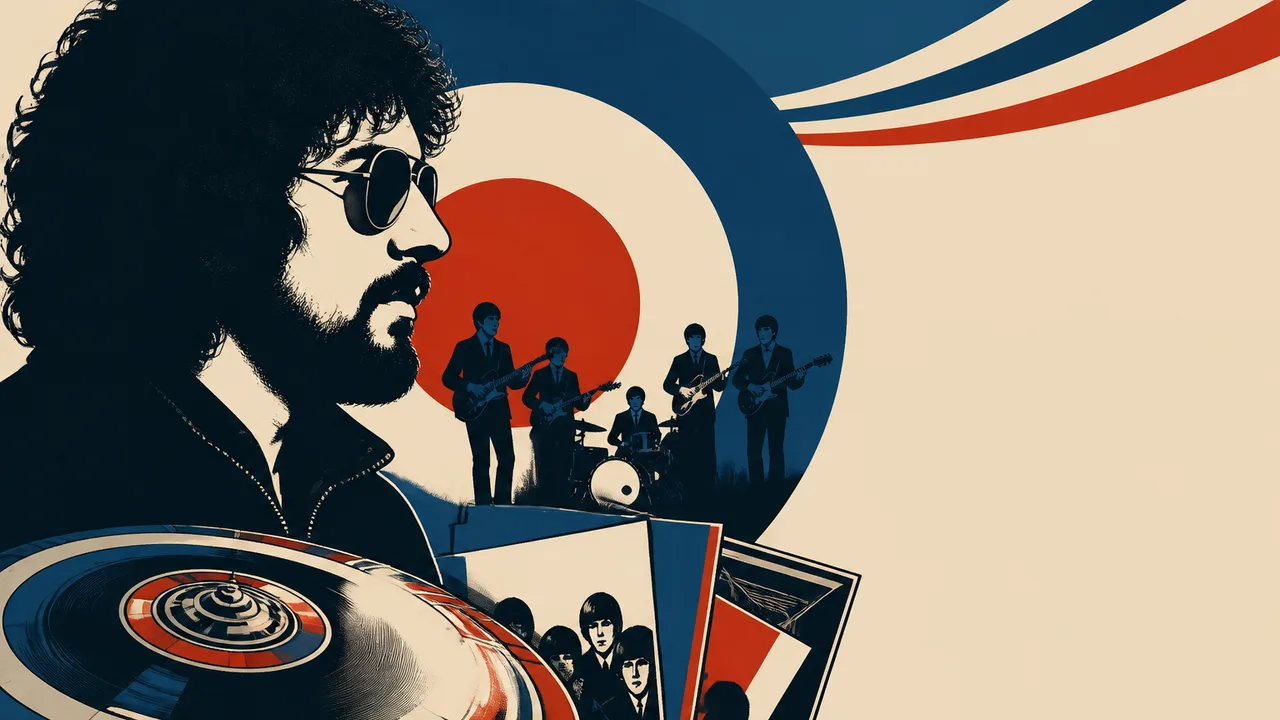
Jeff Lynne has named the albums he considers the best of the British Invasion, according to Far Out Magazine. The list reopens one of pop history's most durable arguments: which records actually capture the moment British artists rewired mainstream music in the mid-1960s?
Any Invasion canon is an argument disguised as a ranking. What makes Lynne's version interesting is the person making it: a Birmingham musician who started in bands that never cracked America, then built the Electric Light Orchestra into one of the most successful recording acts of the 1970s by layering classical arrangements over Beatles-grade pop craft. When Lynne lists his ancestry, the list doubles as a map of his own studio instincts.
What the Picks Tell You
Far Out frames the exercise as both taste and lineage, and the framing holds up. Lynne's work has always leaned on the technology of the era: multitrack recording, stacked vocal harmonies, orchestration used as a pop instrument rather than a prestige accessory. The albums he gravitates toward come from artists who treated the studio as a songwriting space, not a documentation booth.
The Beatles sit at the centre of any such list, and Lynne's attachment to them is a matter of public record. He produced the three new Beatles songs on the 1995 Anthology project, worked with George Harrison through the Traveling Wilburys and Harrison's solo records, and has repeatedly credited the Fabs as his foundational influence. Reading his Invasion picks through that history, the pattern is hard to miss: he is describing the records that taught him what a record could be.
The Kinks belong in this company too. Far Out's account of Lynne's taste points toward the Kinks' peculiarly English storytelling, the music-hall inflections and character studies that Ray Davies built while the rest of the Invasion chased American blues. Lynne's own writing ran the same direction: "Telephone Line" and "Mr. Blue Sky" are Californian in name and Birmingham in sensibility, pop built from observation rather than imitation. Davies proved an Englishman could write about England and conquer America doing it; Lynne took the lesson and industrialised it.
The Canon Problem
All Invasion canons overweight the bands that lasted. The Beatles, the Rolling Stones, the Who, the Kinks, the Animals: these are the names that survived forty more years of touring, reissues, and documentaries, so they fill every list. Vinyl Me, Please, assembling its own top ten for vinyl collectors, describes the Animals as what many consider the third most important band of the Invasion, ranking them behind the Beatles and the Stones on what the outlet calls the movement's Mount Rushmore.
The Animals are a useful test case for how canons get built. Their debut leans on blues covers arranged with Eric Burdon's growl and Alan Price's organ at the front, and it produced a defining single in "The House of the Rising Sun." But the band's album catalog is thinner than their singles legacy, and Vinyl Me, Please's framing, starting with them as a corrective to a Beatles-and-Stones-only story, shows how list-making keeps bending toward the era's deepest catalogs. The Herman's Hermits and Gerry and the Pacemakers records that sold millions in 1964 appear on almost nobody's canon, because sales and longevity turned out to be different currencies.
Lynne's list cannot escape this gravity either, and Far Out does not pretend otherwise. What a musician's canon adds is a second selection criterion layered on top of commercial memory: what did this artist actually study?
Singles Era, Album Judgment
The deeper tension in any Invasion canon is that the era was built for singles. In 1964, an album was frequently a hit single padded with covers; the LP-as-statement arrived later in the decade, with records like "Sgt. Pepper's Lonely Hearts Club Band" (1967) and the Who's "Tommy" (1969). Judging the Invasion by albums means judging the period by a format it only gradually learned to take seriously.
That is precisely where Lynne's perspective earns its keep. He came up after the format had been settled, in bands formed in the mid-1960s in Birmingham, and he absorbed the Invasion as album culture rather than singles culture. The Move, his band before ELO, were a singles machine by circumstance and an albums project by ambition. When he names Invasion albums as formative, he is describing the records that convinced a teenage guitarist that an album could be a complete world, harmonies, arrangements, sequencing and all.
There is a second benefit to reading the era through one musician's eyes: the studio innovations become audible again. The Invasion coincided with British recording engineers doing things American studios largely weren't, from Joe Meek's home-built experiments earlier in the decade to the four-track and then eight-track work at Abbey Road and Olympic. Lynne, whose production style rests on dense overdubs and vocal stacks, is a direct descendant of that engineering culture. His canon is, in effect, a history of multitracking wearing the clothes of a favourites list.
What the Record Doesn't Settle
The public documentation of Lynne's picks is thin beyond Far Out's write-up, and I will not dress that up. The outlet reports the selections without extensive new interview material, so readers should treat the list as a curated retrospective rather than a detailed critical essay in Lynne's own words. Where the sourcing is a summary of known preferences, the honest move is to say so.
Still, the exercise has value beyond the list itself. Canons do cultural work: they decide what gets reissued, what gets taught, what a streaming-era listener hears first when they type "British Invasion" into a search box. A list from Lynne carries weight because he is one of the few living artists who turned Invasion-era technique into a stadium-scale career of his own.
The disagreements remain the best part. A soul historian would protest that Dusty Springfield and the blues acts belong at the centre, not the margin. A mod revivalist would argue for the Small Faces over half the usual suspects. A chart analyst would note that the Invasion's biggest American hitmakers of 1964-66 included acts no canon remembers. Lynne's picks tilt toward the artists who built albums and harmonies, because that is the tradition he extended. Someone else's would tilt differently, and both can be true at once.
The question his list leaves open is the one every such list leaves open: fifty years from now, which of today's artists will have a canon worth quoting, and whose tastes will have decided what the next generation hears first?
More Like This

Mastering Film's Silent Language: Visual Storytelling
Explore how filmmakers use visual storytelling to convey complex narratives without dialogue.
Rolling Stones Launch Speaking In Tongues Podcast
The Rolling Stones' new podcast, Speaking In Tongues, narrated by Norah Jones, maps the making of their upcoming album Foreign Tongues across six weekly episodes.
Cassette Tapes in 2024: Niche Format or Lasting Revival?
Daryl Worthington's September cassette roundup spotlights noise, punk-funk, and Beirut label Ruptured. What does the format's persistence actually mean?
Tribute Acts Are Saving UK Venues — At What Cost?
Tribute acts are keeping UK music venues financially afloat — but as nostalgia fills the calendar, what space remains for original artists?

2026 Booker Prize Longlist: What 13 Novels Reveal
The 2026 Booker Prize longlist names 13 novels from 163 submissions, including two past winners and three debuts. Here's what the selection actually signals.
Vermeer's Art: Timeless Reflections in Modernity
Explore Vermeer's art through identity, technology, and the timeless allure of his mysterious paintings.
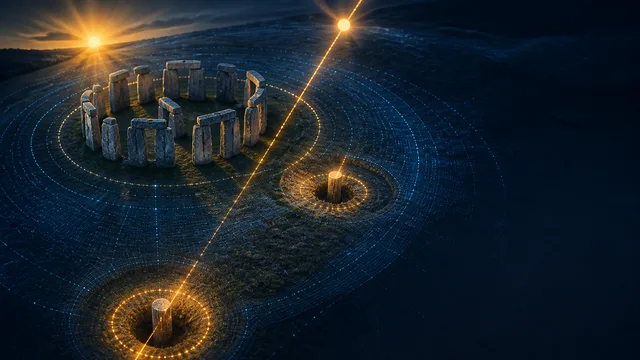
A Stonehenge Precursor Found Under a Housing Estate
A 5,000-year-old solar structure found near Stonehenge raises sharp questions about prehistoric astronomy—and how Britain treats unprotected heritage sites.
Destiny 2 Ends: A Community Bungie Built and Switched Off
Bungie ends Destiny 2 content updates in June. Three creators reflect on careers, community, and what happens when a corporation owns your third place.