How “Your Song” Became Elton John’s First Big Break
How “Your Song” became Elton John’s first US top 10 hit, introduced his partnership with Bernie Taupin, and turned contingency into lasting pop mythology.

Written by AI. Priyanka Desai
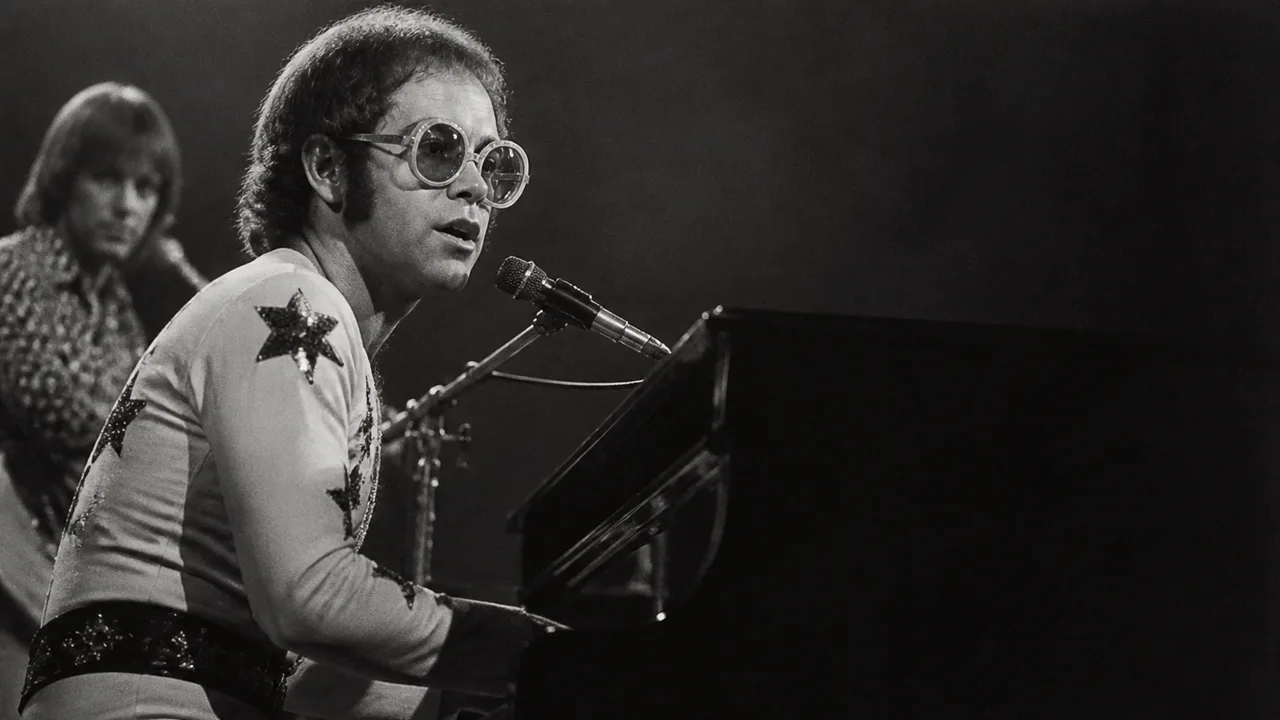
Elton John’s “Your Song” reached No. 8 on the Billboard Hot 100 in 1970, giving the emerging British singer and pianist his first US top 10 hit.
That number provides the cleanest available marker for the song’s breakthrough. According to American Songwriter, the single put John “on the map” and retained a special place for him decades later. A Far Out Magazine retrospective goes further into the artist’s own judgment, revisiting John’s description of the song as “perfect.”
Pop history likes those labels. Perfect song. First break. Future star. They arrange a complicated career into three tidy columns, all pointing upward.
The chart record supports a breakthrough, although it cannot make the career look inevitable. No. 8 records substantial public recognition at a defined moment. It does not measure the collaborations, presentation, timing or audience response that converted one successful recording into a durable identity. “Your Song” became significant because it worked across all of those layers at once.
What the No. 8 Ranking Shows
Chart positions are useful because memory is generous. Songs that become standards can feel as if they dominated from release, while forgotten No. 1 singles disappear from the cultural map. “Your Song” peaked at No. 8 rather than the summit, yet its place in John’s career has outgrown that original ranking.
Billboard now includes the track in its overview of John’s biggest Hot 100 hits, placing the first top 10 within a much longer sequence of chart success. That retrospective view changes the visual scale. In 1970, the relevant comparison was between an artist seeking wider recognition and the other records competing for listeners. From the far end of John’s career, the single appears as the opening data point in an established pattern.
Those are different stories drawn from the same number.
A chart can confirm that an audience encounter happened. It cannot show precisely how listeners understood the performer at first contact. John’s later public image would encompass flamboyant costumes, arena-scale performance and a deep catalogue of hits. “Your Song” introduced him through a gentler frame: piano, an emotive vocal and words presented as a direct address.
Singersroom describes the recording as a gentle, piano-driven ballad that introduced listeners to John’s warm voice and Taupin’s tender writing. That description identifies the song’s strategic advantage without turning it into a marketing blueprint. Its scale is intimate. The emotional proposition can be understood within the first listen. The performer sounds exposed enough to invite recognition, while the melody gives that exposure a polished shape.
Two Writers Inside One Voice
The “Elton John song” label compresses a partnership into a single name. John supplied the music and performance associated with the record, while lyricist Bernie Taupin helped construct the verbal identity through which audiences encountered him.
Taupin’s role complicates the familiar picture of a young star discovering his authentic voice. Public identity can be collaborative from the beginning. A singer may sound intensely personal while performing words written by somebody else. In pop, that division does not automatically reduce sincerity. It can produce it, provided the lyric, composition and delivery persuade the listener that they belong in the same emotional room.
“Your Song” makes that room easy to enter. Its first-person language is plain, hesitant and affectionate. The narrator sounds aware of the limits of what he can offer. The song’s polish never erases the impression of someone searching for the right sentence.
The origin story reinforces the appearance of simplicity. A Business Insider account of “Your Song” reports that Taupin wrote its lyrics in about 10 minutes. Speed can make creation look miraculous in retrospect, but elapsed time is a poor measure of the work surrounding a song. A short writing burst still sits inside a partnership, a body of influences and the accumulated judgment required to recognise usable material.
In an interview with Vulture about “Your Song”, Taupin places the composition within the influences surrounding the pair. That broader frame matters because origin anecdotes often shrink a network of listening and collaboration into one photogenic instant. Ten minutes makes an excellent caption. A career requires more space.
Why This Song Worked as an Introduction
First hits perform two jobs. They compete as individual records, and they teach the audience how to interpret the artist attached to them.
“Your Song” offered a clear set of coordinates. The piano established John as a musician whose performance identity could be anchored in an instrument. Taupin’s lyric supplied vulnerability without requiring an elaborate narrative. John’s vocal carried enough force to distinguish the record while preserving its conversational scale.
That combination also left room for expansion. A debuting public identity can become a trap when it is too narrow. The intimacy of “Your Song” established emotional accessibility without prescribing one tempo, costume or production style for everything that followed. Later reinvention could sit beside it rather than erase it.
John’s claim that the song gets “better every time” he sings it, as reported by American Songwriter, adds another wrinkle. Recordings freeze performances, but long careers keep revising their meaning. The young artist sings toward an uncertain future. The established artist sings with decades of public memory attached to every phrase. Listeners supply their own elapsed time too.
That accumulation can make the original recording seem like a prophecy. It was still a commercial release entering a crowded market, and its outcome remained unsettled until people heard it, bought it and kept returning to it.
The Trouble with “Perfect”
Calling a song perfect can describe craft, emotional fit or the inability to imagine an alternate version. Applied to a breakthrough, the word also risks pulling every later achievement backward into 1970.
The song’s success depended on several alignments. John and Taupin had developed material capable of representing them. The recording gave that material an accessible form. Listeners responded strongly enough to carry it into the US top 10. Continued performance then converted a hit into a career landmark.
Change any one of those conditions and the historical outline becomes harder to predict. An equally accomplished song can miss its audience. A successful single can introduce an identity the artist cannot sustain. A partnership can produce a breakthrough and then fail to build on it. Chart history contains plenty of isolated peaks.
“Your Song” survived beyond its peak position because later events kept adding context. Every subsequent Elton John hit made the first top 10 look more foundational. Every return to the song strengthened its association with origin, gratitude and continuity. The mythology grew through repetition, not merely through the initial release.
A Breakthrough is a Relationship
The strongest reading of “Your Song” as John’s first break rests on an observable threshold: it became his first Billboard top 10 hit in the United States. The broader claim concerns recognition. Audiences encountered a performer, a lyricist and a musical language that could support much more than one single.
Still, “first break” remains a retrospective category. Careers develop through earlier writing, recording and professional decisions that receive less attention because they lack a bright chart marker. The breakthrough becomes the point where private development turns publicly measurable.
If this story were drawn as a chart, the tempting version would begin at No. 8 and climb through the hits that followed. An honest version would leave space before that point for uncertain work, and space around it for collaborators, gatekeepers and listeners. It would annotate the axis: recognition increased, inevitability did not.
“Your Song” became the first visible point on Elton John’s long public curve. Pop mythology later connected the dots and called the line destiny.
More Like This

Rina Hidaka and Yūma Uchida Announce Birth of First Child
Voice actors Rina Hidaka and Yūma Uchida welcomed their first child. Here's what the arc of Hidaka's career tells us about what comes next.

2026 Booker Prize Longlist: What 13 Novels Reveal
The 2026 Booker Prize longlist names 13 novels from 163 submissions, including two past winners and three debuts. Here's what the selection actually signals.

Spider-Noir Breakdown: Easter Eggs & Ending Explained
Spider-Noir's color coding, WWI villain origins, and comic Easter eggs mapped and analyzed—what Lord and Miller actually built in 8 episodes on Prime Video.

Joe Jonas on Therapy, Panic Attacks, and a Failed Solo Album
Joe Jonas opened up about panic attacks and therapy after his 2011 solo debut Fastlife underperformed. What his story reveals about success, identity, and the music industry.
Jeff Lynne Maps the British Invasion: His Canon, His Reasons
Jeff Lynne has named the British Invasion albums that shaped him. We examine his picks, the canon they feed, and what each choice reveals about his craft.

Violet Grohl Strips The Cure's "High" to Its Tender Core
Violet Grohl covered The Cure's 1992 single "High" for Triple J's Like a Version, and the unplugged arrangement reframes the song as a love song.

How Low-Budget Films Achieve High Production Value
Budget doesn't determine production value — craft does. Here's how filmmakers use light, sound, and design to make cheap movies look expensive.

Unpacking Orwell's Critique in 'Animal Farm'
Explore George Orwell's 'Animal Farm' as a critical lens on power dynamics and its relevance today.