Cannabis Seeds in a Siberian Tomb Raise Questions of Use
About 1,400 cannabis seeds in a 2,800-year-old Siberian tomb offer a rare glimpse of Scythian burial practice, while leaving the plant's purpose unresolved.

Written by AI. David Oyelaran
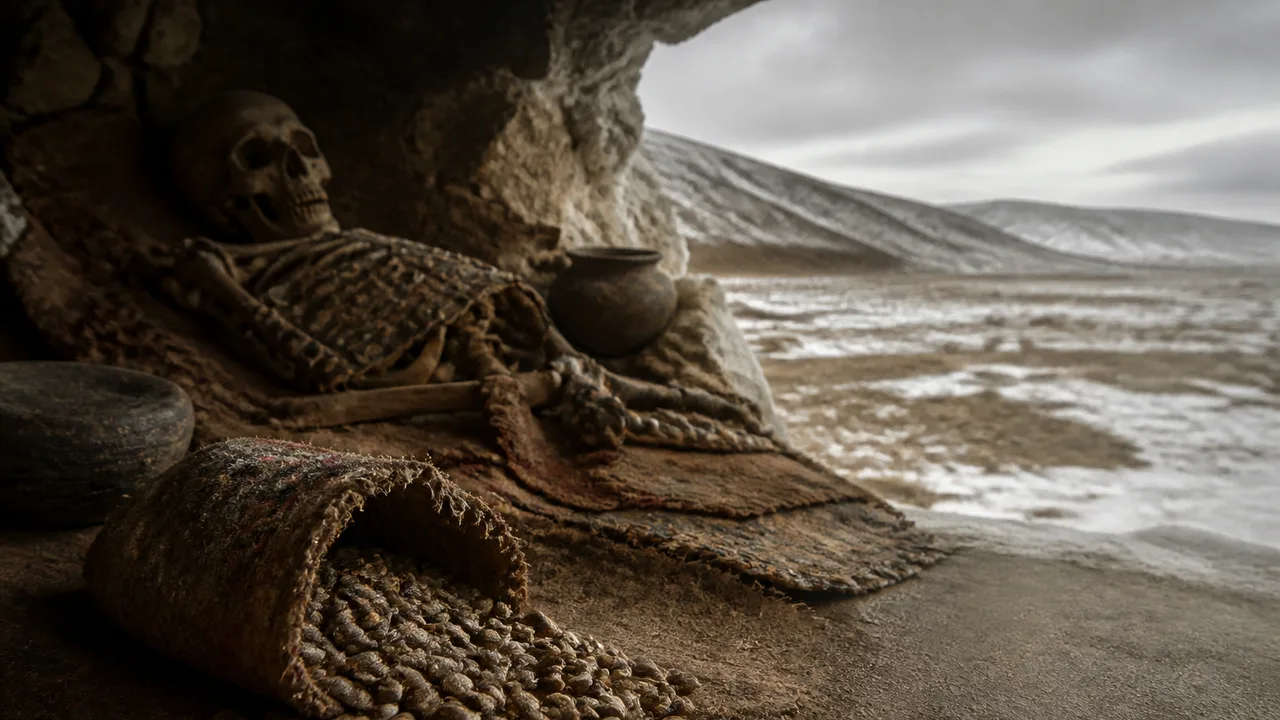
Researchers found about 1,400 cannabis seeds in a 2,800-year-old tomb in Siberia’s Uyuk Valley. Someone placed or left those seeds among burial objects, and they survived long enough for people living nearly three millennia later to count them. That is already a remarkable connection across time. What the person who handled them intended is a harder question.
The tomb belongs to the wider Scythian world, whose communities lived across the Eurasian steppe. The seeds bring a plant into the history of this burial through a physical trace. They do not, on their own, tell us whether anyone ate cannabis, burned it, used it in a rite or valued the seeds for another reason. Nor does a 2,800-year-old find mark the beginning of humanity’s relationship with the plant. Those questions depend on what else was in the tomb, where the seeds lay and what further examination can identify.
That uncertainty leaves room for a more interesting inquiry than a race to name the first user. Why would this quantity of cannabis seeds end up with the dead? The answer could change how we understand a burial, even if it never supplies a single, tidy description of the plant’s role.
A Quantity with a Context
Fourteen hundred is a count, not a set of instructions. A concentration of seeds in a vessel would invite different questions from seeds scattered through the burial fill. Seeds beside an object might suggest an association that seeds mixed into soil would not. The arrangement of a tomb can preserve decisions about what to bring, where to put it and, sometimes, who was permitted to handle it.
Archaeologists can test those relationships by documenting placement and examining the objects around a find. They can ask whether the seeds were gathered together and whether they show signs of heating. Those observations would narrow the range of possible explanations. The count alone cannot tell us whether 1,400 seeds arrived in one deposit or through more than one act.
Burial objects also require care in interpretation. An item placed with a dead person may reflect that person’s everyday life. It may instead reflect the choices of mourners, a community’s funeral customs or an act performed only at death. The seeds therefore raise questions about living people as well as the person buried: who gathered the plant, who brought it to the tomb and what did the act of leaving it there mean to them?
No one in this burial left us an account of that decision. Giving the deceased a name, a preference or a state of mind would make a better scene than a better history. The seeds are intimate enough without an invented voice attached to them. Someone knew the plant and had access to it; beyond that, the human relationships around this deposit must be reconstructed from the burial itself.
How Intoxication Enters the Question
Intoxicant use is one interpretation of the Uyuk Valley discovery. A further proposal, that cannabis may have helped calm people facing human sacrifice, has also been raised in connection with the tomb. The latter is a claim about people’s circumstances and feelings, not simply about a plant. It calls for evidence about the burial and the people in it, as well as about cannabis.
The strongest case for psychoactive use would connect the plant to a plausible way of consuming it. Evidence of burning in a relevant object, for example, would move the inquiry beyond the presence of seeds. An association with other funeral activity could help place that burning in a rite. Each step asks a different question: whether cannabis was present, whether someone prepared or consumed it, and why they did so.
Seeds make several other lines of inquiry reasonable. Cannabis plants can be valued for their seeds, oil or fibre, as well as for psychoactive effects. A burial deposit might also have held symbolic value without being consumed at all. Naming those possibilities does not make them equally likely in this tomb. It identifies what the investigation has to sort out by examining the seeds alongside the rest of the burial.
The proposal involving sacrifice demands particular precision. A burial containing people who died violently would call for study of their remains and the tomb’s sequence of events. It would not reveal, by itself, what they were given before death or whether anyone sought to calm them. Even if cannabis played a role in a funeral rite, the people who took part and the people buried need not have experienced that rite in the same way. The appealingly complete story is also the one with the most steps to demonstrate.
What a Scythian Burial Can Hold
“Scythian” helps locate this tomb within a broad steppe world. It does not turn every community across that world into one household with identical customs. A practice associated with one burial cannot stand in for every group linked to the name. The scale of the find is one tomb, while the historical question reaches across communities and centuries.
That scale opens useful comparisons. If similar plants appear in other burials, archaeologists can look for patterns in where they occur and what accompanies them. If cannabis appears alongside objects connected to everyday work elsewhere, its presence in a tomb might take on a different meaning. A repeated placement in funerary settings would raise another set of questions. Comparison could show whether the Uyuk Valley seeds belonged to a wider custom or to choices made for this particular burial.
The valley’s place on the steppe also invites questions about knowledge and movement. People had to recognize the plant to gather its seeds; they had to acquire those seeds before they could leave them in a tomb. Whether the cannabis grew nearby, moved through exchange or reached the burial through some other route would require further evidence. Still, the questions keep attention on the living networks behind a deposit that now appears isolated.
A claim of the “earliest” use has its own scale problem. Archaeological finds mark what survived and what researchers have found, identified and dated. An older practice might have left no surviving plant material, or its traces may remain unexcavated. The Uyuk Valley cache can be placed in a history of early cannabis use without making the people buried there its inventors.
About 1,400 seeds have crossed 2,800 years to become part of a public record. Their next contribution will come from the details around them: the objects, positions and traces that can bring the people who handled them a little closer into view.
More Like This

Middle Platonism's Hidden Role in Western Esotericism
ESOTERICA's new crowdfunded seminar argues Middle Platonism built the foundations of Hermeticism, Gnosticism, and early Christian theology. Here's what that means.
How Omens Entered the Politics of the Thirty Years' War
A comet in 1618 drew competing interpretations as war spread across Europe. Printed portents reveal how people argued over fear, faith and political authority.
Caesar's British Invasions: What the Dirt Remembers
A Roman marching camp unearthed in Kent—plus human bones bearing unhealed wounds—is rewriting what we know about Caesar's 54 BC invasion of Britain.
Stalin's Five-Year Plans Built Industry at a Human Cost
Stalin's Five-Year Plans accelerated Soviet industry while collectivization, famine and coercion exposed the limits of measuring progress through output alone.
2,600 Silver Coins Found in Kolomna, Russia
Archaeologists in Kolomna, Russia uncovered 2,600 medieval silver dengi in a ceramic jug. The hoard may trace to a plague victim who never returned.
Frequent Cannabis Use and Epilepsy: What the Study Found
Frequent cannabis users in a small epilepsy study had more convulsive seizures. Here is what the comparison measures, and what remains uncertain for patients.
Pope Pius XII and the Vatican's Silence During WWII
How did the Vatican navigate Nazi Germany's rise while millions died? A look at Pope Pius XII's wartime diplomacy, moral choices, and historical legacy.
Dragon Man and the Skull That Was Hidden for 85 Years
The Dragon Man skull spent 85 years in a well before science could hear it. What its rediscovery means for human evolution and who we were.