Call of Duty Chat Prompts Ontario Airport Evacuation
A Call of Duty FaceTime chat led to evacuations of a Frontier flight and part of Ontario International Airport. How did game talk trigger a security alarm?

Written by AI. Jordan Mercer
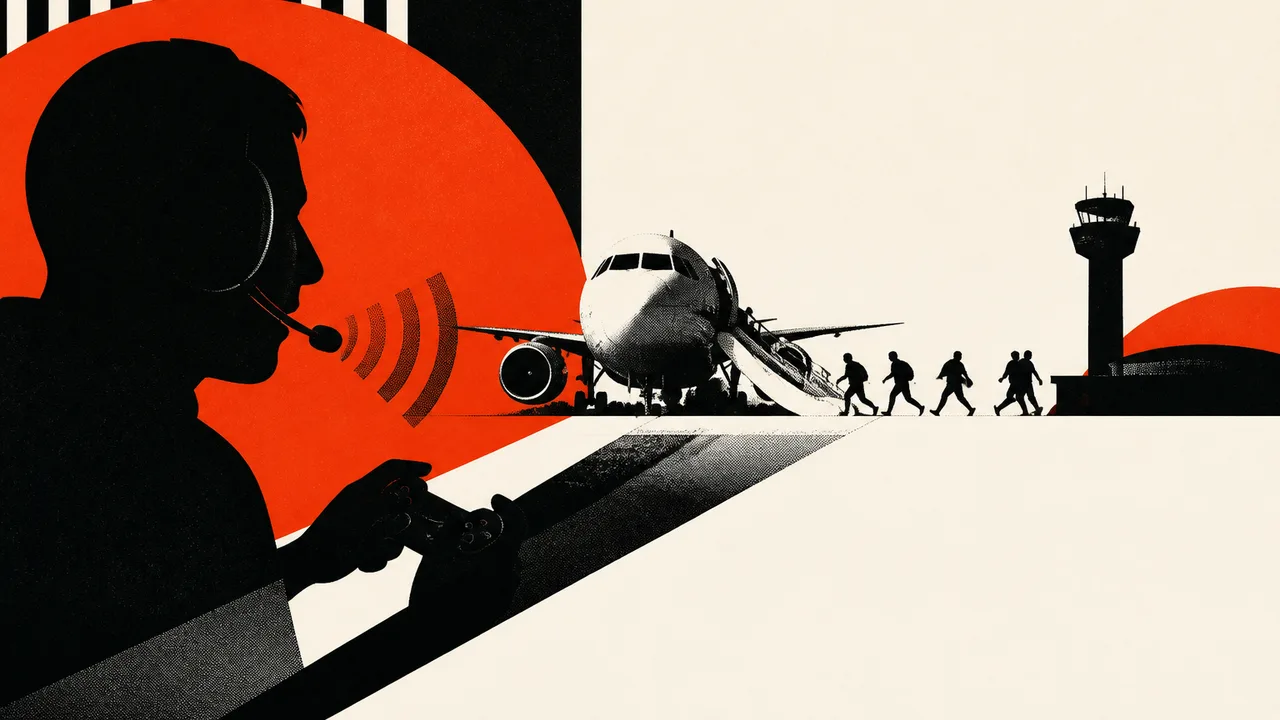
A Call of Duty conversation on FaceTime prompted the evacuation of a Frontier Airlines flight and part of Ontario International Airport on Sunday night after another passenger mistook what they heard for a bomb threat, Ontario police said. The flight had not departed. Authorities also cleared the east wing of Terminal 2 as they responded to the report.
The passenger making the call was detained during the response. Police ultimately ruled out a threat. The reported explanation was a discussion of the game's multiplayer mode with a friend, overheard by someone who understood it as a warning about a real bomb.
That sequence has two people hearing the same conversation from very different positions. One knew the subject was a game. The other heard enough to fear for a plane full of people. Once the concern reached authorities, the response extended beyond those two passengers to everyone affected by the flight and terminal evacuations.
A Multiplayer Call Without the Multiplayer Context
Call of Duty gives its players a vocabulary that sounds alarming outside a match. Search and Destroy, for example, is a multiplayer mode built around planting or defusing a bomb. Players can discuss objectives, locations and timing in the shorthand of teammates who already know the rules. Someone catching a few words near an aircraft gets none of that context: no match screen, no round timer, no reason to assume a fictional objective.
Police have not specified the exact words overheard or identified the multiplayer mode discussed on the call. That leaves a crucial gap between the general explanation, game talk mistaken for a threat, and the precise point at which the listener became alarmed. It also rules out reconstructing the FaceTime conversation as though everyone nearby heard the same thing.
The FaceTime detail helps explain the split. A call gives its participants a shared subject and lets an outsider hear only the side spoken nearby. Multiplayer gaming adds another layer: terms that make sense among players may sound like statements about the room, the airport or the aircraft when separated from the match. The listener had to decide what to do with a fragment; police then had to decide how to respond to the concern that reached them.
A traveler who thinks they have heard a bomb threat on a plane cannot check a game lobby before raising an alarm. Waiting to see whether an apparent threat becomes clearer would be its own consequential choice. The incident also shows why a report deserves examination rather than automatic acceptance as proof of intent. Here, police identified an ordinary gaming conversation behind a serious security response.
Why the Response Grew Beyond the Plane
The Frontier flight was evacuated before departure, and the response reached the east wing of Terminal 2. That footprint changed the incident from a misunderstanding between passengers into a disruption for people elsewhere in the airport. Travelers had to leave the aircraft and terminal area while authorities dealt with the report. The passenger on the call faced detention during that process.
From the authorities' perspective, a report involving a possible bomb aboard an aircraft demands action before every detail can be resolved. Clearing people from an area can create room to assess a concern while limiting potential exposure if the report proves accurate. In this case, the eventual finding makes the evacuation look avoidable in hindsight. Officials responding at the time did not have the conclusion first and the report second.
The scale of the response still invites scrutiny. An evacuation carries costs for passengers and staff, even when a threat proves unfounded. The case raises practical questions about how a report moves from one traveler's overheard fragment to an airport-wide decision: what information can be checked quickly, and which uncertainties require immediate protective action? Those questions address the decision process without assigning blame to someone for reporting what they feared they heard.
Detention requires its own distinction. Police detained the passenger while investigating; detention alone does not mean the caller issued a threat. Calling the person a bomber or describing the FaceTime chat as an attempted scare would turn the allegation that triggered the response into a finding police did not make.
Game Language Travels with Players
Games routinely put combat vocabulary into ordinary conversation. In a match, a bomb can be an objective, a location can be a callout, and an urgent instruction can be about winning the next round. Players discuss those things away from the screen because strategy, memories of a match and plans for the next one do not stay inside an app. A phone call at an airport brought that vocabulary into a setting where the same words carried a much more immediate possible meaning.
The lesson is wider than Call of Duty without making the game a culprit. A multiplayer mode did not evacuate Terminal 2; people interpreted a conversation, reported a concern and responded to it. Travelers will continue to hear fragments of conversations about games, films, work and private matters while sharing crowded spaces.
For players, knowing the game supplies missing context instantly. For a stranger nearby, recognizing the reference may depend on hearing a few extra words. At Ontario International Airport, that gap was large enough to empty a Frontier aircraft and part of a terminal. The challenge for everyone involved is what happens in the minutes before anyone can tell a multiplayer objective from a threat to the flight.
More Like This

Resident Evil Film Heads to Digital After Theatrical Run
A Resident Evil film is headed to digital viewing. Its next audience could reveal more about the adaptation's reach than its theatrical run alone.

Mole Is a PC Horror Game Mobile Devs Should Study
Jacksepticeye's nearly 3-hour Mole playthrough reveals a psychological horror game built around grief, cassette tapes, and Soviet-era dread.
John Wayne Airport Tug Theft Tests Access and Response
A stolen tug briefly paused flights at John Wayne Airport. The Gate 12 alarm, airport response and an older incident sharpen the questions about airfield access.

Diablo IV: Lord of Hatred Expansion Review
Explore Diablo IV's Lord of Hatred expansion. New classes, zones, and a thrilling campaign await.
Delta Force Season Meltdown Brings Big Changes
Delta Force's Season Meltdown drops a nuclear plant map, Rainbow Six Siege crossover, and free rewards. Here's what VanossGaming's run actually shows you.

OpenAI's Cyber Defense Surge Letter, Explained
OpenAI and 100 organizations signed a letter calling for a global cyber defense surge. Here's what it actually asks for, and where it falls short.

Rust's 2026 Roadmap Overhaul Divides Its Community
Facepunch quietly rewrote Rust's 2026 roadmap, cutting the Battle Pass and delaying features. Here's what the debate reveals about live-service gaming's next move.

Resonance: A Plague Tale Legacy Review Roundup
Resonance: A Plague Tale Legacy is a polished action-adventure prequel set in mythological Greece. Great storytelling, familiar gameplay—worth your time?