Amsterdam's Unwritten Rules for First-Time Visitors
Beyond canals and coffee shops: the cultural customs, cycling laws, and local attitudes that shape how Amsterdam actually works for visitors.

Written by AI. Mariel Fontaine
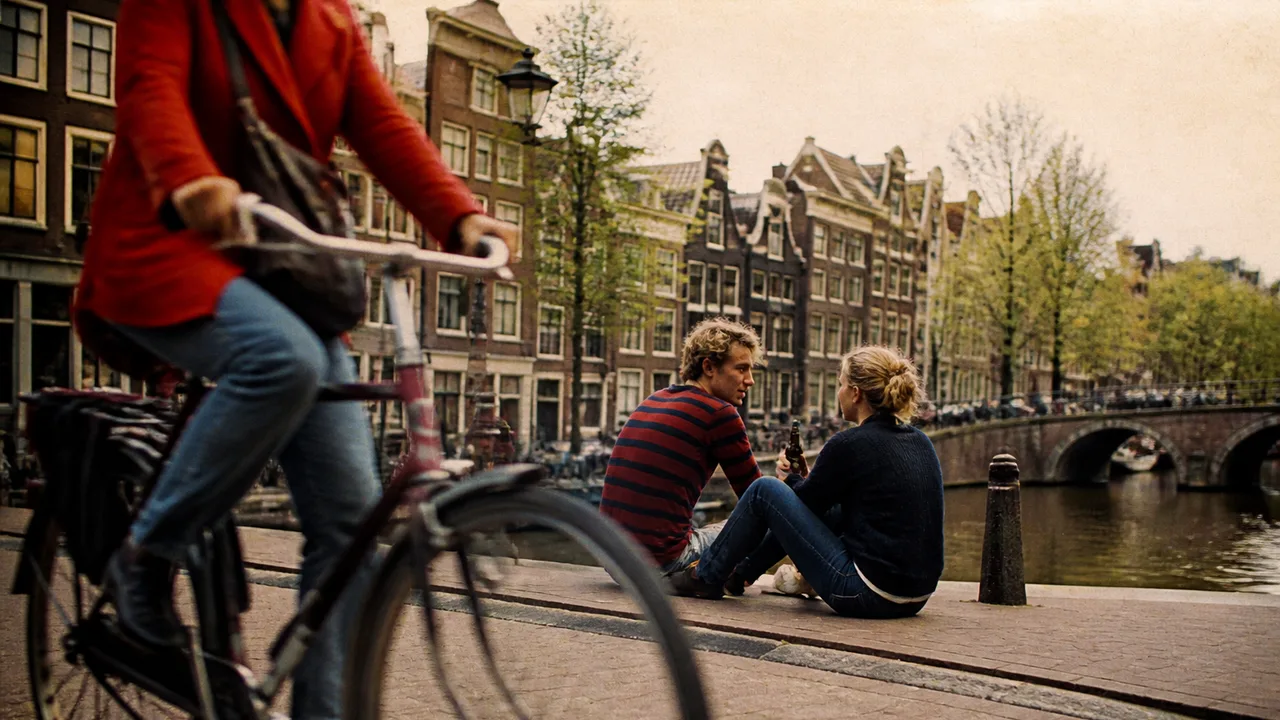
Photo: AI. Nikolai Brandt
Amsterdam has a reputation problem — or rather, a reputation mismatch. The city that gave the world Rembrandt, the Rijksmuseum, and some of the most sophisticated urban cycling infrastructure on earth has spent decades being marketed, and visited, primarily as a place to do things your parents wouldn't approve of. The locals have noticed, and they are not particularly pleased.
Travel creator Mark Wolters, filming on location for his Wolters World channel, frames this tension as a matter of unwritten rules — the social and practical codes that no guidebook spells out but that every Amsterdam resident navigates daily. What emerges from his account is less a checklist of dos and don'ts than a portrait of a city that runs on efficiency, precision, and a very particular kind of directness that outsiders routinely mistake for coldness.
The Dutch Don't Waste Words — or Time
Start with communication. Wolters identifies the Dutch "calling card" as "sarcasm, dry wit, and directness," and notes that tourists frequently misread this as rudeness. It isn't. It's a cultural value: efficiency extends to conversation the same way it extends to transportation and urban planning. The Dutch will not pad a sentence with pleasantries if the point can be made without them, and they find it genuinely puzzling when visitors take offense at that.
This efficiency also explains something that surprises a lot of travellers: attempting to speak Dutch is not considered charming here. In Flemish Belgium, Wolters notes, a tourist stumbling through a few words of Dutch earns a kind reception — an "ah, cool, you tried." In Amsterdam, the reaction is closer to mild confusion. Why would you do that? The Dutch speak English at a level that embarrasses most native speakers. The efficient move, by their own logic, is to use it. Insisting on Dutch reads less as cultural respect and more as an unnecessary complication of a perfectly smooth transaction.
The Bicycle Is Not a Metaphor (It Is an Infrastructure Priority)
Then there are the bikes. The Netherlands cycles at a scale that is genuinely difficult to conceptualise — according to Bicycle Dutch, the Dutch log a staggering volume of cycling kilometres annually, a figure that reflects not a hobby culture but a dominant mode of transport that the entire built environment is designed around. In Amsterdam, cyclists do not share the road with pedestrians in any meaningful sense. They have their own lanes, their own signals, their own right of way — and pedestrians who wander into those lanes will discover, quickly, that the infrastructure prioritises the bike.
Wolters is blunt about this: "red is dead." Step into a bike lane without looking and you will be hit. Not because cyclists are aggressive, but because they are moving efficiently through infrastructure designed for them, and a pedestrian standing in a bike lane is as out of place as someone standing in a motorway lane.
The same logic applies to renting a bike. Wolters advises tourists to resist the obvious appeal unless they genuinely understand urban cycling — hand signals, lane discipline, traffic patterns. "Make sure you know the rules," he says, distinguishing between "oh, I like to ride bikes" and the focused attention that cycling in a city like Amsterdam actually requires. The countryside, the tulip fields, the Keukenhof — rent a bike there. In the city, if you're uncertain, walk.
Coffee Shops, Coffee Shops, Coffee Shops
The subject that looms over any conversation about Amsterdam tourism eventually has to be addressed. Wolters is careful here, neither moralistic nor promotional: the coffee shops are legal, they are predominantly patronised by tourists rather than locals, and they carry real safety considerations that first-time visitors routinely ignore.
The key practical warning concerns potency and delayed onset. Products sold in Amsterdam's coffee shops are significantly stronger than what many visitors have encountered elsewhere. Wolters describes a pattern he's observed: a tourist visits one coffee shop, notices nothing much, concludes it hasn't worked, visits a second — and then has a genuinely bad experience when both kick in simultaneously. His advice is to talk to staff, be honest about experience level, and apply the same patience you'd apply to any unfamiliar substance. This is harm reduction, not a moral lecture.
The broader point Wolters makes is worth sitting with: "They just give people the freedom of choice here." The Dutch tolerance framework is not an endorsement of a particular lifestyle. It is a philosophical position about individual autonomy that the rest of the city does not particularly organise itself around. The locals are not, in the main, visiting coffee shops on their lunch breaks. They are quietly tired of a tourism economy that has made their city synonymous with the behaviour of a subset of visitors who come for exactly that.
What the City Is Actually Asking For
This brings us to the sharpest tension in Wolters' account. Amsterdam is, by any measure, under significant tourism pressure — a resident population dwarfed by annual visitor numbers — and the city has been working actively to reshape who comes and why. The campaign is not subtle. As reported by The New York Times in 2023, Amsterdam ran targeted advertising in the United Kingdom aimed squarely at young men planning party weekends, with a direct message: if that's your intention, stay home. The city has also moved to ban new hotels in the historic centre, restrict short-term rentals, and — most dramatically — announced plans to relocate the red light district away from its current position in the oldest part of the city.
Wolters characterises the underlying attitude carefully: "It's not that they don't want tourists here. They want more targeted tourism." The distinction matters. Amsterdam is not anti-tourist; it is anti-a-specific-kind-of-tourist. The city wants visitors who go to the Stedelijk, who take the train to Haarlem or Utrecht for an afternoon, who eat somewhere that isn't on the first page of TripAdvisor. "They don't want the tourists here," Wolters says, before correcting himself: they don't want the damage. The tourists individually are fine.
The Practical Things Nobody Mentions
Set aside the philosophy for a moment and consider the architecture. Amsterdam's canal houses were built on narrow plots with staircases that function, in some cases, more like ship's ladders than domestic stairs. This is not a quirk — it is a direct consequence of the property tax system that historically assessed buildings by their street-facing width, incentivising tall, narrow construction. The stairs are steep, they are not always well-lit, and they become genuinely hazardous if you're carrying a large bag or have had a few drinks. Wolters has watched tourists fall backwards. International hotel chains, with their standard-issue elevators, solve this problem; historic canal house apartments do not. For anyone with mobility considerations, this is a booking decision, not an afterthought.
Hotel rooms, relatedly, are small and expensive by Western European standards, and that equation gets worse on weekends when demand peaks. Pack accordingly — not just for the room size but for the staircases you'll be navigating with whatever you brought.
The final practical note concerns transit. The Netherlands has excellent contactless payment infrastructure on its trains and metro: tap in with a credit or debit card when you board, tap out when you exit, and the fare is calculated automatically. Wolters flags the one failure mode: forget to tap out and you'll be charged a default maximum fare. It's a minor thing that becomes an annoying thing if it happens repeatedly.
The City That Wants to Be Seen Whole
The through-line in Wolters' account, and in the broader story Amsterdam has been trying to tell about itself for the better part of a decade, is this: the version of the city that exists in most tourist imaginations is real, but it is a very small portion of the actual place. The red light district is not representative. The coffee shop is not representative. And residents — direct, efficient, occasionally sardonic — are genuinely interested in sharing the rest of it.
"The people do want to share," Wolters says, "because they want people to know we're more than just coffee shops and the Red Light District."
The city is making structural bets on that. Whether enough tourists are listening is a different question.
More Like This
American Tourists in Europe: The Etiquette Gap
From date formats to tipping culture, the everyday customs that trip up American travelers in Europe—and what they reveal about deeper cultural differences.

How Times Square Became a Billboard for Itself
Times Square's wall-to-wall advertising wasn't inevitable. It was built by specific people, specific decisions, and one very consequential zoning law.

Home Swapping Saves Families Thousands on Holidays
Home swapping is helping families save thousands on holidays by cutting accommodation costs. Here's how the model works, what it costs, and what the risks are.
What Poles Actually Want Tourists to Know
From geography to drinking etiquette, here's what Polish locals wish visitors understood before arriving—and why it matters more than you think.
Europe's Tech Sector Is Skipping Its Summer Nap
Europe's tech scene — led by hubs like Eindhoven — is defying the summer slowdown with fresh investment, global talent, and high-stakes AI regulation on the horizon.
What to Expect When Staying in European Hotels
European hotels operate by different rules than North American ones. Here's what actually differs—room size, beds, breakfast pricing, accessibility, and more.

European Night Trains: What to Realistically Expect
Before you book a European night train, read this. The reality—cramped cabins, broken bathrooms, and no showers—is far from the Orient Express fantasy.

JetBlue Buys Spirit's LaGuardia Slots for $58.5M
JetBlue won 22 Spirit Airlines LaGuardia slots for $58.5M. Here's what it means for fares, Frontier, and travelers who depended on cheap Northeast flights.