Academy Museum Gala 2026 Honors Carpenter, Domingo, Theron
The 2026 Academy Museum Gala honors John Carpenter, Colman Domingo, and Charlize Theron on Oct. 17—a trio that reveals a lot about what Hollywood is choosing to remember.

Written by AI. Devon Quincy

There's a particular kind of institutional recognition that arrives so late it functions more as a correction than a celebration. John Carpenter getting his first official industry honor at the 2026 Academy Museum Gala—confirmed by Gold Derby—is that kind of moment. The man who directed Halloween, The Thing, Escape from New York, and Big Trouble in Little China has spent roughly five decades being celebrated by filmmakers, critics, and audiences while the industry's formal apparatus looked the other way. Now he's getting the Luminary Award, and the question worth sitting with isn't "why him?" but "why now, and what took so long?"
The sixth annual Academy Museum Gala will take place October 17, according to Variety, with Charlize Theron receiving the Icon Award and Colman Domingo receiving the Vantage Award. Confirmed by the Academy Museum itself, the event is one of Hollywood's more strategically interesting nights—a fundraising gala for a museum that only opened in 2021, still actively constructing its institutional identity, which means every honoree choice carries a kind of positioning argument about whose work the industry considers worth preserving and contextualizing.
That argument, this year, is genuinely interesting.
The Carpenter Question
The gap between John Carpenter's cultural influence and his institutional recognition is one of the more striking imbalances in American film history. His films didn't just popularize the slasher and creature-feature subgenres—they essentially designed the visual and sonic grammar that subsequent horror films still work within or against. The Steadicam creep. The synthesizer score, which Carpenter composed himself, creating a feedback loop between image and dread that directors still try to replicate. The way he used widescreen compositions to hide what was already in the frame.
Horror spent decades being the genre that critics acknowledged had technical merit while making sure that acknowledgment came with a condescension buffer—"good for horror," "effective despite its genre." What's shifted is that the critical and cultural consensus has largely dropped the asterisk. The reappraisal of Carpenter specifically has been thorough enough that the Luminary Award lands less as a discovery and more as an overdue ratification.
Gold Derby explicitly notes that this is Carpenter's first official honor from the industry establishment, which, if you sit with it for a moment, is genuinely remarkable. The Academy Museum honoring him now—rather than the Academy itself, it's worth noting—suggests something about where the institutional energy for this kind of recognition lives. A museum committed to film history has a different calculus than a voting body primed toward recent releases. For Carpenter, a museum is actually the more fitting venue.
The Domingo Trajectory
Colman Domingo's Vantage Award tracks a different kind of story. Where Carpenter's recognition is corrective, Domingo's feels genuinely current—the industry acknowledging a talent at something like full acceleration rather than in retrospect.
Domingo's career arc has a quality that's both unusual and instructive: he spent years as one of the most respected working actors in television (Fear the Walking Dead, Euphoria) before his film career entered a phase where the industry seemed to suddenly realize it needed to catch up to him. The Oscar nomination for Rustin in 2024 was the most visible signal, but the pattern of his casting—across genres, scales, tones—reflects an actor who has systematically refused to let any single role define his range.
In a recent NPR profile, Domingo described himself as a "say yes person," someone actively seeking new challenges rather than protecting a brand. That orientation shows up in his filmography in a way that's legible: stage, television, prestige film, genre work, producing. The Vantage Award—the name itself implies a perspective, a particular angle of vision—seems calibrated to honor exactly that kind of expansive, category-resistant career.
What makes Domingo's recognition interesting at this particular moment is what it says about the industry's current comfort with actors whose value is definitionally hard to pin down. Awards culture has historically preferred legibility—the actor who does this kind of thing really well. Domingo's career is a rebuke to that preference, and honoring him with an award named for perspective rather than achievement feels like a deliberate choice.
The Theron Conversation
Charlize Theron receiving the Icon Award is the most straightforwardly legible of the three honorees—and also, depending on your angle, the most complex.
The case for Theron as icon is airtight on its face. The Oscar for Monster. The commitment to physical transformation as dramatic instrument. Mad Max: Fury Road, which gave her one of the most fully realized action roles in contemporary American cinema—a film where she was, by most accounts, the magnetic center even as the title belonged to someone else. She built a production company. She has navigated the specific terrain of being a woman in Hollywood who demands and largely receives creative control, which remains its own kind of achievement.
The Hollywood Reporter frames her recognition alongside Domingo's and Carpenter's as a reflection of the industry's evolving landscape—which is true as far as it goes, though "evolving landscape" is one of those phrases that can mean almost anything depending on who's doing the evolving and toward what.
What's actually interesting about Theron as an Icon Award recipient is the specific question it implicitly raises: what does the gala want "icon" to mean? It could gesture toward longevity and transformation-as-craft, toward a specific kind of bankable power, or toward something more complicated about how women have had to operate within the industry's structures to achieve that status. The award doesn't resolve those questions, but the fact that they're there is part of what makes a choice like Theron's worth more than a moment's thought.
What the Gala Actually Is
It would be a mistake to read too much into any single year's honoree list without acknowledging what the Academy Museum Gala actually is: a fundraising event for a young institution that needs both money and goodwill to establish itself. AP News and Deadline both report it plainly as a fundraising gala, which is what it is. The honorees are chosen to draw donors and press, not only to make critical statements.
That context doesn't invalidate the choices—institutions can do multiple things at once—but it does suggest reading the honoree list as a pure editorial argument about cinematic value is probably overreading. The Academy Museum's interests here are material as well as curatorial.
Still, the specificity of this trio is genuinely striking, and specificity is where meaning lives. A horror filmmaker-composer who spent decades outside the canon, a character actor turned leading man who defies easy categorization, and a South African-born action star who built real industry power—these are not the obvious choices for an industry that defaults to celebrating itself. They are, if you're generous, something like an argument about what the museum thinks cinema's history actually contains, as opposed to what the industry's existing honor structures have historically said it contains.
IndieWire notes the gala is co-chaired by Steven Spielberg, among other industry figures—which is a reminder that this is also an establishment event, operating within the structures it's nominally revising.
The most honest read is probably the least dramatic one: the 2026 Academy Museum Gala is an institution in its early years, learning what it wants to say about film history and making choices that sometimes cut against the grain of existing hierarchies, sometimes run alongside them. The Carpenter choice is the one that will age best, because it corrects something that needed correcting. Whether it signals a durable shift in how the industry recognizes genre filmmaking—or whether it's a one-time acknowledgment before the gala returns to safer terrain—is the question October 17 won't actually answer.
That answer will come from whatever choices they make next.
More Like This

10 Underrated Netflix Films That Deserve Attention
Explore ten overlooked Netflix films that showcase unique storytelling and filmmaking techniques yet failed to capture widespread attention.

Inside Hollywood's Stunt Revolution: A YouTube Journey
Explore the evolution of stunt work through YouTube, where creativity meets technical prowess in action-packed sequences.

London Games Festival 2027 Gets a New Central Venue
London Games Festival moves to the Business Design Centre for April 2027. Here's what the venue shift means for fans, devs, and the festival's global ambitions.

Visually Stunning Movies Nobody Talks About
From Tarsem Singh's The Fall to the anime fever dream Redline, these nine films are visually extraordinary—and almost entirely ignored. Here's why that matters.
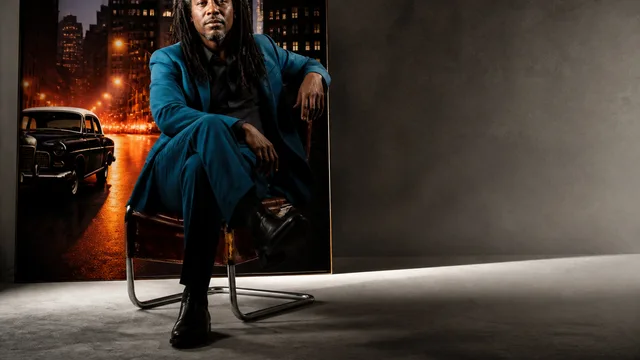
Cool Machine Closes Whitehead's Harlem Trilogy
Colson Whitehead's Cool Machine brings his Harlem Trilogy to a dazzling close with heists, 1980s New York, and a moral vision that earns every page.

Tom Bombadil's Power: Why You're Asking Wrong
Tom Bombadil is Tolkien's most debated enigma. A new In Deep Geek breakdown reframes the question of his power—and the reframe is more interesting than any answer.

Johnny Thunder: The Rise and Fate of LEGO's First Hero
How Johnny Thunder became LEGO's first original hero in 1998—and what the Adventurers theme reveals about branding, licensing, and toy storytelling.

When ABS Challenges Go Wrong: A Rules Breakdown
Umpire Carlos Torres denied two ABS challenges in one A's-Orioles game. Here's what the tape reveals about a protocol still working out its kinks.