Abydos Skull Injuries Strengthen Royal Sacrifice Case
Skull injuries in burials near Egypt's first kings strengthen the case for retainer sacrifice at Abydos, while raising questions about the people buried there.

Written by AI. Sofia Ramirez
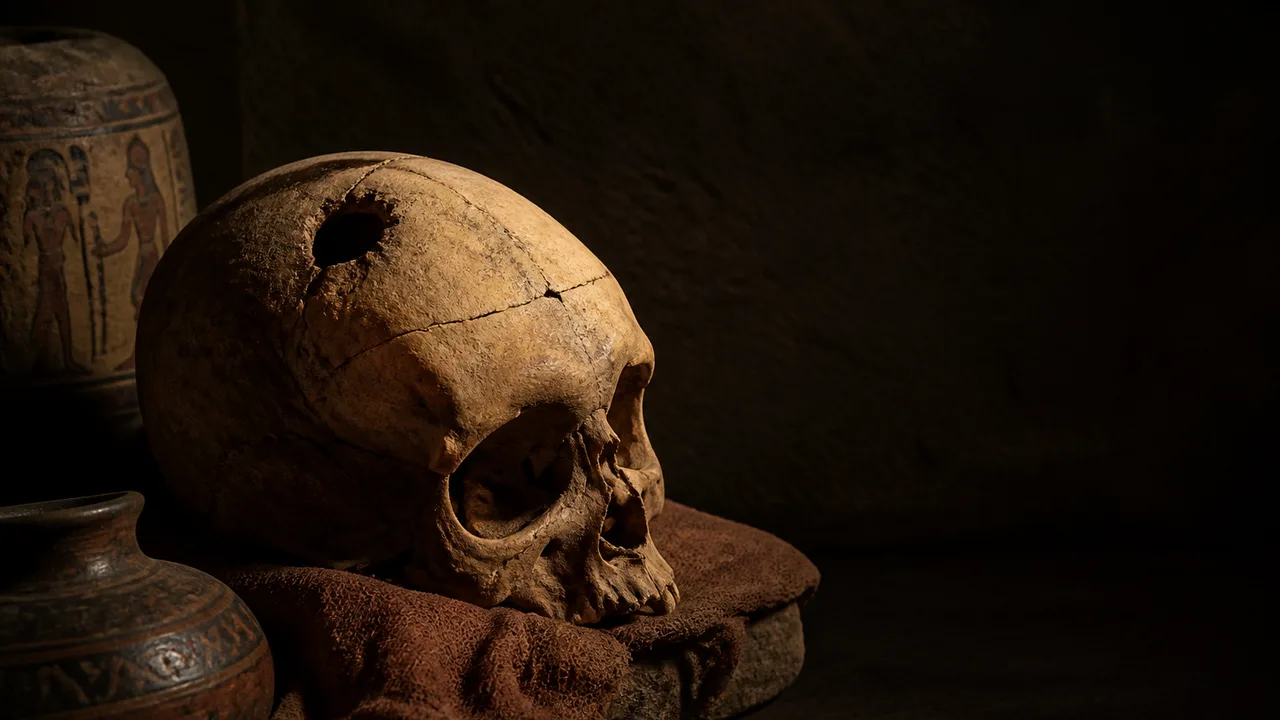
At Abydos, people were buried beside Egypt’s first kings. A new forensic study has sharpened a century-old question about how some of them got there: did they die so that a ruler could take a household into the next life?
Researchers have identified potentially fatal skull injuries among people buried near First Dynasty royal tombs. The finding strengthens the case for retainer sacrifice, the killing of people associated with a ruler as part of a royal burial. The accounts of the study do not give enough methodological detail to assign that explanation to every surrounding grave. A blow to the head, a grave’s position and a theory about the afterlife answer different questions; archaeologists have to connect them.
The dead are often called “servants.” That word offers a tidy picture of a royal court. It also risks handing each buried person a job title that their remains cannot speak aloud. The question now reaches beyond whether some people were killed. It asks who they were, how they lived under the first kings, and what a burial beside a ruler demanded of them.
What the Injuries Add
The skull evidence brings a different kind of information to a debate long shaped by the layout of the graves. Burials clustered around a royal tomb invite an interpretation: these people accompanied the king in death. Injuries that could have killed them add a possible means of death to that setting. Together, the two lines of inquiry make the sacrifice interpretation stronger than the grave plan could make it alone.
They also operate on different scales. An injury belongs to an individual. A group of graves belongs to a burial project that people planned and carried out. Moving from the first scale to the second requires attention to where each injured person lay, when that person died relative to the ruler, and whether other graves share the same pattern. If those connections hold, the graves could show a royal household extending its hierarchy into funerary practice. If circumstances differ across the burials, the people around a tomb may have arrived there through more than one route.
Earlier interpretations have treated their placement as a powerful clue, but placement alone cannot say whether a death was ordered, coincided with a ruler’s funeral or belonged to another ritual circumstance. New forensic evidence changes the terms of that comparison. It gives researchers bodily traces to examine alongside the architecture, rather than asking the arrangement of graves to carry the entire argument.
Even the phrase “died to accompany a ruler” contains two claims. One concerns the circumstances of death. The other concerns the reason for it. Evidence of a potentially fatal injury bears most directly on the first. Burial context helps explain the second. Intent leaves a harder trace than a wound, especially when the people who organized the burial did not leave accounts from those placed around the tomb.
A King’s Grave Had Neighbors
The graves entered this debate through excavations by Flinders Petrie around the turn of the twentieth century. Their placement beside First Dynasty tombs has since prompted competing readings of their purpose. Returning to those excavated remains with forensic questions changes what can be asked of them. It also puts the old excavation context back to work: the relationship among graves is central to understanding what an injury meant at Abydos.
Think of a royal tomb as a construction project as well as a burial. People had to make decisions about space, order, access and whose bodies belonged near the center. A surrounding grave records one result of those decisions. If people were killed for inclusion, the burial displayed a ruler’s power over the living at the moment the ruler died. If some were buried there through other arrangements, the site still records how the royal household sorted people by proximity to its dead king.
That is why the arrangement cannot be treated as mere background scenery for a forensic finding. A wound found in an ordinary cemetery would invite one set of questions. An injury in a grave organized around a ruler invites questions about authority and ceremony as well.
The scale of a royal burial can draw the eye toward the person at its center. The surrounding graves ask readers to look the other way, toward people whose names and choices may be much harder to recover. Their placement tells us that the institution of kingship had a place for them after death. Understanding their place in life calls for closer work.
Who Counts as a Retainer?
“Retainer” is useful shorthand for someone attached to a royal household. It can also smuggle an entire biography into a burial. Were these people workers in the household, officials, dependents or people connected to the court in some other way? A position near a king does not settle the question. Nor does an injury reveal whether its victim served willingly, was compelled to serve or held any identifiable role at all.
The label “servant” narrows the possibilities further. It suggests labor and a relationship of obligation, both plausible subjects for research into a royal household, but neither can be assigned to an individual by grave location alone. To test identities, researchers would need to bring together what the burial contains, what it lacks, how it was made and how one grave compares with another. Those details would also help show whether the people beside a ruler formed a single group or several.
This is where social history and forensic work meet. A skull may preserve an event near the end of a life. The rest of a burial may preserve traces of how that person was treated by the living. Neither substitutes for the person’s own account. Together, they can move the question from “How did the king’s funeral work?” toward “Who bore its costs?”
The strongest case for sacrifice joins evidence of lethal violence to a repeated, deliberate pattern of burial around a ruler. The new injuries make a once-contested explanation more compelling for some of the dead at Abydos. They give researchers a reason to ask more precisely which lives the royal burial gathered around it, and which of those lives it ended.
More Like This

Douglas MacArthur and the People He Left Behind
MacArthur is remembered as a military legend. But what about the veterans he gassed, the soldiers he abandoned, and the Japanese citizens who built a new democracy?
California's Hidden Underground: Caves, Tunnels, and Buried History
From a buried Gold Rush city to survival tunnels built by Chinese immigrants, California's underground holds layers of geology, history, and forgotten infrastructure.

Medieval England: How Peasants and Guilds Shaped Society
A new documentary traces medieval England's social divide through two real families—one peasant, one guild merchant—and the starkly different worlds they inhabited.
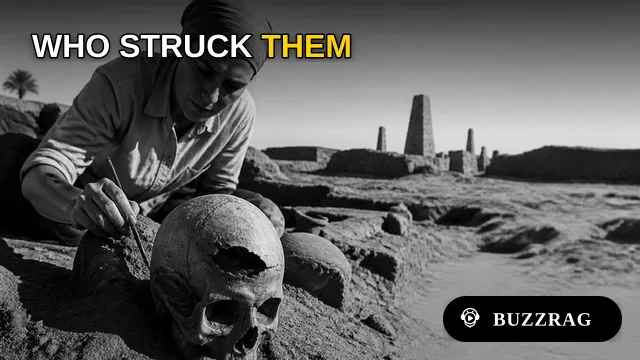
Abydos Skull Injuries Revive Debate on Royal Sacrifice
A forensic study found potentially fatal injuries in skulls from graves near Egypt’s first kings, strengthening a century-old case for retainer sacrifice.

Egypt's New Delta Project: Green Miracle or Mirage?
Egypt is engineering a new Nile in the desert. But satellite data, groundwater depletion, and a troubling history raise urgent questions about who this is really for.

Ancient Megastructures That Still Puzzle Engineers
From Göbekli Tepe to the Great Pyramid, these ancient sites raise genuine questions about what early human societies were capable of building—and how.