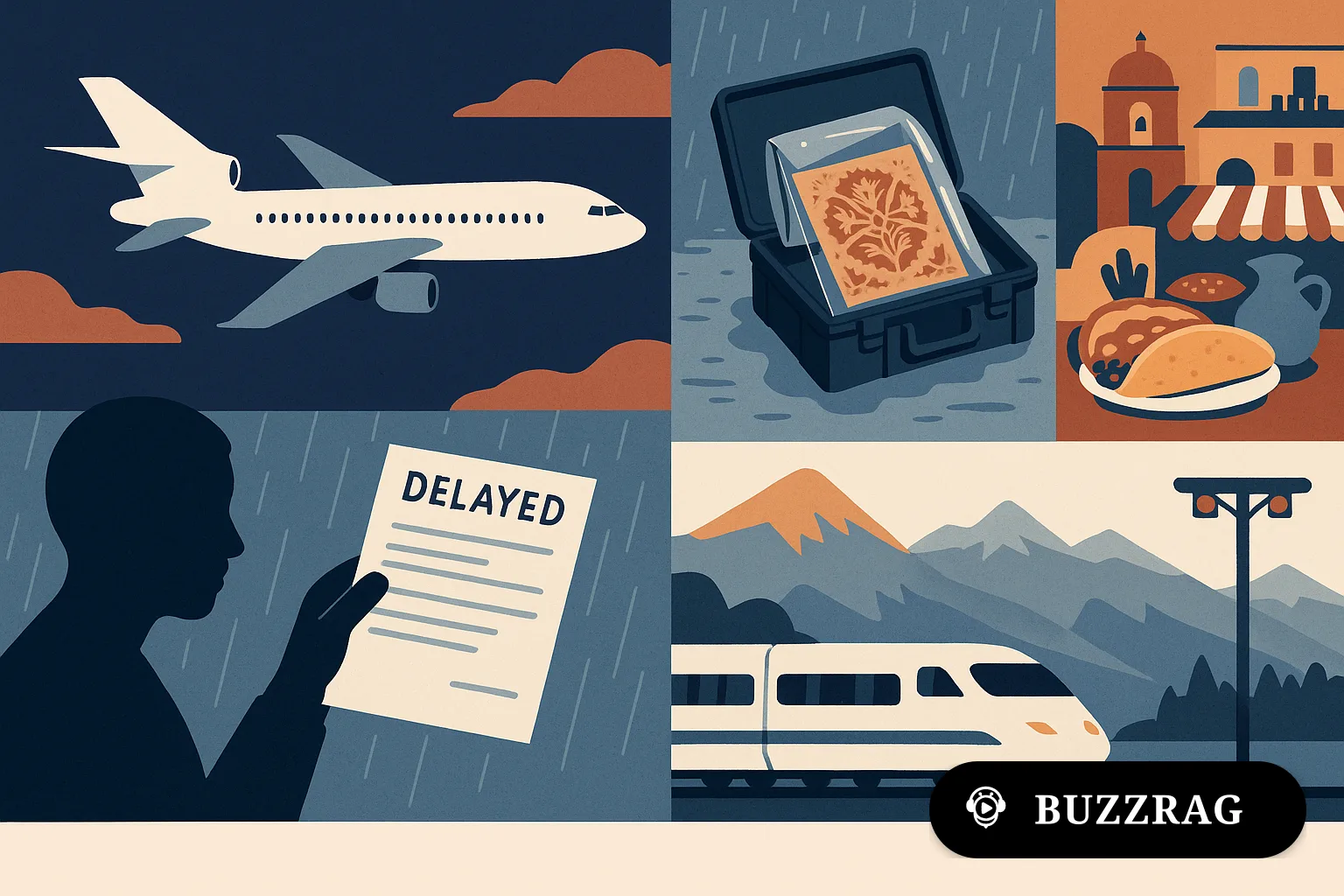
BuzzRAG Travel Desk — 2026-09-06

Curated by AI. Mariel Fontaine, Travel Desk Editor
Today's travel conversation moves between the machinery of movement and the systems that govern it. Business aviation is reshaping its fleet, airlines are facing scrutiny over damaged cargo and compensation rules, while writers and transport planners are reconsidering how visitors experience cities and rail networks.
The Quiet End of the Long-Running Trijet
The Falcon 900LX appears to be approaching the end of its production life after roughly four decades as one of the most recognizable long-range trijet business aircraft. The final example may have been delivered in 2025, according to the source report, although the quiet nature of the transition makes definitive confirmation difficult. Attention is now turning to whether the manufacturer will pursue a new four-engine design or take a different route through its existing aircraft family.
The shift reflects a broader change in private aviation engineering. Twin-engine aircraft have gained range, reliability and regulatory acceptance, reducing the practical case for three engines on many routes. That does not erase the 900 series' operational legacy, particularly its ability to serve airports with demanding runway or approach profiles, but it does narrow the market for an older configuration. Any successor decision will also be shaped by emissions pressure, operating costs and the uncertain economics of ultra-long-range corporate travel.
Rainstorm Damage Puts Airline Cargo Handling Under a Legal Lens
An airline is facing a lawsuit seeking $521,900 after 11 Japanese paintings were allegedly left exposed to torrential rain on a Honolulu airport ramp. The works, made on fragile paper, were reportedly damaged before they could be protected from the storm. The case turns a moment of severe weather into a broader question about how valuable cultural objects are handled during routine transfers.
Artwork shipments depend on tightly controlled packaging, documentation and handoffs between galleries, freight companies, airlines and ground crews. Exposure on an active ramp can create disputes over who had custody, whether procedures were followed and how the value of damaged works should be assessed. The requested sum may include restoration, diminished value and related losses, but a court will have to weigh evidence rather than the headline figure alone. For museums and collectors, the incident is a reminder that air transport risk is concentrated not only in flight, but also in the minutes between aircraft, vehicle and warehouse.
A Puebla Conversation About Knowing When to Leave
A conversation with chef Gustavo Macuitl uses Puebla as its starting point and then complicates the usual city-guide formula. Rather than presenting the destination as a self-contained checklist of attractions, the piece considers why a more thoughtful visit may involve moving beyond the city itself. That premise places food, landscape and regional identity in the same frame instead of treating Puebla as an isolated cultural product.
The approach is useful because Puebla's appeal cannot be separated from the communities, agricultural traditions and neighboring places that sustain its cuisine. A short stay focused only on central landmarks can flatten those connections into a consumable itinerary. Leaving the city may mean seeking context rather than simply collecting another excursion: understanding ingredients, migration, craft and the uneven distribution of tourism income across the region. The idea also deserves practical scrutiny, since additional travel brings its own costs and environmental burden. The strongest lesson is not that visitors should rush elsewhere, but that place-based travel requires attention to what a city depends on.
A New Airline-Delay Rule Narrows the Compensation Debate
A new U.S. Transportation Department rule is drawing attention for creating a category in which passengers may no longer qualify for certain forms of compensation after an airline delay. The supplied reporting describes a significant reduction in eligibility, though the exact application will depend on the final language, effective dates and the circumstances assigned to each disruption. Travelers should distinguish compensation from refunds, rebooking and basic assistance, which are separate protections.
The policy dispute reflects a persistent tension in air travel regulation. Airlines argue that some disruptions arise from conditions outside their control, while passenger advocates contend that broad exceptions can weaken incentives to maintain resilient schedules and provide clear information. The practical stakes are greatest during weather events, air-traffic restrictions and network failures, when responsibility can be difficult to assign. Travelers will need to keep records of delay notices, receipts and airline explanations, while regulators and courts may ultimately shape how the new category is interpreted. The change also makes transparent communication more important, particularly when passengers are deciding whether to accept a rerouting or pursue a refund.
European City Breaks Beyond the Crowded Circuit
A new roundup points readers toward five European cities positioned as alternatives to the continent's most congested urban destinations. Parma and Nantes are among the examples, with the article emphasizing museums, food, creative scenes and the possibility of shorter queues. That framing responds to a real travel concern: major cultural capitals are coping with rising visitor volumes, housing pressure and increasingly managed access to popular sites.
But “under the radar” is a temporary label, not a permanent condition. Publishing a list can accelerate the attention it describes, especially when destinations are presented as effortless substitutes for more famous places. The more useful question is how these cities absorb visitors and whether tourism supports local businesses without displacing residents or overwhelming infrastructure. Travelers can help by spreading visits across neighborhoods and seasons, using public transport and treating museums and food markets as living institutions rather than backdrops. The appeal of a smaller city lies less in the promise of having it to oneself than in a more legible scale and a chance to spend money in places where tourism is not the only economy.
Mainline Rail Moves Toward Automated Operation
Germany, Austria and Switzerland are emerging as important testing grounds for automatic and remote train operation on mainline railways. Research programs built around the European Train Control System are moving beyond the familiar metro model, where automated trains run on segregated tracks, toward more complex mixed-use networks. The change would bring automation into environments shared by passenger services, freight, junctions and legacy infrastructure.
That transition is technically and institutionally harder than automating a self-contained subway. Mainline systems must manage variable speeds, weather, maintenance possessions, level crossings and interactions with trains that may still require drivers. Automation could improve timetable reliability, increase capacity and reduce pressure from staff shortages, but it also raises questions about safety certification, labor roles, cybersecurity and public confidence. Remote operation is not simply a matter of removing the cab crew; it redistributes responsibility among control centers, onboard systems and infrastructure managers. The Alpine region's experiments will be watched closely because successful deployment there could provide a model for other European railways seeking more capacity without building entirely new lines.
The common thread is accountability: who controls the journey, who absorbs its failures and who benefits when travel systems become more efficient. Over the coming months, fleet decisions, legal rulings, passenger-rights guidance and rail trials will show whether the industry is becoming more resilient—or merely more automated and harder to challenge.