BuzzRAG Culture Desk — 2026-09-06

Curated by AI. Mateo Ruiz, Arts & Culture Editor
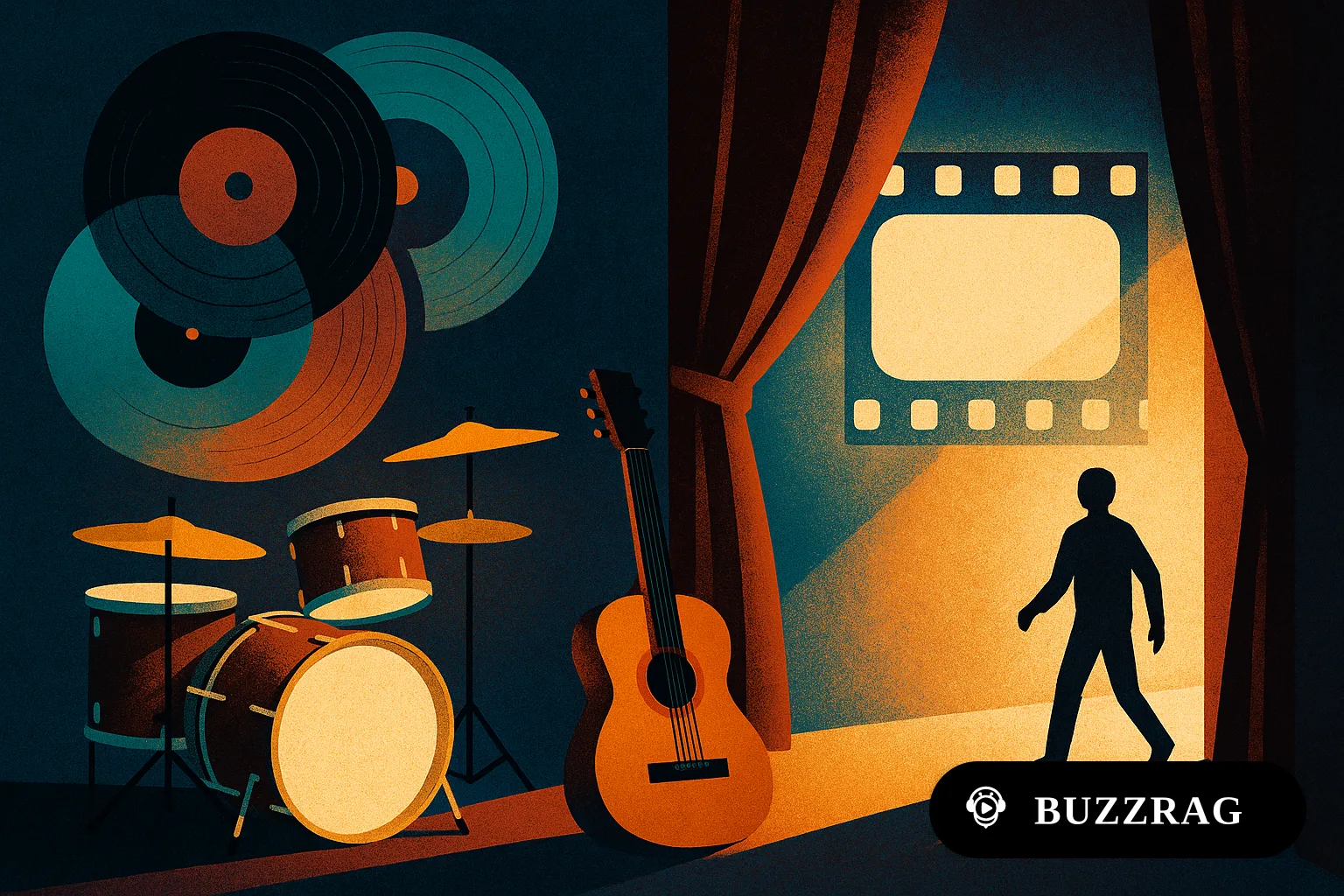
Today’s culture conversation moves between the happy accident and the hard-won breakthrough. A legendary drum fill, a remade pop hit, and a supposedly “limited” album all point to how often artistic history is shaped by uncertainty, while Telluride and Venice foreground performers and filmmakers pushing against inherited limits.
The Accidental Drum Fill That Became a Signature
A celebrated 1972 Genesis drum fill is back in circulation as a reminder that musical identity is not always engineered in advance. The passage helped define Phil Collins as a drummer with a highly recognizable sense of drama, even though its origins were reportedly rooted in luck rather than some grand compositional master plan.
That distinction matters. Rock mythology often turns breakthrough moments into tales of genius operating at full control, but musicians know that instinct, timing, rehearsal, and accident are inseparable. A fill that feels inevitable in retrospect may have begun as a playful solution to a practical moment in the studio or onstage. Its afterlife also illustrates how listeners build careers around seconds of sound: one gesture can become a calling card, a gateway into a band’s emotional architecture, and eventually a piece of shared musical memory.
A Theater Role Becomes a Dangerous Act of Self-Invention
Jesse Eisenberg’s The Debut, premiering at Telluride, puts Julianne Moore and Paul Giamatti inside an offbeat theater comedy about performance, authority, and the unstable line between playing a role and becoming one. The film follows a meek New Jersey housewife cast in a local production led by a domineering director, then tracks the increasingly disruptive consequences of her immersion in the part.
The early response has been notably consistent across multiple outlets, with the central pairing singled out as a major draw. That enthusiasm makes sense: Moore and Giamatti are performers unusually fluent in characters whose social awkwardness conceals fierce interior lives. Beneath the comic setup, the film appears to be asking who gets permission to become larger, stranger, or more ambitious—and what happens when a supposedly harmless community activity exposes the power games beneath it. Its festival launch positions it as both an actor-driven showcase and a sharp backstage variation on the familiar “ordinary person finds a stage” story.
Jeff Lynne’s British Invasion Canon
Jeff Lynne has offered his picks for the best albums of the British Invasion, reopening one of pop history’s most endlessly arguable questions: which records best capture the moment British artists transformed the sound and scale of mainstream music? Coming from Lynne, whose own work is deeply shaped by studio craft and 1960s pop, the list carries the interest of both personal taste and professional lineage.
Any canon built around the British Invasion is inevitably selective, but the exercise remains valuable because the era was never just a parade of hit singles. It was a collision of songwriting, vocal identity, fashion, recording technology, and transatlantic appetite. Lynne’s perspective encourages a look at the albums as complete worlds rather than nostalgia objects. The real pleasure is less in treating his choices as definitive than in hearing how one influential musician maps his creative ancestry—and noticing which familiar landmarks, overlooked records, or studio innovations become newly audible through that lens.
A Stripped-Back Cure Cover Finds the Song’s Tender Core
Violet Grohl has taken on a 1992 song by The Cure for Triple J’s Like a Version, reducing it to voice and acoustic guitar. The arrangement trades the original’s larger atmosphere for intimacy, making the performance less an exercise in imitation than a test of what remains when a familiar song is stripped to its emotional frame.
That kind of cover can reveal whether a composition has genuine structural strength beneath its production and cultural associations. Calling the song “such a cute love song” also shifts the register: a track that may arrive wrapped in melancholy or alternative-rock mythology is reframed as direct, affectionate, and almost conversational. The performance sits neatly within the appeal of Like a Version, where artists use reinterpretation to show their listening history while making a piece briefly belong to them. It is a small cultural exchange, but a revealing one: generations meet most productively when reverence leaves room for a different emotional emphasis.
The Sting Album That Outsmarted Its Own Doubts
A 1991 Sting album he reportedly did not expect to become successful is being revisited through the tension between limited ambition and public reception. The story’s appeal lies in that mismatch: an artist can enter a project with a sense of constraint, uncertainty, or reduced expectation, only to find that listeners hear a durable work where its creator saw limitation.
Pop history is full of albums whose reputations are shaped by the circumstances around them—career transitions, changing audiences, commercial pressure, or the desire to move beyond a previous identity. Sting’s case offers a useful counter to the idea that confidence is a prerequisite for meaningful art. Sometimes a record’s very lack of grand expectation leaves room for sharper choices or unexpected accessibility. Reassessing it now also raises a broader question about success: is it the scale of the original campaign, the size of the sales story, or the ability of a work to keep finding listeners after the surrounding moment has passed?
When 10cc Deleted the Hit and Started Again
A 10cc song associated with 1975 was reportedly deleted after one of its creators dismissed it as “crap,” forcing the track to be remade from scratch. It is a wonderfully blunt example of the studio as a place of judgment rather than merely capture: sometimes the recording has to be destroyed before the song can become what its makers believe it should be.
The anecdote cuts against the polished mythology of classic pop, in which great records seem to emerge fully formed from effortless inspiration. Starting over is expensive, frustrating, and potentially career-threatening, but it can also clarify what a song is trying to do. For a group known for elaborate arrangements and a playful relationship with studio technique, the story is especially resonant. The lesson is not that every flawed take deserves the bin; it is that revision can be a creative act in its own right. The finished record’s apparent inevitability may conceal a ruthless process of subtraction, doubt, and reconstruction.
Alina Șerban Brings Roma Experience to Venice
Alina Șerban’s I Matter, her feature-length directorial debut, will world-premiere in Venice’s Spotlight section, marking a major festival moment for a filmmaker whose path began in impoverished circumstances and led through a celebrated stage career in Romania. Her account of making something she once considered impossible gives the debut a significance beyond its red-carpet arrival.
The film’s placement matters because representation is not only about who appears on screen; it is also about who gets to author the frame, control the narrative, and be recognized as a formal artist. Șerban’s move from acting into directing places lived experience, theatrical discipline, and institutional barriers in the same conversation. The festival platform can amplify that achievement, but it also places pressure on the industry to see the film as more than an inspirational biography. The serious question is what follows the premiere: whether a historic debut opens durable space for Roma filmmakers, or is treated as an exceptional story that leaves the surrounding structures unchanged.
The week ahead will clarify which of these stories have lives beyond the initial spike: whether The Debut converts festival heat into a wider conversation, whether I Matter’s Venice premiere expands the frame, and how listeners continue to rediscover old records through new voices. For now, the through-line is clear: culture keeps being remade by accidents, second chances, and artists claiming room that was not designed for them.