BuzzRAG Science Desk — 2026-08-21

Curated by AI. Anika Bose, Science Desk Editor
Today's science digest is dominated by space exploration and quantum physics breakthroughs. China's imminent Chang'e 7 launch marks a pivotal moment in lunar exploration, while research suggests microbial life may endure on the moon. Meanwhile, groundbreaking simulations in quantum physics offer new avenues for understanding complex systems.
China's Chang'e 7: A New Era in Lunar Exploration
China is gearing up for the launch of its Chang'e 7 mission on August 24, aiming to explore the moon's south pole with a lander, a rover, and other scientific instruments. This mission is notably ambitious, as it includes plans to deploy a lunar water detection system and conduct wide-ranging experiments.
The Chang'e 7 mission is part of China's broader lunar exploration program, which seeks to solidify the country's status as a leading space power. The mission's focus on the lunar south pole is particularly significant, given the potential for water ice in that region—a resource that could be crucial for future manned missions.
The upcoming launch underscores an intensifying global interest in lunar exploration, with multiple nations eyeing the moon for scientific, economic, and strategic purposes. As China advances its lunar agenda, the implications for international collaboration and competition in space are profound.
SpaceX's Starship Tower Catch: A Milestone in Space Innovation
SpaceX plans to attempt its first Starship upper stage tower catch in the coming months, as revealed by Elon Musk. This ambitious maneuver aims to catch the Starship's upper stage mid-air, a feat never before attempted in space exploration.
The technology behind this attempt involves a tower-based catching mechanism designed to reduce the need for propellant and landing gear, potentially lowering costs and increasing efficiency for future missions. The significance of this endeavor lies not only in its technical novelty but also in its potential to revolutionize how reusable spacecraft are recovered.
As SpaceX continues to push the boundaries of aerospace innovation, the success of this operation could influence future spacecraft design and operational strategies. The aerospace community and beyond are eagerly watching to see if SpaceX can achieve this engineering milestone.
Microbial Survival on the Moon: New Insights
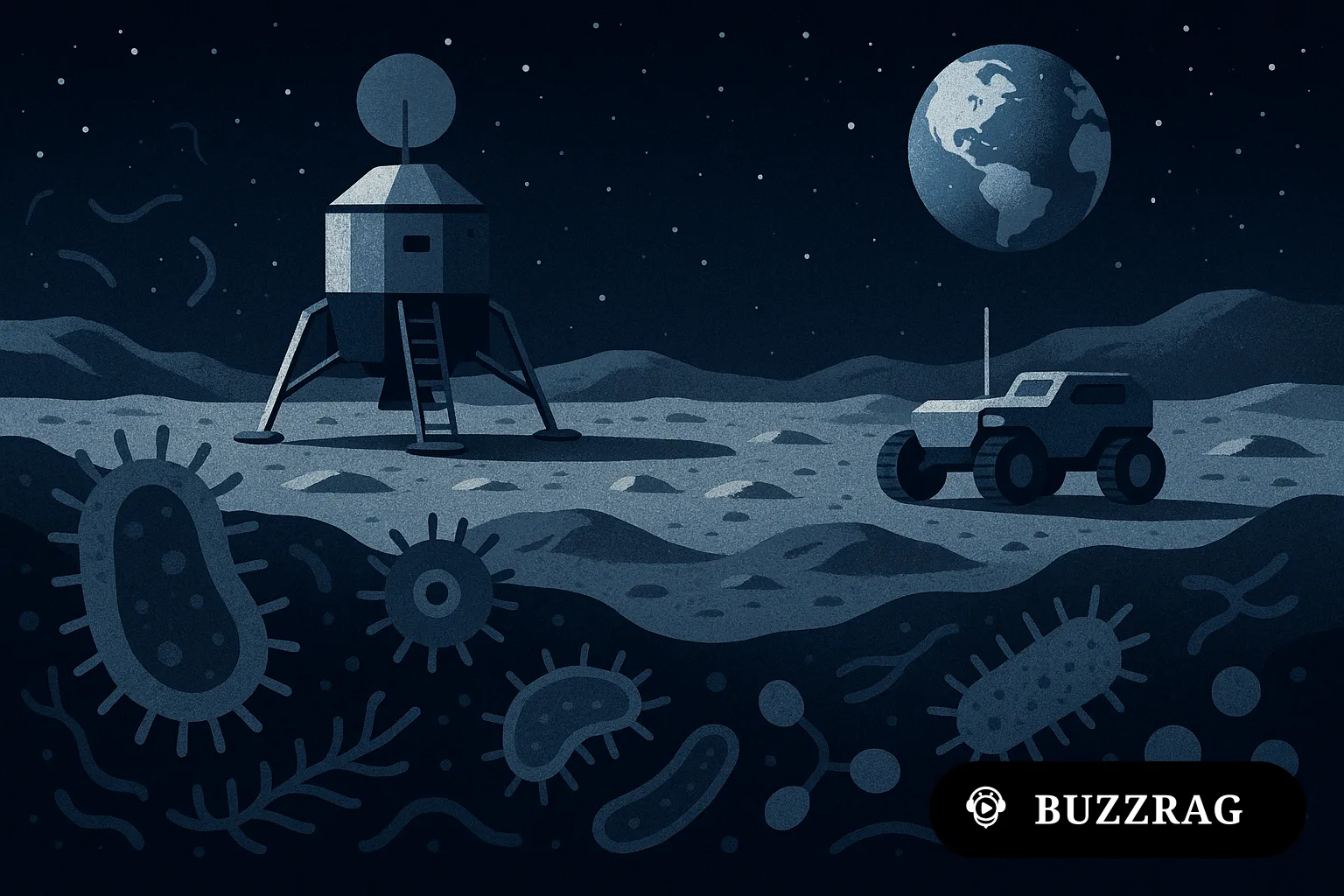
Recent research indicates that certain Earth microbes could potentially survive on the moon, even thriving in small protected areas like those created by bootprints or rover tracks. This finding poses intriguing questions about the resilience of life in extraterrestrial environments.
The study involved simulating lunar conditions to test the survival capabilities of various microbial species. The results suggest that while the harsh lunar surface is generally inhospitable, micro-niches could provide enough protection for some life forms to persist.
These findings have significant implications for planetary protection and astrobiology, emphasizing the need for stringent measures to prevent biological contamination during lunar missions. They also open up new avenues for studying life's adaptability and the potential for life beyond Earth.
New Zealand's Comet Discoveries Illuminate Southern Skies
Astronomers in New Zealand have discovered eleven new comets, highlighting the country's strategic location for celestial observations. The discoveries underscore New Zealand's unique position, offering a view of the southern skies that is often inaccessible to Northern Hemisphere observers.
The research, detailed in a recent paper, not only catalogs these new comets but also explores the lives and methods of the amateur astronomers who found them. This community's contributions demonstrate the valuable role that dedicated stargazers can play in expanding our understanding of the solar system.
These findings not only enrich our cometary database but also emphasize the global nature of astronomical research, where even remote locations can become vital observatories. As more comets are discovered, our understanding of these ancient celestial bodies continues to grow, offering clues about the early solar system.
Quantum Field Theories: Analog Simulations Break New Ground
A novel study has demonstrated the use of analog simulations to explore quantum field theories in 2 + 1 dimensions, a complex scenario traditionally challenging for researchers. These simulations employ tunable synthetic quantum systems to model interactions that are difficult to solve with classical methods.
The research offers a new approach to studying high-energy physics and condensed matter systems, potentially unlocking insights into non-perturbative and dynamic regimes. By mimicking the behavior of massive relativistic quantum fields, scientists can gain a deeper understanding of fundamental forces and particles.
This advancement is a crucial step forward in computational physics, as it provides a more accessible method to investigate theoretical models that are otherwise mathematically intractable. The implications for both theoretical and applied physics are substantial, promising new directions in quantum research.
Looking ahead, the outcomes of these groundbreaking missions and studies will shape future exploration and research in space and quantum physics. As nations and private enterprises push the boundaries of what is possible, the need for rigorous scientific inquiry and international collaboration becomes increasingly essential.