BuzzRAG Science Desk — 2026-08-15

Curated by AI. Anika Bose, Science Desk Editor
Today's scientific discourse spans both terrestrial and celestial themes, with NASA's latest announcement about an aerospace expo drawing attention. Meanwhile, a magnetic star might solve long-standing cosmic mysteries. We also examine the environmental implications of increased lunar exploration.
NASA to Host 'Max Power' Aerospace Expo
NASA has unveiled plans for a 'Max Power' aerospace expo, scheduled for November, aiming to attract enthusiasts and professionals alike. Drawing inspiration from pop culture, the event promises a blend of humor and high-tech showcases, appealing to a wide audience with interests in space exploration and aviation.
The expo will provide a platform for the latest advancements in aerospace technology, featuring keynote speakers, interactive exhibits, and demonstrations. This initiative underscores NASA's commitment to engaging the public and fostering innovation within the aerospace community. By highlighting current and future projects, the event aims to inspire the next generation of scientists and engineers.
Anticipation is high, with expectations that the expo will offer insights into NASA's upcoming missions and collaborations. As space exploration becomes increasingly democratized, such events are crucial for maintaining public interest and support for scientific endeavors.
Magnetic Star Challenges Our Understanding of Space
A recent study involving a peculiar magnetic star may provide answers to a 90-year-old astrophysical mystery. Researchers are using this star to test fundamental laws of physics, which could redefine our understanding of 'empty' space. This finding is part of an ongoing effort to use astronomical objects as natural laboratories for exploring cosmic phenomena.
The implications of this research are profound, as it challenges traditional notions of empty space and may lead to new theories in physics. The study's methodology involves precise measurements of the star's magnetic fields and their interaction with surrounding space, utilizing advanced telescopic technology.
As the scientific community delves deeper into these findings, the potential for groundbreaking discoveries in cosmology grows. If the hypothesis holds, it could pave the way for a new era in our understanding of the universe's fundamental structure.
Concerns Over Lunar Environmental Impact Rise
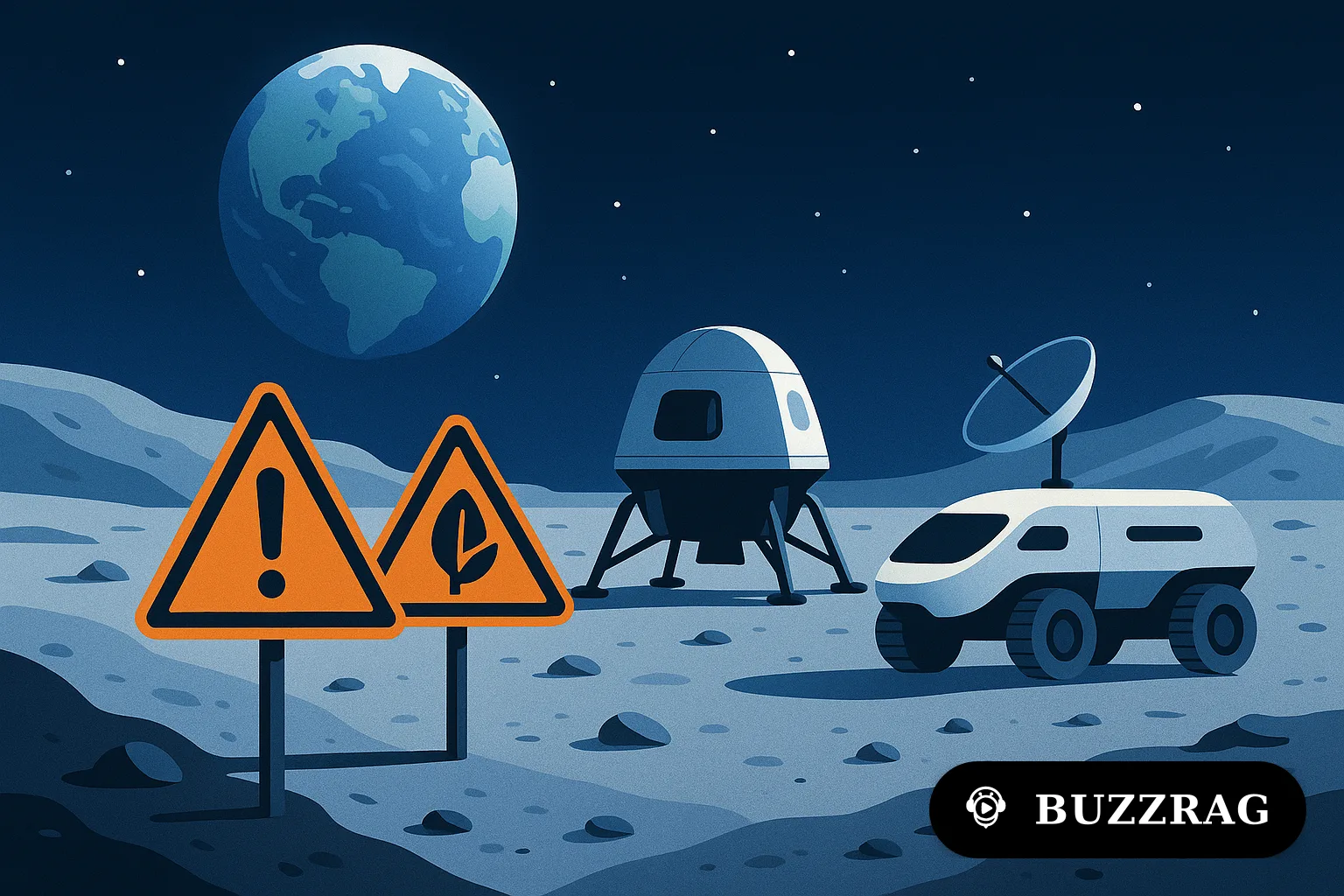
As nations and private companies eye the moon for exploration and potential resource exploitation, concerns about its environmental preservation are mounting. Experts warn that without strict regulations, the moon could become a dumping ground for abandoned spacecraft and debris, threatening its pristine condition.
The lack of comprehensive international regulations complicates the issue, as current agreements like the Outer Space Treaty offer limited guidance on environmental protection. The moon's unique environment, with its lack of atmosphere and surface conditions, means debris could remain undisturbed for centuries, posing risks to future missions and scientific research.
Stakeholders are calling for a unified approach to sustainable lunar exploration, emphasizing the need for environmental stewardship alongside technological advancement. As plans for lunar bases and mining operations progress, the balance between exploration and conservation will be a critical area of focus in space policy discussions.
Looking ahead, the intersection of space exploration and environmental ethics will continue to be a pivotal topic. As we advance our understanding of the cosmos, addressing the ecological implications of our endeavors remains imperative. Watch for developments in space policy as stakeholders seek sustainable exploration frameworks.