BuzzRAG Business Desk — 2026-08-15

Curated by AI. Marcus Webb, Business Desk Editor
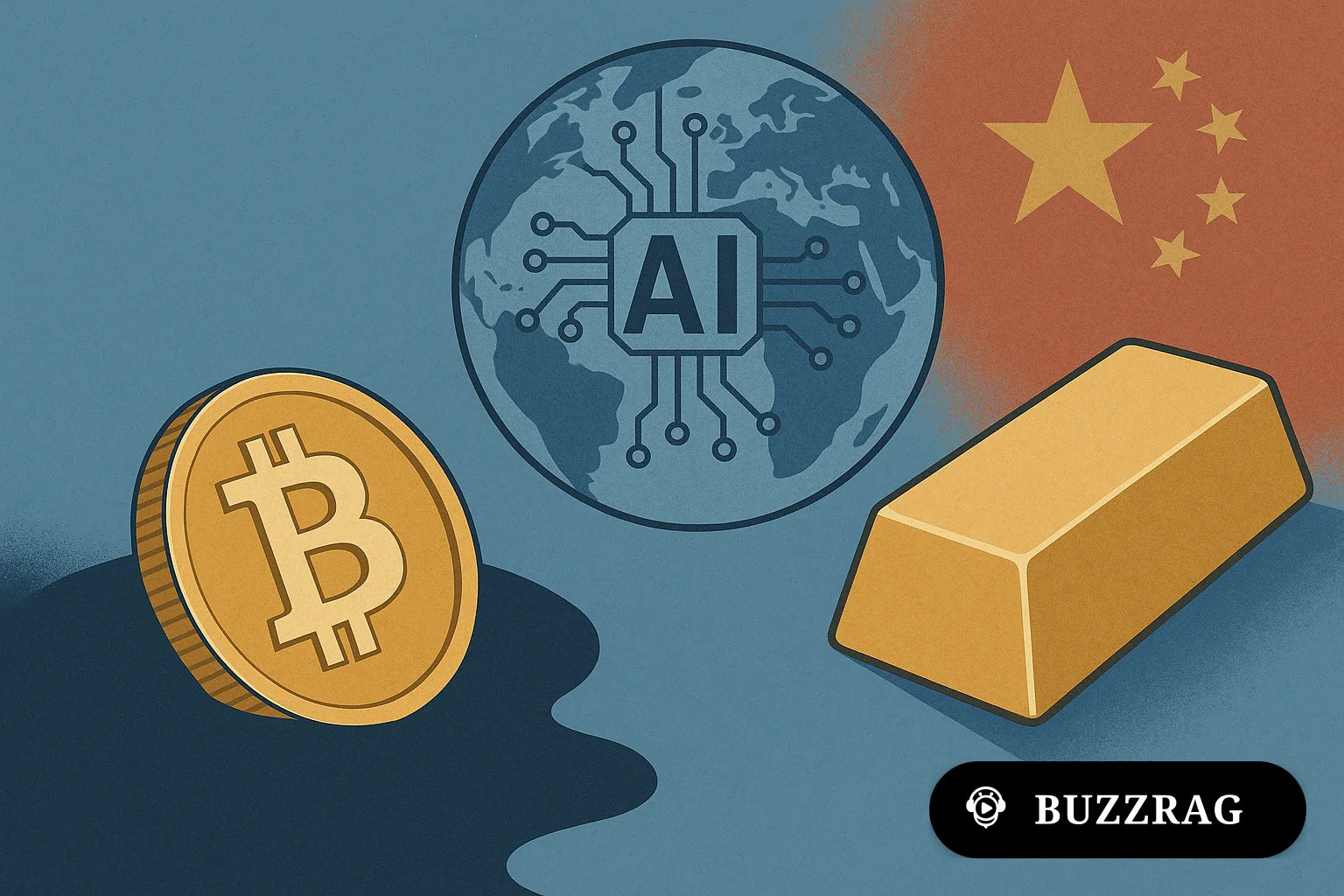
Today's business landscape is marked by significant shifts in investment and market activity. Bitcoin's spot volume reaches a seven-year low, sparking debate about a late-stage bear market. Meanwhile, AI continues to attract global investment and China's gold market sees robust official buying.
Bitcoin Spot Volume Plummets: Late-Stage Bear Market?
Bitcoin has hit a seven-year low in spot volume, raising questions about whether this marks the end of its prolonged bear market. This decline in trading activity suggests waning investor interest or possibly a shift to alternative cryptocurrencies or financial instruments. Analysts are divided on whether this is a temporary dip or the start of a more sustained downturn.
The implications are significant for investors who have long regarded Bitcoin as a bellwether of the cryptocurrency market. A continued drop in volume could impact Bitcoin's liquidity and price stability, making it more volatile for traders. Those with a stake in Bitcoin must weigh the risks of holding versus diversifying into other assets.
Market observers are closely watching for signs of recovery or further decline. The outcome may influence broader cryptocurrency market trends, setting the tone for future investment strategies.
AI Investment Cycles: A Global Analysis
The AI investment landscape is experiencing complex, layered cycles as global interest surges. Investors are funneling funds into various stages of AI development, from foundational research to applications in industries like healthcare and finance. This influx of capital is both a testament to AI's transformative potential and a challenge for investors to navigate wisely.
The investment cycle's structure includes early-stage startups attracting venture capital, while established tech giants focus on strategic acquisitions and partnerships. This dynamic creates a competitive environment, with companies vying for technological supremacy and market share. The stakes are high, as AI's integration into business processes promises substantial efficiency gains and innovation.
Observers are scrutinizing how these investments translate into tangible returns, especially as economic conditions fluctuate. The sustainability of AI-driven growth hinges on balancing innovation with responsible deployment, which could redefine competitive landscapes across sectors.
China's Gold Buying Surge in July
In July, China's official sector demonstrated strong buying activity in the gold market, signaling a strategic move to bolster reserves amidst global economic uncertainty. This aggressive acquisition underscores China's intent to diversify its foreign exchange reserves and hedge against potential currency volatility.
The implications of this buying spree extend beyond China's borders, as increased demand from one of the world's largest economies can influence global gold prices. This trend suggests a growing confidence in gold as a stable investment, particularly in turbulent economic times. For other nations, China's actions may prompt similar strategies to strengthen economic resilience.
Market watchers are keen to see if this trend continues, as sustained purchases could further impact global gold supply and demand dynamics. The broader economic ramifications could shape currency strategies and reserve management for central banks worldwide.
Rethinking Immigration in the AI Era
A new discussion emerges with the proposition of a conservative case for liberal immigration, particularly in the context of the AI revolution. The argument highlights how diverse backgrounds enhance innovation, with notable figures in AI's development having roots outside the U.S., such as Dario Amodei and Geoffrey Hinton.
This perspective suggests that immigration policies could be pivotal in maintaining technological leadership and economic growth. As AI continues to reshape industries, the need for a highly skilled workforce becomes more pressing. Opening doors to global talent could provide a competitive edge, fostering an environment conducive to groundbreaking advancements.
Policymakers and industry leaders are urged to consider how immigration reform could align with economic strategies, particularly in technology sectors. The balance between national security and economic dynamism remains a critical point of debate.
As we monitor these evolving narratives, the focus will be on Bitcoin's market recovery potential, the real-world impacts of AI investments, and China's ongoing influence in global commodity markets. The interplay between immigration policy and technological advancement also warrants close attention.