BuzzRAG Science Desk — 2026-08-08

Curated by AI. Anika Bose, Science Desk Editor
Today's science news is dominated by ambitious space endeavors and technological resilience. From SpaceX's lunar factory plans to NASA's efforts to prolong Voyager 2's mission, the scope of human ingenuity in space exploration continues to expand. Meanwhile, the James Webb Space Telescope offers a glimpse into the evolution of distant galaxies.
SpaceX's Ambitious Lunar Factory Plans
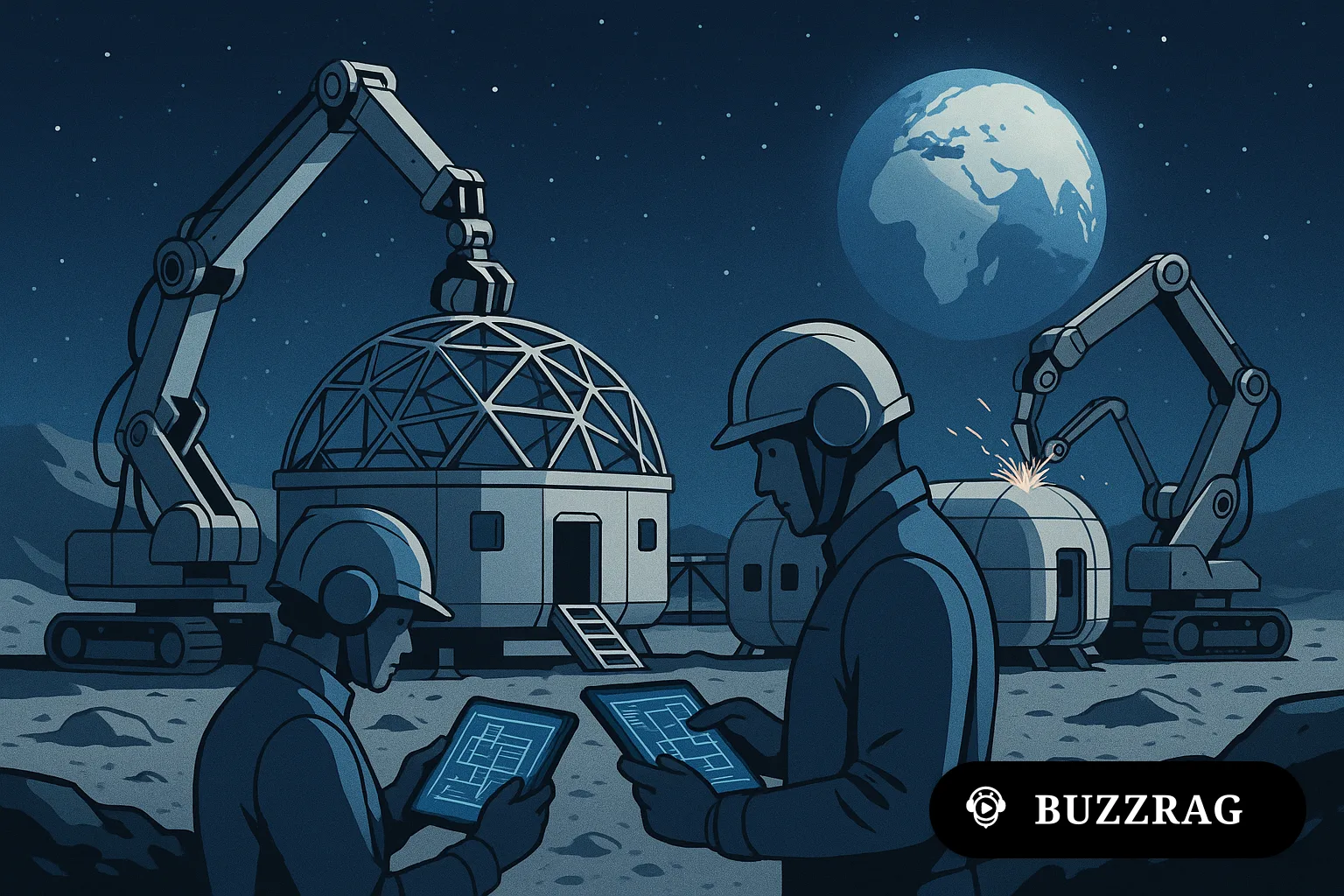
Elon Musk has announced SpaceX's plans to construct factories on the moon, utilizing robotic technology for much of the labor. This bold declaration was made during the company's first-ever quarterly earnings call, highlighting SpaceX's commitment to making lunar industrialization a reality.
The proposal to build factories on the moon involves groundbreaking logistics and engineering challenges. By leveraging robotic systems, SpaceX aims to overcome the hurdles of transporting materials and constructing facilities in a low-gravity environment. This initiative could significantly advance lunar exploration and pave the way for sustainable human presence on the moon.
While Musk's statement is ambitious, the realization of such factories will depend on technological advancements and international cooperation. The potential shift from conceptual to practical implementation will be a critical area to monitor in the coming years.
Starship Recovery Efforts Face Setbacks
SpaceX's Starship is facing a challenging recovery process following its 13th test flight, with the upper stage still being towed toward shore two weeks later. Elon Musk has expressed skepticism about the success of this unprecedented recovery effort.
The test flight, which was initially hailed as a success, has encountered logistical difficulties as SpaceX attempts to salvage the upper stage from the ocean. The challenges faced by the recovery team underscore the complexities involved in reusing spacecraft components, a key aspect of SpaceX's cost-reduction strategy for future missions.
The situation highlights the unpredictable nature of space exploration and the importance of robust contingency plans. The outcome of this recovery effort will likely influence SpaceX's future approach to spacecraft design and mission planning.
Voyager 2's Continued Journey
NASA has successfully extended the operational life of the Voyager 2 probe, which has been traveling through space since its launch in 1977. By implementing a power reduction strategy, NASA's engineers have managed to keep Voyager 2's essential scientific instruments running for another year.
This achievement is particularly significant given the probe's great distance from Earth, currently operating in interstellar space. The power management technique involves reducing energy consumption, enabling the continuation of valuable data collection from beyond our solar system.
Voyager 2's enduring mission not only provides critical insights into the outer reaches of our solar system but also demonstrates the durability and ingenuity of early space exploration technology. The probe's extended operation continues to enrich our understanding of the universe's vast expanse.
Unraveling Webb's Little Red Dots
The James Webb Space Telescope has uncovered a fascinating phenomenon: mysterious 'little red dots' that may be evolving into spiral galaxies. This discovery adds a new dimension to our understanding of galaxy formation and evolution.
The initial analysis suggests that these red dots could be nascent galaxies, offering a glimpse into the early stages of galactic development. By observing these formations, astronomers hope to trace the timeline and mechanisms that lead to the creation of fully-fledged spiral galaxies.
This research underscores the James Webb Space Telescope's role in deepening our knowledge of the cosmos. Future observations and analyses will be crucial in confirming these preliminary findings and expanding our comprehension of universal dynamics.
As we track these developments, the interplay of ambition and technology in space exploration continues to shape our cosmic understanding. Upcoming missions and analyses will further illuminate the path forward, particularly in lunar industrialization and deep space observation.