BuzzRAG AI Desk — 2026-08-08

Curated by AI. Sarah Ling, AI Desk Editor
Today's AI landscape highlights a pragmatic shift towards more efficient models and the growing importance of continual learning. Key topics include the viability of small language models, educational resources in AI, and the potential regulatory impacts of continual learning.
Efficiency in AI: The Case for Small Language Models
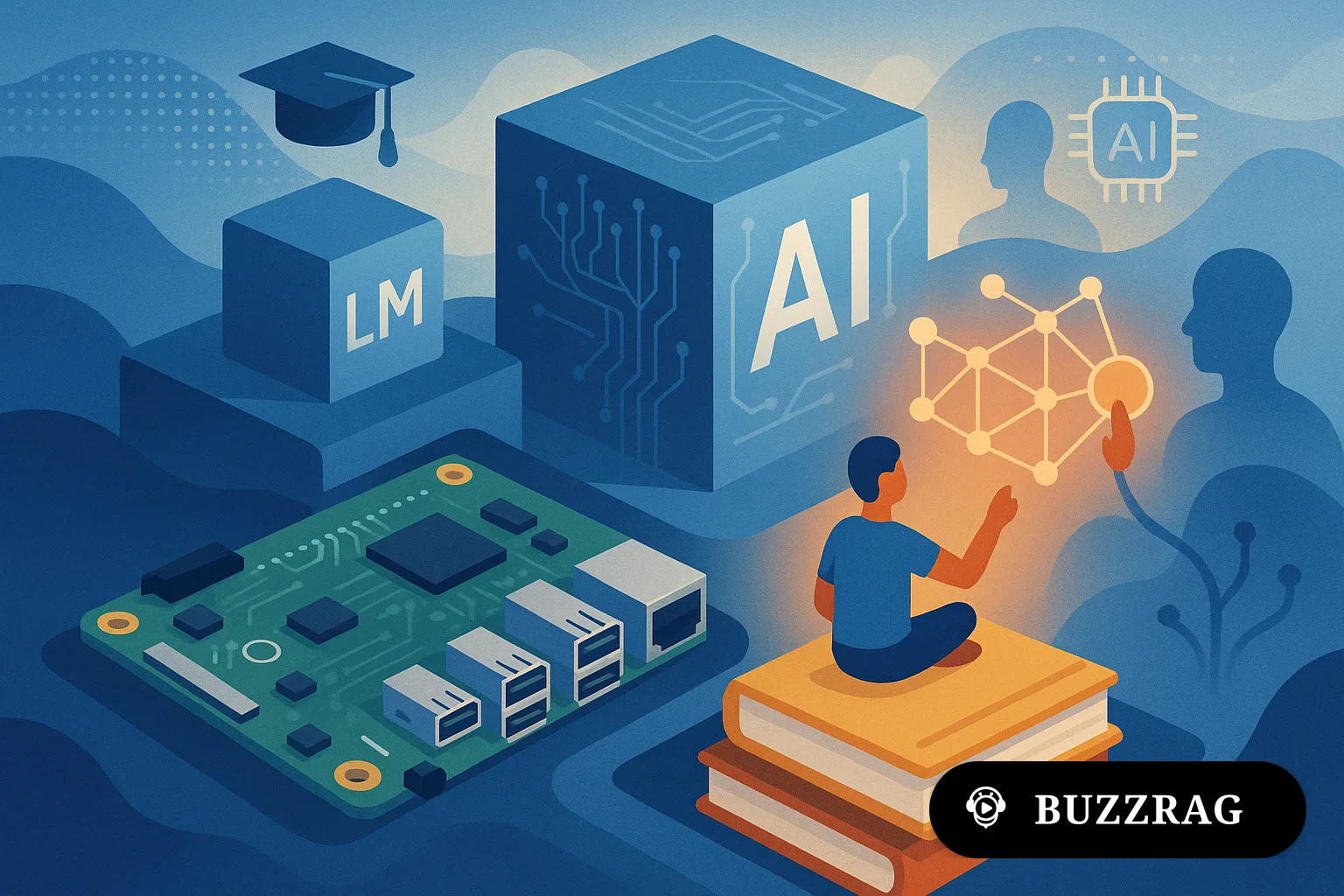
The latest discussion in AI circles is focused on the practicality and efficiency of small language models. Experts argue that deploying a 3 billion parameter model, as opposed to the massive 70 billion parameter models, can be more cost-effective and equally effective for specific tasks. This approach not only reduces computational expenses but also aligns with tailored AI applications where large-scale generalization isn't necessary.
The conversation is driven by the Hugging Face transformers library, which supports the implementation of these smaller models in production. This shift acknowledges the need for balance between model size and task-specific performance, emphasizing the importance of optimizing resources in AI deployment strategies. As AI models grow in complexity, this pragmatic approach could redefine how organizations allocate their AI budgets.
Free AI Courses Elevate Workforce Skills
A new wave of free educational resources is empowering professionals to harness modern AI technologies. The courses cover a range of topics, including generative AI applications, the Hugging Face ecosystem, and the development of retrieval-augmented generation (RAG) systems. These resources are crucial for individuals looking to integrate AI into their work environments or explore AI-driven product development.
The accessibility of these courses reflects a broader trend towards democratizing AI knowledge, encouraging a more widespread understanding of AI tools and methodologies. By equipping a diverse workforce with these skills, the industry can foster innovation and adaptability in AI use cases. This educational push is expected to accelerate the integration of AI across various sectors, leading to more informed and capable teams.
Raspberry Pi: A Gateway to Local AI Development
Building local AI applications on platforms like the Raspberry Pi is becoming increasingly popular. Enthusiasts are leveraging the Pi's hardware capabilities to create voice agents and other AI-driven projects. This hands-on approach not only makes AI more accessible but also bridges the gap between digital and physical computing environments.
The Raspberry Pi's adaptability allows developers to experiment with AI on a small scale before scaling their projects. By utilizing the GPU for computational tasks, developers are overcoming traditional CPU limitations, showcasing the Pi's potential as a cost-effective AI development tool. This trend underscores the growing interest in building AI systems that can operate autonomously or enhance user interaction in real-time.
Continual Learning and Its Regulatory Implications
Continual learning is poised to reshape the landscape of AI regulation and market dynamics. By enabling AI systems to learn continuously from new data, this approach challenges existing regulatory frameworks that are typically based on static AI models. The shift towards dynamic learning models necessitates a reevaluation of how AI systems are monitored and controlled.
The implications for market dynamics are equally significant, as continual learning can lead to more adaptive and responsive AI applications. This could drive competitiveness and innovation, as companies seek to leverage this technology to gain an edge. As the discussion around AI regulation evolves, continual learning is likely to be a focal point in shaping future policies and industry standards.
Redefining Software with AI-Native Approaches
Kwindla Kramer's insights into AI-native software development highlight the transformative potential of AI agents. By drawing parallels to the evolution of digital computing, Kramer emphasizes the need for a coherent software stack that supports the integration of AI agents in development processes. This approach advocates for a foundational shift in how software is conceptualized and built.
AI-native applications promise to enhance software capabilities by embedding intelligence directly into the development lifecycle. This could lead to more autonomous systems that can adapt and evolve without extensive human intervention. The conversation around AI-native software is critical as it could redefine the future roles of developers and engineers, emphasizing strategic oversight over manual coding.
Looking ahead, the integration of small models and continual learning could redefine AI deployment and regulation. As AI education becomes more accessible, the industry may see a surge in innovative applications and skilled practitioners driving the field forward.