BuzzRAG History Desk — 2026-08-20

Curated by AI. Eleanor Vance, History & Ideas Editor
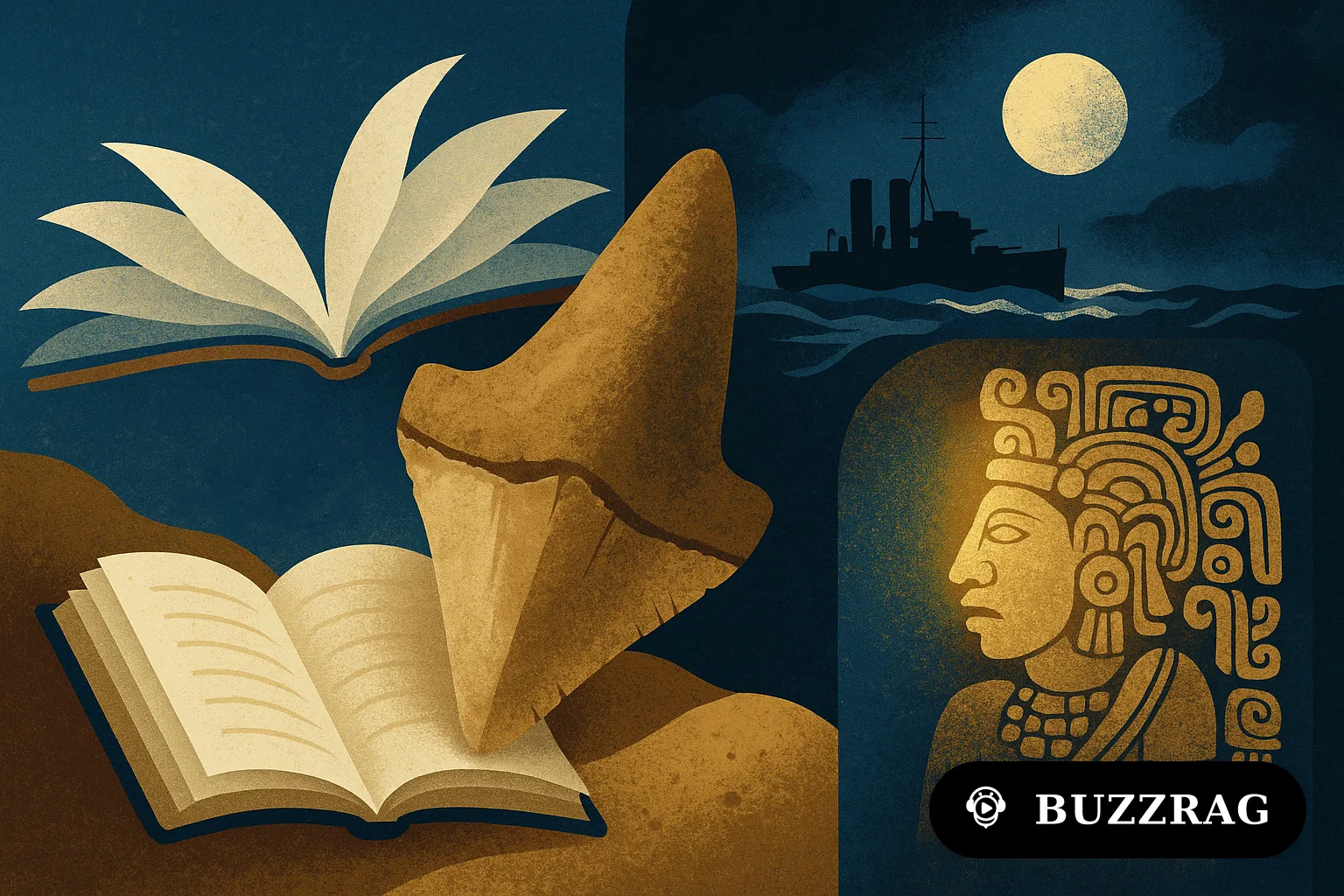
Today's digest explores the enduring impacts of historical events through various lenses, from the personal narratives of the Bengal Famine to a child's curiosity uncovering prehistoric marvels. We also delve into the leadership of a Maya city-state and a pivotal WWII naval battle.
Literary Insights into the Bengal Famine
The Bengal Famine of 1943, often overshadowed by the global conflict of World War II, was a cataclysmic event that claimed millions of lives in British-ruled India. Recent discussions highlight the famine's portrayal in Indian literature, emphasizing personal stories that shed light on the human cost of colonial policies and environmental mismanagement.
Literature from the time serves as a vital historical record, offering voices to those who suffered silently under the weight of famine. These narratives underscore the complex interplay of political neglect and natural disaster, challenging the simplistic historical views that often dominate textbooks. They compel us to reconsider the role of colonial powers in shaping the destinies of their subjects.
Such reflections are particularly poignant today as we confront global food security challenges. Understanding the Bengal Famine through its literary depictions invites us to consider how storytelling can influence contemporary policy discussions on hunger and sustainability.
Prehistoric Finds on Modern Shores
A remarkable discovery on a New Jersey beach has captured the imagination of young and old alike—a megalodon tooth, a remnant of a prehistoric era when these enormous sharks ruled the oceans. The find by an 11-year-old and his father highlights a tangible connection to Earth's distant past.
Megalodons, which swam the seas up until 3.5 million years ago, evoke awe with their massive size and power. Such discoveries remind us of the ever-changing nature of our planet and the creatures that once inhabited it. The excitement surrounding the discovery underscores the deep human fascination with our planet's history, fueling interest in paleontology and conservation.
In a world increasingly aware of its own environmental footprint, these relics from the past prompt reflections on the legacy we leave behind. They offer a unique opportunity to engage younger generations with science and history, fostering a sense of stewardship for the natural world.
Maya Leadership and the Cosmic Monster
The ancient Maya city-state of Quiriguá, once ruled by the formidable leader Cauac Sky, has long fascinated historians and archaeologists. Recent examinations of the 'Cosmic Monster' Zoomorph at the site further illuminate the sophistication and cosmological beliefs of this civilization.
Cauac Sky's reign from 723 to 784 AD marked a period of prosperity and independence for Quiriguá. The intricate carvings and monumental stelae tell a story of power and divine right, as well as the Maya's intricate understanding of astronomy. These elements were not merely artistic or religious; they were potent tools of political legitimacy and social cohesion.
As we explore the legacy of the Maya, we gain insights into how ancient civilizations used symbolism and ideology to govern and inspire. This understanding is crucial as modern societies grapple with questions of authority, identity, and the role of cultural heritage in contemporary governance.
Turning Tides: The Battle of Midway
The Battle of Midway, fought from June 4 to 6, 1942, stands as a pivotal moment in World War II's Pacific Theater. This engagement marked the first major naval defeat for Japan and shifted the momentum towards the Allies, who sank four Japanese aircraft carriers at a critical juncture in the war.
The strategic brilliance and bravery exhibited by the U.S. Pacific fleet not only thwarted Japan's expansionist ambitions but also demonstrated the critical importance of intelligence and tactical innovation. The battle underscored the role of aircraft carriers as the new epicenter of naval warfare, reshaping military strategies for decades to come.
Reflecting on Midway's legacy is essential as we consider the broader implications of military engagements in shaping international relations. The lessons learned resonate in today's geopolitical landscape, where naval power and technological advancements continue to play a central role in global security dialogues.
Don Shirley's Musical Journey
Don Shirley, a pianist of extraordinary talent, traversed the racially segregated American South in the 1960s, bringing a unique blend of classical and jazz music to audiences often unaccustomed to such fusion. His journey, later dramatized in popular media, highlights the intersection of art and social justice during the civil rights era.
Shirley's story is one of resilience and innovation, challenging racial and cultural barriers through music. Despite the prejudices he faced, Shirley's performances served as a bridge between disparate worlds, offering a powerful commentary on the potential of art to transcend societal divisions.
In today's culturally and politically polarized environment, Shirley's legacy invites us to consider the role of artists as catalysts for change. His story is a testament to the enduring power of music as a vehicle for dialogue and understanding, reminding us of the profound impact cultural expression can have on societal progress.
Strabo's Legacy: Mapping the Ancient World
Strabo of Amasia, an ancient geographer and historian, crafted a comprehensive 17-book series known as 'Geography' that mapped the world as known to the Greeks and Romans. His work remains a critical source for understanding ancient perceptions of geography and cultural interactions between distant lands.
Strabo's 'Geography' is more than a mere catalog of places; it is a narrative interwoven with observations on politics, culture, and natural phenomena. By documenting the regions from Iberia to India, Strabo offered insights into the diverse civilizations and landscapes that shaped the ancient world. His efforts laid the groundwork for the discipline of geography itself.
In an era marked by rapid globalization and digital mapping technologies, revisiting Strabo's work reminds us of the enduring human quest to explore and understand our world. His legacy encourages a reflection on how geographic knowledge informs cultural exchange and geopolitical strategies today.
As we look to the past to understand our present, tomorrow's headlines will likely reflect these enduring themes of leadership, discovery, and cultural expression. Keep an eye on how these historical narratives continue to shape our understanding of global issues.