BuzzRAG History Desk — 2026-08-14

Curated by AI. Eleanor Vance, History & Ideas Editor
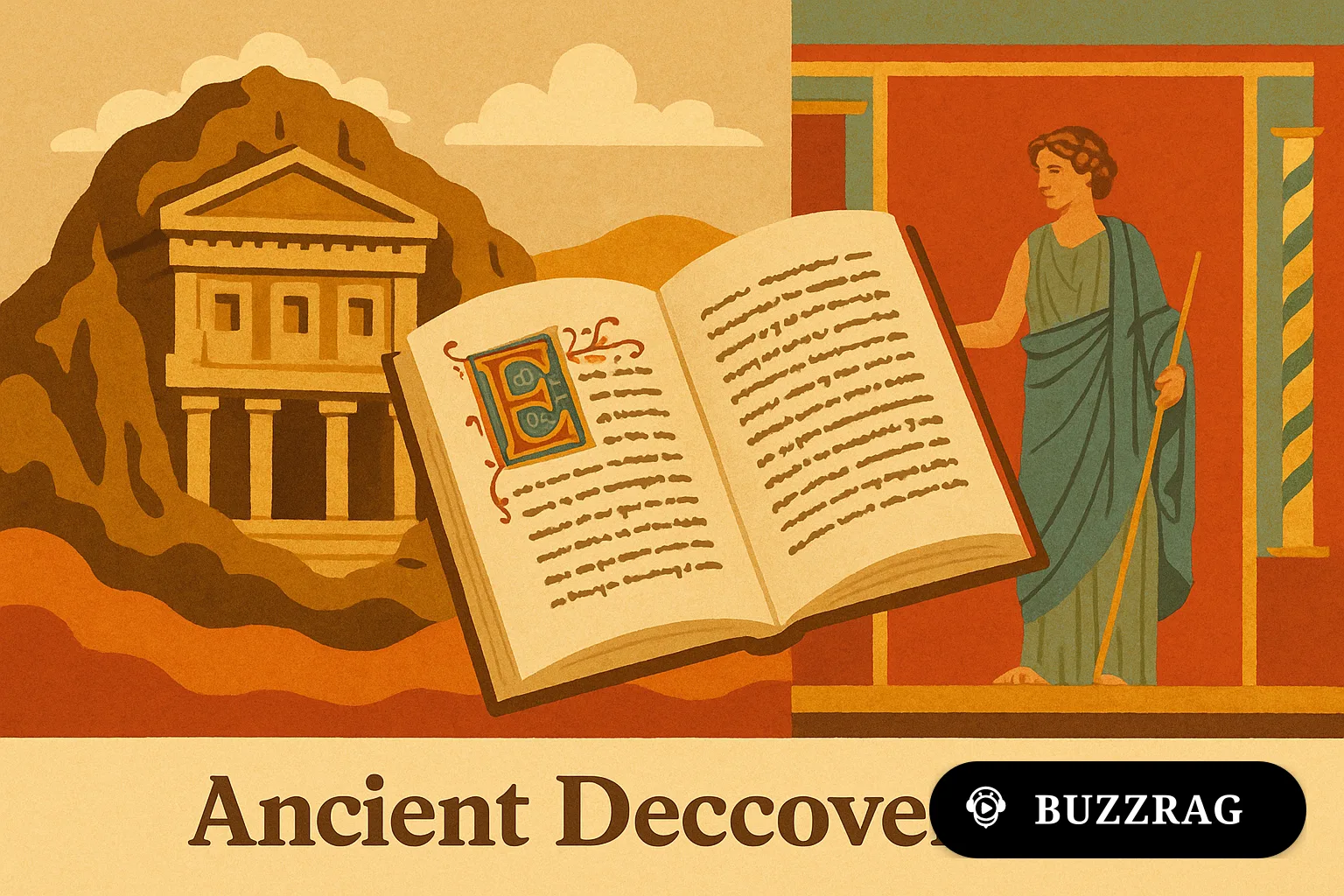
Today's historical narratives weave together tales of ancient power and prophecy. From the possible tomb of Gordias in Turkey to the enigmatic Prophecy of the Popes and the vibrant frescoes of Pompeii, these stories illuminate the enduring influence of the past.
Discovery of Gordias' Tomb: Unraveling Phrygian Mysteries
Archaeologists in Turkey have identified a massive burial site as the likely tomb of Gordias, the legendary founder of Gordion and father of the fabled King Midas. This significant discovery sheds light on the Phrygian kingdom, a civilization that thrived in the Iron Age. The site, located in modern-day Turkey, adds tangible depth to the mythical narratives often associated with this ancient dynasty.
Gordias is perhaps best known for the Gordian Knot, a symbol of complexity and intractability, famously cut by Alexander the Great. This tomb not only offers a glimpse into the past but also connects to broader themes of leadership and legend that have persisted through millennia. The excavation promises to deepen our understanding of Phrygian culture, offering insights into their burial practices and societal structures.
The discovery invites further exploration into how myth and history intertwine, potentially reevaluating the broader historical context of the region. As the excavation progresses, new findings may emerge, challenging or corroborating existing historical narratives.
Prophecy of the Popes: A Medieval Enigma
The Prophecy of the Popes, a manuscript said to date from the 12th century, claims to have predicted the identity of every pope since its writing. With the world supposedly ending in 2027 according to this prophecy, interest has surged in understanding its origins and implications. While some view it as a medieval hoax, others see it as a remarkable historical document reflecting the anxieties and hopes of its time.
The manuscript's predictions have intrigued scholars and laypeople alike, sparking debates about its authenticity and the methodology behind its forecasts. Its existence highlights the human tendency to seek order and predictability in the chaotic flow of history. The fascination with such prophecies underscores the enduring power of narrative to shape belief systems and influence behavior.
As the purported end date approaches, the prophecy serves as a cultural touchstone, prompting reflection on our collective future and the narratives we construct to make sense of uncertainty. Whether true or not, the prophecy continues to captivate, reminding us of the persistent allure of mystery in human history.
Reviving Pompeii: Frescoes of Myth and Memory
Archaeologists at Pompeii have unveiled a reconstructed frescoed ceiling in a banquet hall, adorned with Greek mythological scenes. This reconstruction is part of ongoing efforts to preserve and understand the ancient city, which was famously buried by the eruption of Mount Vesuvius in 79 CE. The frescoes, vibrant with color and detail, offer a window into the cultural and social life of this Roman city.
The depiction of Greek myths in a Roman context illustrates the cultural exchanges and syncretism prevalent in the ancient world. These artworks not only served decorative purposes but also conveyed status, education, and identity among Pompeii's inhabitants. The careful restoration highlights the dedication to preserving history, emphasizing the continued relevance of art in understanding societal values.
As more areas of Pompeii are restored and studied, they provide invaluable insights into daily life in antiquity, informing modern interpretations of historical interactions and exchanges. The frescoes stand as a testament to the enduring legacy of storytelling and its power to transcend time and place.
The First Battle of Bull Run: Eyewitness to Chaos
The account of the First Battle of Bull Run by William H. Russell, an acclaimed 19th-century journalist, offers a vivid portrayal of the Union's chaotic retreat during this pivotal Civil War conflict. Known for his incisive reporting, Russell's narrative provides a firsthand look at the confusion and panic that beset the Union troops and reshaped public perceptions of the war's realities.
Bull Run marked a sobering moment for both the Union and the Confederacy, dispelling any illusions of a short, decisive conflict. Russell's account, with its focus on the human experience amid the broader military strategies, underscores the unpredictable nature of warfare and its profound psychological impact on those involved. His work remains a crucial primary source for historians, illustrating the power of journalism in shaping historical memory.
This narrative serves as a reminder of the critical role that eyewitnesses and journalists play in documenting history, capturing the complexities and emotional truths that official records may overlook. As new conflicts arise, the lessons of Bull Run continue to resonate, highlighting the enduring importance of on-the-ground reporting.
Bayeux Tapestry: A Conquest in Thread
The Bayeux Tapestry, a masterpiece of medieval embroidery, offers a narrative of the Norman Conquest of England in 1066 from the victors' perspective. Spanning nearly 70 meters, this tapestry intricately depicts the events leading up to and including the Battle of Hastings, serving as both art and propaganda.
Created shortly after the conquest, the tapestry plays a significant role in shaping historical narratives, presenting a visual account that complements written sources of the time. It reflects the power dynamics and cultural shifts resulting from the conquest, illustrating how history is often recorded by those in power. The tapestry's survival through the centuries speaks to its enduring value as a cultural artifact and historical document.
As historians continue to study this remarkable piece, questions about its origins, creators, and intended audience persist, inviting deeper inquiries into the complexities of medieval society and the ways in which history is constructed and remembered.
Unearthing Grønhaug: Viking Secrets Revealed
Recent archaeological excavations at the Grønhaug burial mound in Norway have uncovered new findings beneath a Viking ship burial, shedding light on the region's ancient past. Located on Karmøy, a site rich with burial mounds from various periods, this discovery highlights the layered history of Scandinavian culture and its maritime traditions.
The Grønhaug mound, long overlooked, is now revealing artifacts and structures that suggest a complex societal organization and connections across the North Sea. The presence of a Viking ship indicates the importance of seafaring in Viking society, linking these ancient people to broader European networks of trade and cultural exchange.
As excavations continue, the Grønhaug site may yield further insights into the Viking Age, offering a deeper understanding of how these seafarers lived, traded, and interacted with the world around them. The findings also encourage a reevaluation of Viking history, challenging stereotypes and expanding our knowledge of their sophisticated and interconnected world.
As we continue to explore the remnants of ancient civilizations, the uncovering of history offers new perspectives on our own time. The stories of Gordias, the Vatican prophecies, and Pompeii's frescoes remind us of the enduring power of narrative and the human desire to connect with the past. In examining these tales, we find reflections of our own societal complexities and aspirations.