BuzzRAG History Desk — 2026-08-07

Curated by AI. Eleanor Vance, History & Ideas Editor
Today's digest traverses mythological realms, unearthing the tales of gods who govern the afterlife and the mysteries embedded in our DNA. Historical figures and events resurface, inviting reflection on how past judgments and discoveries influence our present.
Yama: The Hindu God of Death
In Hindu mythology, Yama stands as the formidable god presiding over the afterlife, renowned for his role in judging the souls of the departed. According to the Vishnu Purana, Yama, the son of the sun-god Surya, was among the first mortals alongside his sister Yami, symbolizing the union of life and reason. This mythological narrative, deeply rooted in ancient texts, offers insight into the spiritual worldviews that have shaped Hindu beliefs across millennia.
Yama's depiction is not just a mythological figure but also a reflection of the societal values and moral codes that endure in Hindu culture. As the judge of the dead, Yama's role underscores the importance of dharma—righteous living—as a guiding principle. This mythic tradition, with its intricate symbolism and teachings, continues to resonate in contemporary discussions about ethics, justice, and the afterlife.
As modern societies grapple with questions of morality and justice, revisiting these ancient archetypes can illuminate enduring human concerns. Yama’s narrative reminds us of the timeless quest to reconcile life’s temporal existence with the eternal dimensions of the soul.
Andrew Johnson: America's First Impeached President
Andrew Johnson, the 17th President of the United States, was thrust into leadership during one of the nation's most tumultuous periods following Lincoln's assassination. His Southern Democratic roots clashed with the Radical Republicans who sought to reshape the post-Civil War South, culminating in his impeachment in 1868. This historical episode highlights the enduring tensions between executive authority and legislative oversight, a theme that reverberates in modern political discourse.
Johnson's impeachment, driven by his opposition to 'Radical Reconstruction,' serves as a pivotal moment in the evolution of American governance. It underscores the challenges of reunification and the complexities of navigating political power in a divided nation. The impeachment process itself set precedents for how future conflicts between branches of government might unfold, illustrating the ongoing struggle for balance within the American political system.
Reflecting on Johnson's presidency invites parallels with contemporary political climates, where debates over executive power, legislative checks, and national unity remain central. Understanding this historical context enriches perspectives on current governance challenges and the intricate dance of political power.
Imagining 1966 Wembley with Alternative Histories
The 1966 FIFA World Cup Final at Wembley Stadium remains a cherished memory in English sports history, immortalized by Geoff Hurst's hat-trick and England's victory over West Germany. Yet, alternative histories of that day tease the imagination with what-ifs that challenge conventional narratives. This exercise in speculative history invites us to ponder how slight deviations in events might have reshaped the world as we know it.
Imagining alternative outcomes is not merely a playful endeavor but a profound way to explore the impact of singular events on broader historical trajectories. By reimagining Wembley 1966, one contemplates the cultural and social ripples that such a change might provoke, affecting national pride, international relations, and the cultural zeitgeist of the era.
This approach to history, blending fact with fiction, encourages a deeper appreciation of the delicate balance of historical events. It highlights how the interplay of chance and choice can alter the course of history, prompting reflection on the intricate web of causality that defines human experience.
Evliya Çelebi: Ottoman World's Tireless Traveler
Evliya Çelebi, a 17th-century Ottoman traveler, chronicled his explorations in the expansive Seyahatnâme, providing a rich tapestry of the Ottoman world. His ten-volume travelogue not only catalogued geographical and cultural observations but also offered a lens into the diverse human experiences across the empire’s vast territories. Çelebi's accounts are invaluable for understanding the social and political dynamics of the time.
His narrative, filled with vivid descriptions and personal anecdotes, paints a broad picture of the Ottoman Empire's reach and influence. As a 'world traveler,' Çelebi's work bridges the gap between history and anthropology, offering insights into the lives of ordinary people and the landscapes they inhabited. His writings serve as a reminder of the interconnectedness of cultures long before the modern age of globalization.
In revisiting Çelebi’s journeys, we uncover the nuances of historical travel and the role of explorers in documenting and shaping perceptions of distant lands. His legacy as an observer and chronicler continues to inspire contemporary explorations of cultural exchange and historical narrative.
Unveiling 'Ghost DNA' in Modern Humans
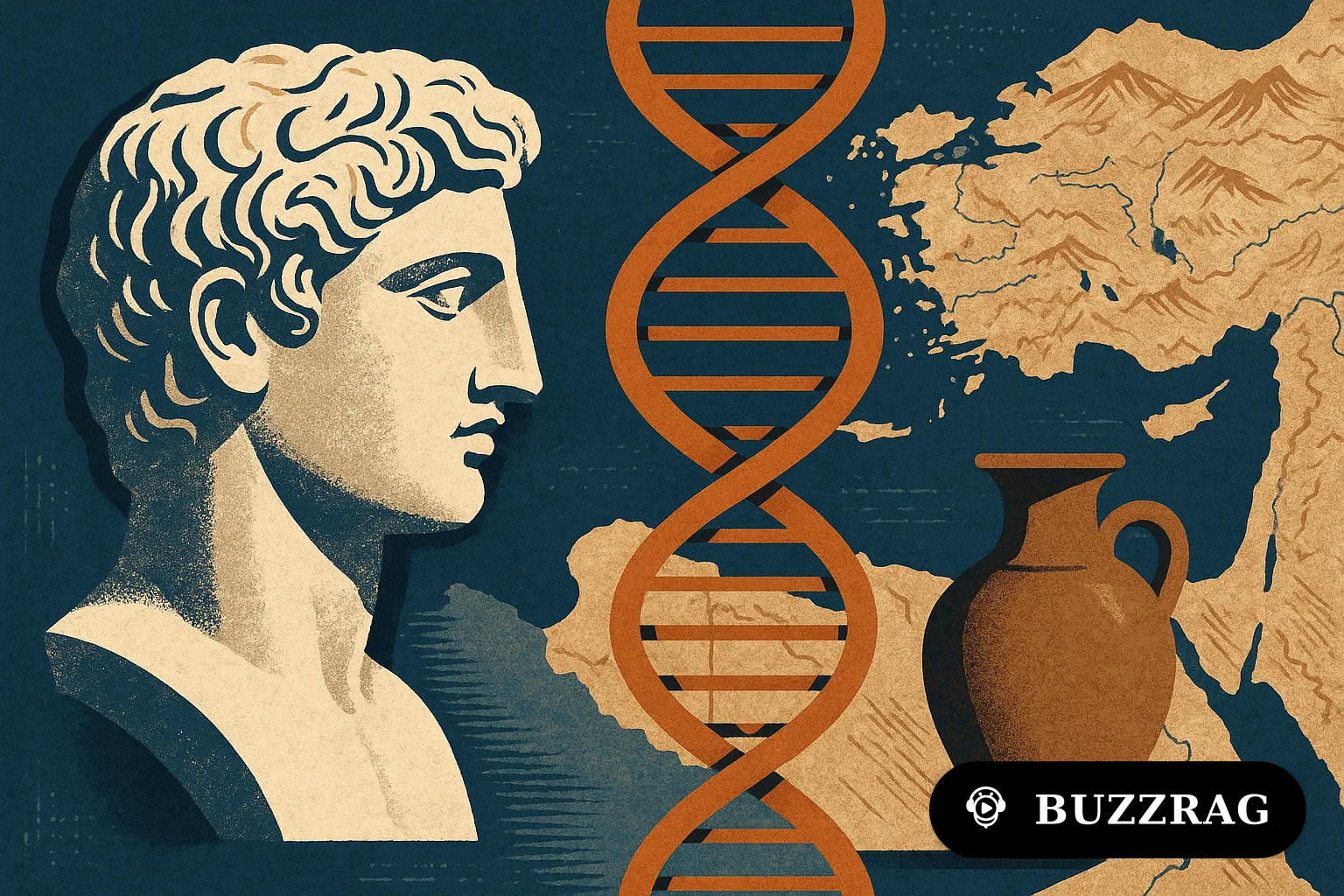
Recent genetic research has unearthed traces of 'ghost' DNA within modern humans, hinting at a mysterious population that left no physical traces in the fossil record. This finding, emerging from the depths of our genetic code, suggests that our ancestors interbred with an unknown hominin group. The discovery challenges conventional understandings of human evolution and points to the complex web of interactions that shaped humanity.
The presence of this enigmatic DNA raises questions about the diversity of early human populations and their migrations. It underscores the dynamic nature of evolutionary processes, where genetic exchange played a crucial role in adapting to varied environments. This ghost lineage, invisible yet present in our genetic makeup, compels scientists to rethink the simplistic narratives of human ancestry.
As genetic technology advances, the pursuit of these hidden ancestors could reshape our understanding of human history and identity. The study of ghost DNA not only enriches the story of our origins but also connects us to the broader tapestry of life, reminding us of the shared heritage among all living beings.
The Kesh Temple Hymn: Echoes of an Ancient Faith
The Kesh Temple Hymn, dating back to around 2600 BCE, stands as one of humanity's earliest known pieces of literature, offering a glimpse into the spiritual life of ancient Sumer. This sacred text, composed in praise of the temple of Kesh, emphasizes themes of divine power, communal memory, and religious devotion. It serves as a testament to the enduring human quest for meaning and connection to the divine.
The hymn's survival through millennia reflects the importance of written language in preserving cultural and religious traditions. It provides modern scholars with insights into the societal structures and theological concepts of early civilizations. The hymn's intricate verses, rich in imagery and metaphor, highlight the sophistication of ancient literary traditions and their role in shaping cultural identity.
In exploring the Kesh Temple Hymn, we trace the lineage of religious expression and literary art that continues to influence contemporary spirituality and literature. This ancient text invites reflection on how foundational beliefs and narratives continue to resonate, shaping the collective consciousness across generations.
Unearthing a Colossal Legacy at Sardis
The recent discovery of a colossal marble statue at Sardis, an ancient city in modern-day Turkey, sheds light on the art and politics of Persian-occupied Lydia around 500 BC. This 2.2-meter statue, with its imposing presence, raises questions about the cultural and political dynamics of the region during a time of Persian dominance.
Sardis, once a thriving hub of trade and culture, was subject to the influences of its Persian rulers, whose artistic expressions blended with local traditions to create unique cultural artifacts. The statue's discovery provides a tangible connection to the past, offering insights into the artistic endeavors and identity politics of the era. The intricate craftsmanship and stylistic features of the statue reveal the complexities of cultural adaptation and influence under foreign rule.
As archaeologists and historians delve deeper into the context of this find, the statue becomes a focal point for discussions on cultural synthesis and identity. Its unearthing prompts a reevaluation of the narratives surrounding ancient Sardis, enriching our understanding of the ancient world's interconnectedness and the enduring legacy of its artistic achievements.
As we delve deeper into these narratives, we uncover the multifaceted layers of human history and their impacts on modern life. From ancient myths to genetic mysteries, these stories remind us that the past continually shapes our present and future.