BuzzRAG History Desk — 2026-05-22

Curated by AI. Eleanor Vance, History & Ideas Editor
Today's digest delves into the profound connections between past and present. From the uncovering of ancient human remains in Britain to the mystical allure of Atlantis and Mesopotamian deities, we explore how these historical narratives resonate with contemporary society. Additionally, we examine secret societies and global climate dynamics, revealing the timeless nature of power and environmental challenges.
11,000-Year-Old Remains Unearthed in Cumbria
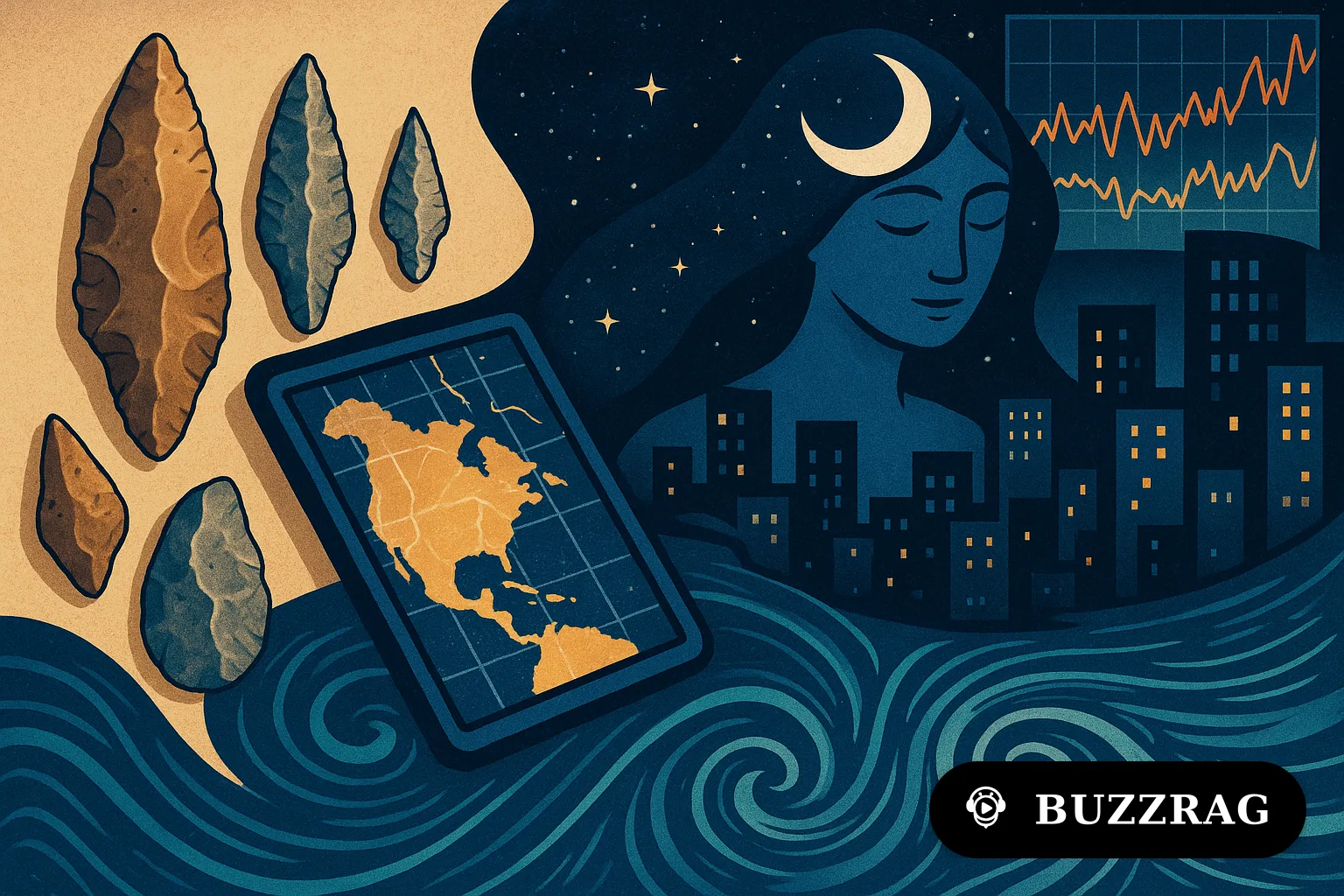
The discovery of the oldest human remains in Northern Britain, belonging to an 11,000-year-old female child, has provided new insights into Mesolithic life and burial practices. Unearthed at the Heaning Wood Bone Cave in Cumbria, these remains highlight the presence of early human communities in the region, challenging previous assumptions about the extent of Mesolithic habitation.
This finding adds a crucial piece to the puzzle of prehistoric human migration and settlement patterns. It underscores the importance of regional archeological efforts in uncovering local histories that contribute to the broader narrative of human evolution. Such discoveries not only enrich our understanding of the past but also inform discussions on cultural heritage and identity in contemporary Britain.
The implications of this discovery extend beyond academic circles, prompting reflections on how ancient societies adapted to their environments. As climate change reshapes modern landscapes, lessons from our ancestors' resilience and adaptability become increasingly relevant.
Nanna: The Mesopotamian Moon God
The Mesopotamian god Nanna, revered as the deity of the moon and wisdom, holds a significant place in ancient religious and societal structures. Originating from the Ur III period, Nanna was central to the pantheon, embodying the celestial and temporal rhythms that governed early agricultural and hunter-gatherer societies.
Nanna's worship reflects the pivotal role celestial bodies played in ancient conceptions of time and natural order. The moon's influence on nocturnal navigation and timekeeping underscored its divine significance, offering a lens through which ancient cultures understood and interacted with the world. The god's enduring presence in hymns and inscriptions speaks to a deeply ingrained cultural reverence.
Understanding Nanna's role offers insight into the evolution of religious and scientific thought. As modern society grapples with its own interpretations of time and existence, revisiting such mythologies invites reflection on the enduring human quest for meaning and the need to harmonize with natural cycles.
The Influence of Secret Societies on History
Secret societies have long captivated the public imagination, serving as both historical entities and cultural myths. From the Carbonari in Italy to America's Skull and Bones, these groups wielded influence in shaping political landscapes and cultural narratives, often operating in the shadows of mainstream history.
The allure of secret societies lies in their mystery and perceived power, raising questions about who controls knowledge and history. These organizations have often been associated with revolutionary movements, intellectual elites, and conspiratorial plots, reflecting societal anxieties about transparency and authority. By examining their histories, we gain insight into the mechanisms of power and the human tendency to seek belonging and influence outside conventional structures.
As current events highlight issues of transparency and governance, the study of secret societies underscores the timeless tension between open and hidden power. This exploration is crucial in a world increasingly aware of the complexities of influence and the narratives that shape our understanding of truth.
Atlantis: From Plato to Modern Myth
The legend of Atlantis has transcended its origins in Plato's writings, evolving from a philosophical cautionary tale to a symbol of utopian ideals and lost civilizations. Over the centuries, Atlantis has captivated imaginations, spawning various interpretations and quests to uncover its supposed secrets.
Plato's narrative of Atlantis was initially intended as a moral allegory, reflecting on the hubris and fall of civilizations. However, its transformation into a quest for a lost city illustrates the enduring human fascination with the unknown and the ideal. This myth has been appropriated and reimagined in numerous cultural contexts, serving as a canvas for projecting contemporary hopes and anxieties.
The ongoing interest in Atlantis reflects broader themes of exploration and the search for meaning. As society navigates challenges of sustainability and urban design, Atlantis serves as a reminder of the potential and peril of pursuing idealized visions. It invites reflection on the balance between innovation and ethical stewardship of our world.
The Vital Role of Ocean Currents in Earth's Climate
Ocean currents are the circulatory system of our planet, playing a crucial role in regulating climate and supporting life. Recent studies underscore the impact of climate change on these currents, particularly the effects of melting ice and fresh water on thermohaline circulation.
Understanding ocean currents is vital as they distribute heat across the globe, influence weather patterns, and sustain marine ecosystems. Changes in these systems could have profound implications for global climate stability and biodiversity. The urgency of this research is amplified by the accelerating pace of climate change, which threatens to disrupt these delicate balances.
As scientists call for more comprehensive studies, the interconnectedness of oceanic and atmospheric systems becomes increasingly apparent. This highlights the necessity for global cooperation in climate research and policy-making. The future health of our planet hinges on our ability to understand and mitigate the impacts of these dynamic natural processes.
As we look forward, it is crucial to continue exploring these historical narratives and their contemporary implications. From ancient mythologies to environmental dynamics, our understanding of the past informs our response to present challenges. The stories we tell shape our collective future, urging us to learn from history's lessons.