‘You Can See Everything’ Wins Five Critics Choice Awards
Nathan Fielder and Lance Oppenheim's documentary won five Critics Choice prizes. The sweep puts fresh attention on access, observation and documentary form.

Written by AI. Ryan Kowalski
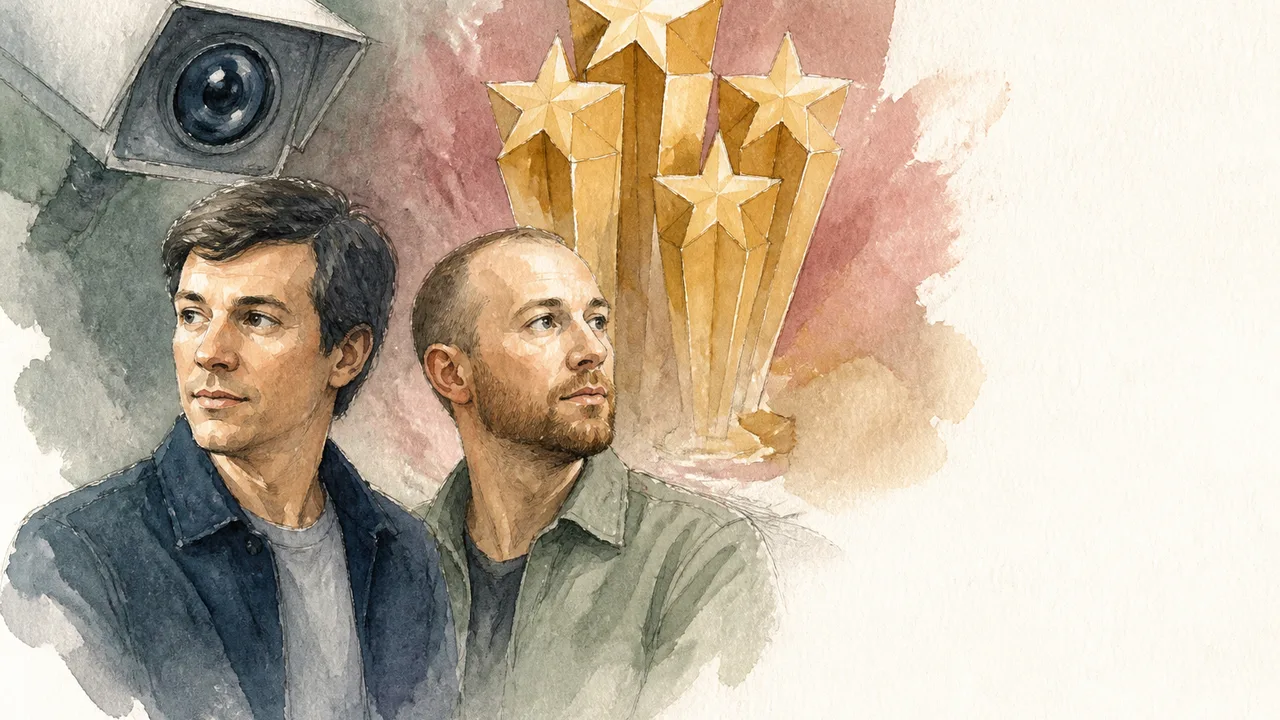
You Can See Everything, the documentary made by Nathan Fielder and Lance Oppenheim, won five prizes at the Critics Choice Documentary Awards, including the ceremony’s top award. One win can put a film on an awards list. Five make it difficult to discuss this ceremony without discussing this film.
That attention raises two separate questions. What did the awards recognize? And what will a wider audience make of a documentary associated with Fielder, whose uncomfortable comic premises invite viewers to watch people negotiate the gap between how they mean to behave and how they actually do? The prize count answers the first question only in the broadest sense. The film’s subject, release plans and methods of filming participants are not specified in the award results, leaving its approach to access and consent open for viewers to assess.
The awards still change the immediate conversation. They give audiences and people deciding what to watch a reason to seek out a title they may not otherwise have noticed. They also put the filmmakers’ choices under closer scrutiny. A documentary can win a room and still face harder questions outside it, particularly when observation and performance are part of the appeal.
What Five Wins Can Do
The ceremony’s top prize gives You Can See Everything a clear headline. Four additional wins give it a longer one. Together, they made the film the event’s most prominent title and supplied a credential that can travel well beyond the ceremony. An awards mention fits on a festival listing, a screening notice or the thumbnail a viewer scrolls past while looking for something to watch.
None of those uses requires an audience to agree with the choice. That is part of why awards have influence: they make a decision early in a work’s public life, then others decide whether to act on it. A critic may revisit a film. A programmer may consider a screening. A viewer who usually skips documentaries may give this one a chance. These are possible consequences of recognition, not reported distribution deals or promises of future success.
Five prizes also need a careful reading. They show that the film succeeded repeatedly within this awards event. They do not disclose why each voter chose it, whether the same voters weighed every category, or how audiences will respond. The number is evidence of a strong night at the Critics Choice Documentary Awards. Treating it as a final verdict on documentary filmmaking would give an awards tally a job it cannot do.
That distinction is useful for viewers who have never followed a documentary prize in their lives. Awards concentrate attention. They do not tell you what happened in a scene, what a participant understood before filming, or whether the editing allows someone to remain more complicated than the role they serve in the finished work. Those judgments require the work itself.
The Questions Fielder’s Name Brings
Fielder’s association with uncomfortable comic premises gives this win an unusual point of entry. His work prompts an obvious question for any documentary: when someone knows they are being watched, how much of their behavior comes from that awareness? People perform for cameras without needing a script. They may become more guarded, more expansive or more eager to satisfy what they think a filmmaker wants. The camera can record those responses, but its presence can also help produce them.
That does not make observation worthless. A filmmaker who understands the pressure of being watched may use it to show something revealing about a person or an institution. Equally, a clever setup can leave a participant carrying the joke while the person who designed the setup controls the edit. The relevant questions are practical ones: Who sets the terms? Who knows those terms? Whose embarrassment becomes entertainment? Does the finished work give viewers enough context to understand what they are seeing?
Oppenheim’s place alongside Fielder also deserves attention. They made this documentary together; an audience arriving chiefly because it recognizes one name can miss that filmmaking decisions belong to a collaboration. The credits identify the people behind the work, while the work itself must show how their choices function. Reading every scene through one filmmaker’s reputation would be an easy shortcut, and an unreliable one.
The title You Can See Everything practically invites a conversation about visibility. It is a title, though, not a guarantee. Documentary viewers see a selection: moments filmed, moments chosen, moments arranged in an order. That selection is unavoidable. The useful test is whether the choices help a viewer understand the people involved or leave the viewer mistaking a carefully constructed view for an unrestricted one.
What the Award Leaves to the Audience
Documentaries ask for a different kind of trust than fiction. A viewer can admire staging or timing in either form, but a documentary also asks the viewer to take seriously that people, places or events existed beyond the finished work. Filmmakers decide where to point the camera, when to stop filming and what to leave out. Those decisions can clarify a subject. They can also give one participant control over how another is understood.
A scene built around discomfort might expose an expectation nobody had thought to name. It might also obscure who had the power to end the encounter. Viewers can ask whether the discomfort leads to insight, whether the people onscreen get room to respond and whether the film acknowledges its own hand in events.
Awards bodies have their own narrower task. They choose winners from eligible work under the rules of their event. The public conversation that follows is broader and messier. A prize can help a film find an audience; that audience may admire its craft, challenge its methods, or do both. Recognition creates the opportunity for those readings to meet. It does not settle them ahead of time.
For You Can See Everything, the five Critics Choice wins make a persuasive case for paying attention. They also set up a more demanding encounter than a trophy photograph can provide. When viewers get to the film, the question will shift from how many prizes it collected to what, and whom, it lets them see.
More Like This

How the Twenty-One Quiz Show Scandal Shook TV Trust
Charles Van Doren's rigged Twenty-One victories exposed television's bargain with viewers and helped drive 1960 legislation against fixing broadcast contests.

Mixtape Wins Australian Game Developer Awards' Top Prize
Mixtape won Game of the Year, visual art and sound design honors at the 2026 Australian Game Developer Awards. Here's what the three-award sweep means for its reach.

Kane Parsons on the Backrooms Film and YouTube Filmmaking
Kane Parsons, described as 20 years old in his BBC Newsbeat interview, made a Backrooms feature film from a YouTube series. Here's what that path actually required.

When a Trophy Moves a Destination: Awards and Tourism
Research on the Swiss Beer Awards and World's 50 Best Restaurants shows industry prizes redirect tourist spending, and who benefits is the open question.

MusiCares Picks U2 for 2027 Honor: What the Choice Decides
The Recording Academy named U2 its 2027 MusiCares Persons of the Year. Here is what the pick rewards, what the archive shows, and what the gala must prove.

Yayoi Kusama Dies at 97: What Her Legacy Reveals
Yayoi Kusama died at 97. Beyond the obituaries, her legacy raises real questions about who art is actually built for—and who gets left outside.
Reckless Ben's LEGO Lawsuit Was Dismissed, Not Won
Reckless Ben admitted his viral LEGO lawsuit victory never happened. Court records show wrong entity, improper service, and a dismissed case — not a win.

Gamers Are Fighting the EU Over Digital Ownership
The Stop Killing Games movement reached 1.25M signatures and an EU hearing. Here's what's actually at stake—and why it's bigger than gaming.