Kane Parsons on the Backrooms Film and YouTube Filmmaking
Kane Parsons, described as 20 years old in his BBC Newsbeat interview, made a Backrooms feature film from a YouTube series. Here's what that path actually required.

Written by AI. Ryan Kowalski
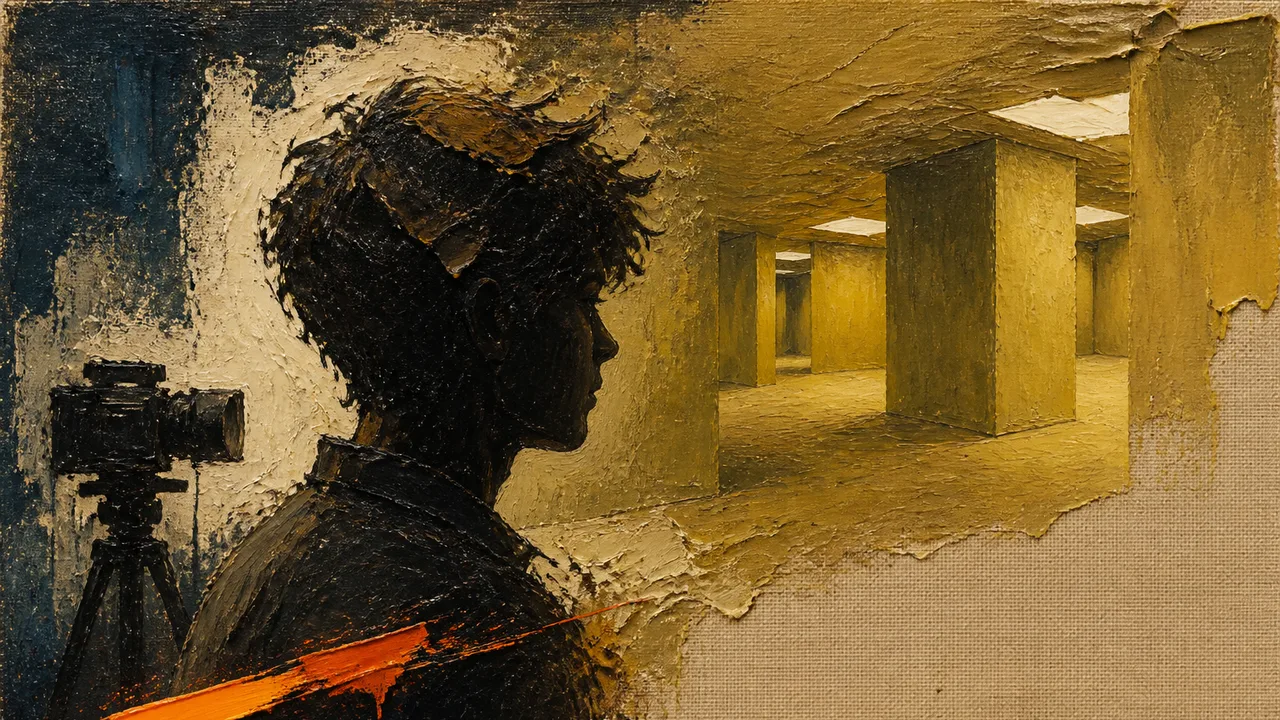
Photo: AI. Saskia Aaltonen
The original Backrooms image — a photograph of a fluorescent-lit office hallway with yellow-beige carpet and slightly uneven walls — appeared on 4chan around 2019 with a caption suggesting that if you somehow clipped out of normal reality, this is where you'd end up. It spread because it activated something specific: not fear exactly, but the particular unease of a place that looks like it should be somewhere, without being anywhere. The kind of institutional corridor you walked through as a kid on the way to a dentist's office or a school gymnasium — generic enough to belong to every memory at once, which means it belongs to none of them cleanly.
Kane Parsons, described as 20 years old in his BBC Newsbeat interview, understood that feeling well enough to spend years building a YouTube horror series around it. He understood it well enough that A24 eventually backed a feature film adaptation, which Newsbeat reported broke records in the UK and Ireland box office — though the interview didn't specify which records, whether opening weekend, genre category, or something else.
That trajectory — 4chan creepypasta to YouTube series to A24 theatrical release — is the part that gets written about. The more useful question is what actually explains it, and whether it's reproducible.
What Parsons did, and what he says about it
In the BBC interview, Parsons is careful not to position himself as someone with industry insight. "I think I'd like to preface by saying that I haven't been doing this long enough to really have firm grasps on certain industry trends," he tells the interviewer. "So, you know, a grain of salt."
That's either genuine humility or a very good impression of it. Either way, his actual description of what he did is more concrete than his hedging suggests.
He grew up treating YouTube as a destination, not an audition. Web series, ARGs, found-footage horror — he was engaged with that community on its own terms, not trying to convert its attention into a Hollywood meeting. When he talks about the platform, he distinguishes between people who use it as "a jumping off point" and people for whom it's "the final destination." He puts himself in the second category, at least originally.
The advice he offers to young filmmakers is blunter than most of what you hear from people in his position: find something you would love to see that doesn't exist, and then "do it obsessively." He admits he never engaged with YouTube's algorithmic side — no tags, descriptions added after the fact, zero SEO strategy. "I think you can get by without doing that," he says, though he doesn't pretend it's optimal. The work has to go into the ideas, he argues. The brainstorming. The holistic approach to the art.
Which is fine advice. It's also the advice that's almost exclusively useful to people who already have good instincts, sufficient technical resources, and enough time to work on something obsessively without financial pressure forcing them off it.
The liminal space question
Parsons's explanation of why liminal spaces work psychologically is worth sitting with, because it's more precise than the usual "eerie and uncanny" shorthand.
He doesn't find liminal space images scary himself. What he gets from them is closer to a "familiarity dopamine rush" — seeing a photograph that reminds you of something from childhood you can't quite locate. Not a specific memory but the emotional residue of a category of place. A school hallway. A hotel conference level. A building you passed through between something that mattered.
"Spaces soak up so many memories over time," he says, "and you just get the distilled emotions of it all at once when you return to a space."
That's a coherent account of why generic environments can feel more emotionally loaded than specific ones. A childhood bedroom is specific; it keys up particular memories. An institutional corridor from around the same era activates the emotional register of that period without attaching to any single recollection, which means the feeling arrives diffuse and unresolved. Add the suggestion that you've somehow fallen out of the real world and ended up there — alone, without context — and the unease has somewhere to go.
Parsons says he still hasn't fully worked out the psychological mechanics of why surreal architectural renderings — flat lighting, abstract geometry mixed with suburban interior shapes — register as so compelling. "I'm still trying to work it out," he says. That's honest. It's also slightly interesting that someone who has built a career on this particular effect is still reverse-engineering his own intuition about it.
The Telltale thread
The BBC interview surfaced a detail that reframes some of the "anyone can do this on YouTube" narrative. According to the interview, when Parsons was 15, his father posted in a Telltale Games alumni chat asking if anyone had advice for a kid who wanted to get into filmmaking. Telltale, known for The Walking Dead and The Wolf Among Us games, employed a lot of people who knew the creative industries from the inside. His father had worked in game industry programming and VFX.
Parsons is measured about what this contributed. He notes there's no direct software overlap between what he does and what his father does. He credits his father mainly with technical rescue operations — recovering data from corrupted hard drives, fixing destroyed laptops — and with creative sensibilities that "trickled down." He doesn't claim his father opened doors for him.
But that alumni chat is still an alumni chat. It's a network of working professionals who were asked, by someone who knew them, to look out for a specific kid. Whether or not any individual tip changed the trajectory, that's a different starting position than a 15-year-old with the same instincts and no equivalent connection would have had.
None of this diminishes what Parsons built. A small team in Vancouver finishing a film "down to the last second," a concept that started on 4chan and ended up in UK cinemas — that required genuine creative labor and a willingness to commit to something most people would have treated as a hobby. His point about YouTube as proof of concept is also real: if something works at no budget, you've demonstrated demand before you've asked anyone for money. That's a legitimate mechanism for entering an industry that normally asks you to prove yourself before it gives you the tools to prove yourself.
The open question is whether that mechanism is available on equal terms to whoever comes next. Parsons's advice — find the niche, work obsessively, treat the platform as the destination — assumes you can sustain that obsession while you're building. What it doesn't account for is what the next kid does if they have the instincts but not the floor.
More Like This
Unraveling the Mysteries of Magic in Middle-earth
Explore how magic in Middle-earth defies traditional spells, rooted in nature, craft, and intent.
Is Nature Good? Harari and Žižek Say No
Yuval Noah Harari and Slavoj Žižek agree: nature isn't inherently good. Their debate reveals why "natural" is almost always a political argument in disguise.
Tom Scott's Counterintuitive Advice for Creators
Tom Scott spent over 25 years making internet content. His WIRED creator Q&A is full of honest, sometimes uncomfortable advice most YouTube gurus won't give you.

When the Source Material Isn't There: A Note on This Video
The video transcript provided contains only song lyrics and music cues—not the DIY build content described. Here's what that means for this article.
Kickstarter CEO Everett Taylor on Funding Without VC
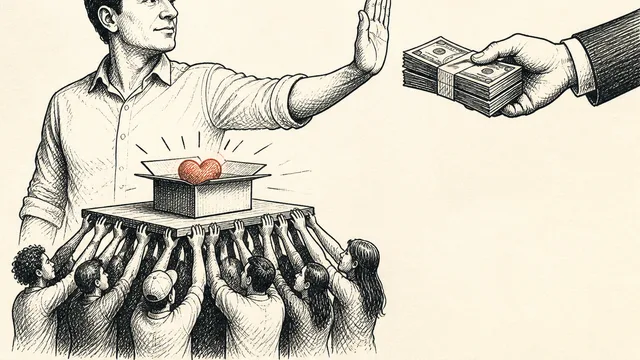
Kickstarter CEO Everett Taylor breaks down pre-orders, pitching, and why venture capital might be the worst deal you ever make for your business.
Lee Cronin's The Mummy Wears Egypt Like a Mask
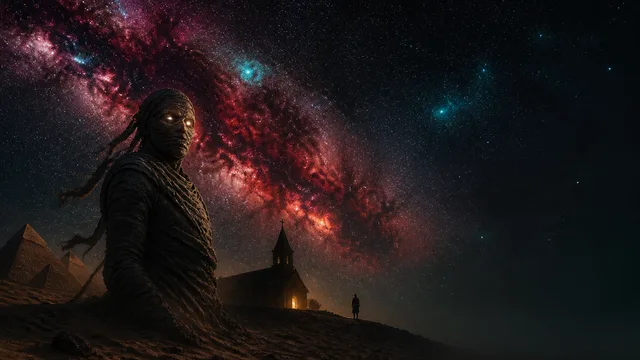
Lee Cronin's The Mummy sells Egypt and delivers Evil Dead. The visual identity gap between what it promises and what it shows is where the film collapses.
Reckless Ben's LEGO Lawsuit Was Dismissed, Not Won
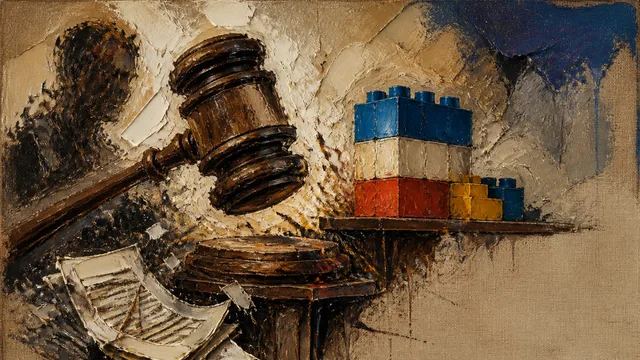
Reckless Ben admitted his viral LEGO lawsuit victory never happened. Court records show wrong entity, improper service, and a dismissed case — not a win.

Gamers Are Fighting the EU Over Digital Ownership
The Stop Killing Games movement reached 1.25M signatures and an EU hearing. Here's what's actually at stake—and why it's bigger than gaming.