World Cup 2026 Economics: Who Pays, Who Profits
FIFA will make billions from World Cup 2026. Host cities will foot the bill. Dynamic pricing and immigration fears are leaving ordinary fans—and Main Street—behind.

Written by AI. Dorothy "Dot" Williams
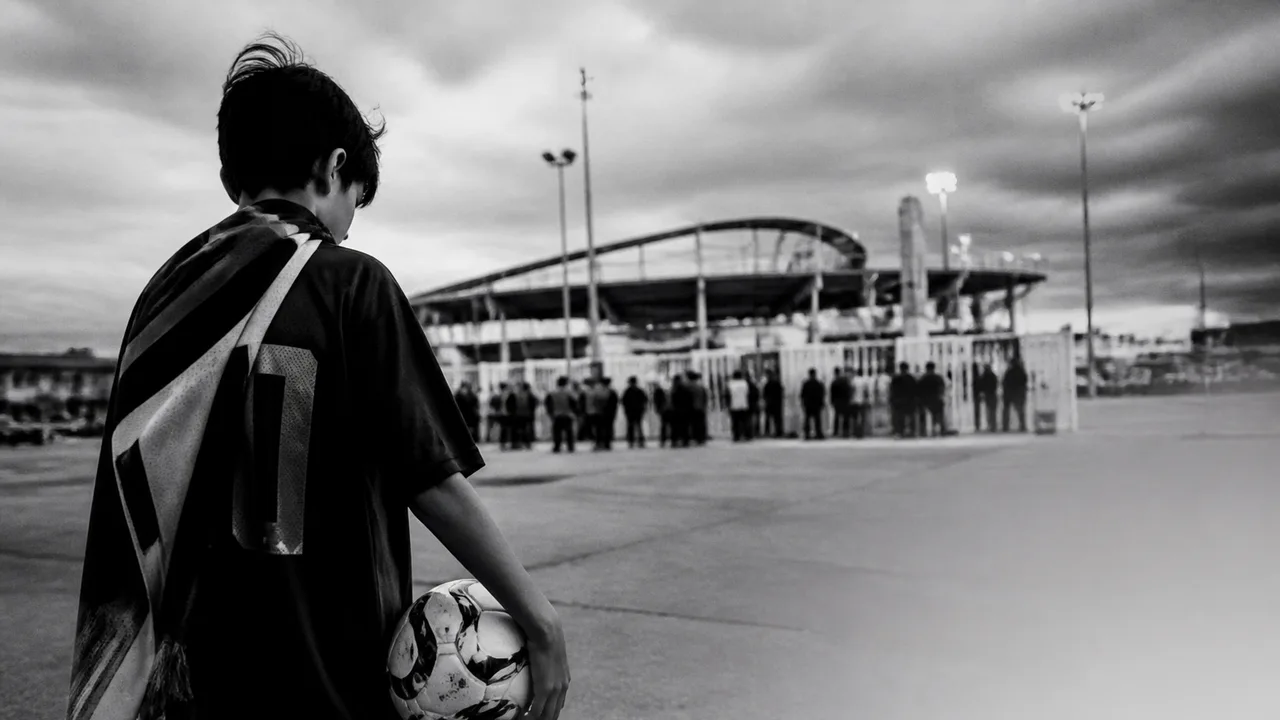
Photo: AI. Atticus Ferenczi
Think about a bar owner in East Rutherford. Or close enough — someone running a sports pub within walking distance of MetLife Stadium who, sometime in the last two years, pulled up a spreadsheet and started doing the math on World Cup foot traffic. Maybe they signed a longer lease. Maybe they hired two extra staff. Maybe they finally pulled the trigger on that patio expansion they'd been putting off since 2019. The projected economic impact for the New York area alone — $3.3 billion, according to Bloomberg Originals' analysis of FIFA and city projections — was the kind of number that makes a small operator feel like the tide is coming in.
Now imagine them reading the ticket prices.
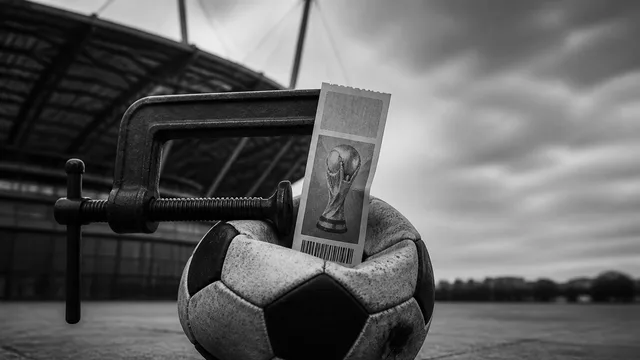
Original purchase price: $446. Resale price: $22,316. That clip, captured and spread across social media before the ink dried on anyone's lease renewal, is the clearest possible statement of what this World Cup actually is. Not a soccer tournament that happens to involve money. A revenue event that happens to involve soccer.
The 2026 tournament is genuinely unprecedented in scale — 48 nations, 16 host cities across the US, Mexico, and Canada, 104 matches total. Bloomberg's framing lands: that's the equivalent of 104 Super Bowls, which is how FIFA president Gianni Infantino actually described it. The man is not shy about what he's optimizing for.
What's new isn't the ambition. It's the mechanism. This is the first World Cup where tickets are subject to dynamic pricing — prices shifting hourly, daily, weekly, chasing whatever the market will bear. In the US consumer economy, we've absorbed this logic into airlines, hotels, Uber surges, Taylor Swift. But world football has never done this before, and the global fan base — people who've saved for years, organized supporters' clubs, booked trips from Senegal and Mexico and South Korea — did not sign up for a demand-based auction. "The US is the ultimate market," one analyst told Bloomberg, "and FIFA's using that to their full advantage in this tournament."
FIFA's response to the backlash? They added a $60 ticket option for some of the most loyal fans. Those cheaper tickets will make up less than 2% of total inventory. That's not a concession — that's a rounding error wearing a press release.
Here's the part that tends to get lost in the ticket-price outrage: the fans who can't afford to go are not the only ones absorbing this. The cities hosting the tournament are taking on real financial exposure, and the structure of the deal is not in their favor.
Under the standard FIFA host contract, cities cover security, transportation, fan infrastructure, staffing. FIFA collects the gate revenue, the broadcast money, the sponsorship. Bloomberg's analysis of 14 past World Cups found that nearly every host nation lost money on the deal — with Russia in 2018 cited as the only exception. Worth flagging: that framing is Bloomberg's analytical read, and economists argue about it depending on whether you count legacy infrastructure, tourism multipliers, and long-tail effects. The "Russia was the exception" claim is a useful shorthand, not settled consensus.
What is less debatable is the structure itself. The revenue flow is not ambiguous: FIFA projects roughly $13 billion over this four-year cycle — a fivefold increase from the period ending with Germany 2006, per Bloomberg — while host cities are left holding the cost side of the ledger.
The federal government reportedly agreed to direct approximately $625 million toward security across the 11 US host cities. Bloomberg cites this figure, but federal budget commitments like this exist on a spectrum — proposed, appropriated, and actually disbursed are different things, and the final number may shift before the opening whistle. What the analysts quoted by Bloomberg make clear is that it wouldn't be enough regardless. "If you have that cost on one side and on the other side you have essentially zero revenues," one expert noted, "then you have a net loss of that amount of money." Some gap gets covered by sponsorship deals and private donations. The rest lands on taxpayers.
Cities that were already straining under those costs have started floating the idea of charging admission for the FanFests — the free public watch parties that were supposed to be the consolation prize for everyone priced out of the actual stadium. When the free thing stops being free, you've learned something real about the budget math.
Now layer in transportation, because nobody is done paying when they buy the ticket. Getting from New York to MetLife Stadium by transit will cost fans roughly $100 round trip for World Cup service, according to Bloomberg's reporting — down from a proposed $150 after public backlash, but still against a standard fare of about $13. Transit pricing for the event has been in active negotiation and those numbers may continue to move, but the direction of travel is clear: every chokepoint is a revenue opportunity. Parking has been slashed near the stadium to create fan infrastructure, which makes the remaining spots scarcer and therefore more expensive. The people trying to claw back some return on their hosting investment are squeezing every inch of the funnel.
If your bar's business model assumed that 60,000 fans were going to pour out of the stadium and into your neighborhood after every match, you built a plan for a different tournament than the one being assembled.
For international fans, there's a separate problem sitting on a different kitchen table entirely.
Airline prices have climbed sharply, driven by a mix of factors including geopolitical turbulence affecting fuel markets — though attributing the increases to any single cause is difficult, and "supply constraints" as a primary driver reflects an editorial characterization more than a pinned-down figure. What's easier to document is the visa problem. Trump-era immigration policies have made the entry process materially harder for fans from certain countries, and the perception of the US as a hostile environment for foreign visitors is, at this point, doing its own work. Bloomberg spoke with a fan who described the visa process as a barrier to attendance. Separately, groups of longtime World Cup travelers — people who've attended consecutive tournaments for two decades — have circulated petitions saying they're skipping the US edition. Not because of ticket prices. Because of the flag on the door.
Trump, for his part, will be at the games. He'll be visible, credited, associated with the spectacle. Infantino, meanwhile, invented a FIFA Peace Prize — a prize that did not previously exist — and awarded it to Trump after Trump expressed frustration about not receiving the Nobel. Read that sentence again. That's not diplomacy. That's a transaction described in the language of ceremony.
Whether the flattery greased any actual wheels is genuinely unclear. Iran will participate, which is notable given the geopolitical backdrop. Trump's reaction, when told by reporters, was characteristically loose: "Johnny's fantastic. You know, he's a friend of mine." The man he apparently knows as "Johnny" is Gianni Infantino. None of this is incidental to the economics — it is the economics, dressed up as sports governance.
FIFA is a nonprofit. It distributes surplus revenue to national soccer federations around the world, funding youth development programs and keeping smaller football associations alive. That part is real, and worth saying plainly. The money does go somewhere beyond executive salaries and Zurich offices. Broadcast rights alone are expected to generate roughly $3.9 billion this year, and FIFA's own resale platform — which takes commissions from both buyer and seller — will add to that haul.
But here's the thing about a nonprofit that generates $13 billion over four years and builds the world's largest sporting event into an exercise in dynamic pricing and corporate hospitality: the mission statement and the business model have arrived at an interesting tension, and FIFA seems comfortable living in it.
"Soccer penetrates a culture and if its presence is reduced it becomes less desirable," one analyst told Bloomberg. "And so how do you have a mass base if the masses can't afford to go to the games?"
That question is not rhetorical. It has an answer, and the answer is: you don't. What you have instead is a broadcast product. The people in the seats become extras in a television show, and the question of who they are — die-hard supporters or corporate box holders who got comp tickets — stops mattering to anyone with a media rights contract. FIFA's own analysts know that empty stadiums are a problem, not because they signal something went wrong with the fan experience, but because the cameras will catch them. That's the tell. The broadcast can't show empty seats, so prices may drop in the final weeks before kickoff. Not because FIFA wants fans there. Because the product needs to look full.
Back near MetLife, the bar owner is still doing the math. The tide they planned for might still come in. But it's worth knowing whose tide it actually is.
More Like This

The Giants' Walk Rate Is Historically Bad in 2026
The SF Giants have a 5.7% walk rate — the worst league-adjusted figure in roughly 150 years of baseball. Here's what the numbers actually mean.
Who Really Profits From the 2026 FIFA World Cup
FIFA projects $11B in revenue and $80B in global economic activity for 2026. But host cities are quietly getting cold feet. Here's where the money actually flows.

Jess Pegula on Fighting for Tennis Players' Cut
Jess Pegula is fighting for tennis players' revenue share. Her challenge is one every independent contractor understands: no floor, no union, no guaranteed income.
AJ Andrews on Building Baseball's and Softball's Future
AJ Andrews tells Bloomberg's The Deal how authenticity and storytelling can grow baseball and softball—lessons that go well beyond sports.
Esports World Cup Moves from Riyadh to Paris
The Esports World Cup is moving to Paris eight weeks out. For the players and orgs who'd already arranged Riyadh travel, the real story starts now.
FIFA's 2026 World Cup Tickets: A Pricing Mess
NY and NJ attorneys general are investigating FIFA over alleged ticket price inflation and misleading seat categories for the 2026 World Cup. Here's what we know.

The Broken Economics of the Car Rental Business
Car rental companies aren't just greedy—they're structurally trapped. A look at the unit economics that make the industry's misery nearly unavoidable.

The Iran War's Surprise: Oil Markets Held Together
The Strait of Hormuz closed and oil didn't hit $200. Here's the layered, complicated story of why — and what it means for how energy flows next.