Esports World Cup Moves from Riyadh to Paris
The Esports World Cup is moving to Paris eight weeks out. For the players and orgs who'd already arranged Riyadh travel, the real story starts now.

Written by AI. Ryan Kowalski
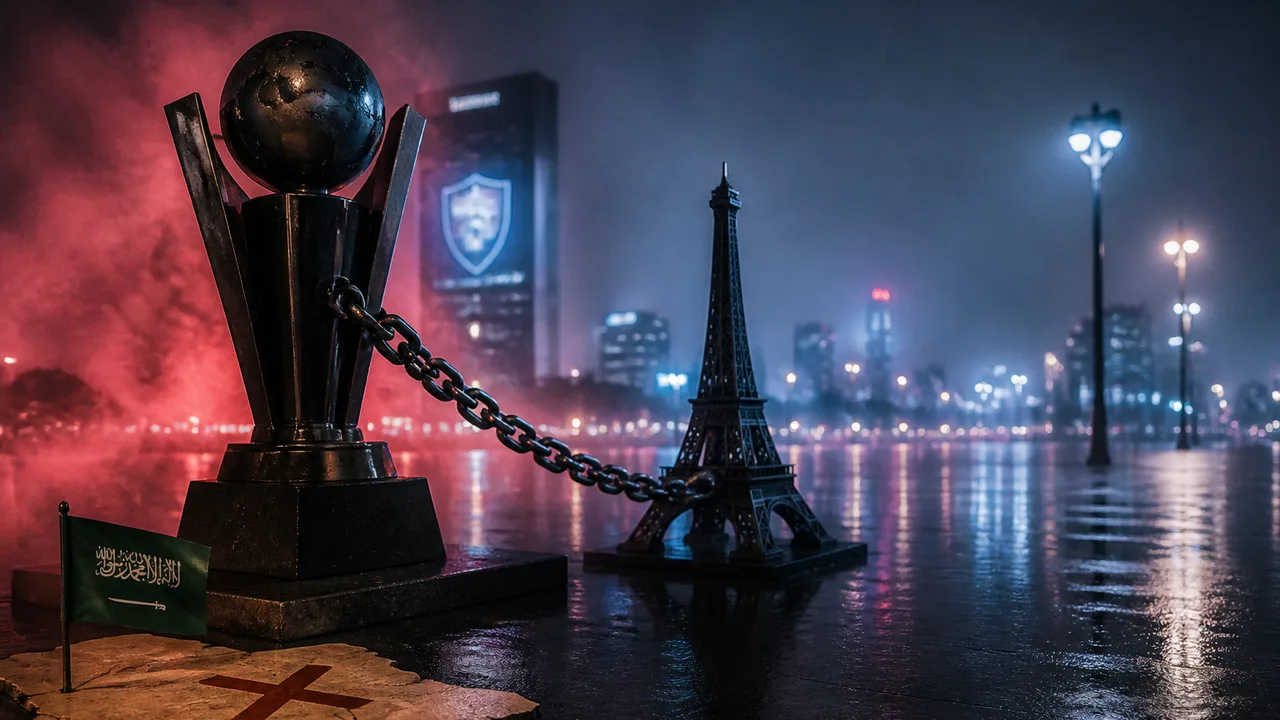
Photo: AI. Kai Hargrove
Eight weeks before the Esports World Cup was set to begin in Riyadh, the organizers announced it would be held in Paris instead. That's not a scheduling tweak. That's a full continental relocation of an event that—according to EWC Foundation COO Mike McCabe, who spoke with BBC News this week—involves more than 2,000 players from 100 countries, seven weeks of competition, and months of accumulated planning now being rebuilt from scratch.
McCabe framed it cleanly: the "regional situation" made travel reliability uncertain, cancellation wasn't an option, postponement wasn't an option, so they moved it. "It's really hard for us to pivot on a 24-hour notice," he said. "This way gives us the confidence that we can build forward."
That's the official version. It's probably mostly accurate. It also leaves out the people who were already mid-pivot before the announcement came.
Who actually absorbed this?
Somewhere right now, there is a manager for a mid-tier esports organization—one without a travel department, maybe operating out of a shared office in Seoul or São Paulo or Stockholm—who spent the last several weeks coordinating Riyadh visa applications, hotel blocks, and flights for a roster of players whose families may have planned to come watch them compete. Then the announcement dropped and all of that work became a sunk cost.
McCabe didn't address those people directly, and to be fair, the BBC interview didn't press him on it. But it's the question that sits underneath everything he said. When he described players' response as essentially "just tell us where to come and we'll be there"—that's a characterization of the player sentiment, not a direct quote—he was describing professional competitors with institutional support. The picture looks different for a smaller organization without that infrastructure absorbing an eight-week relocation notice.
The EWC Foundation says the move was made "relatively early," and McCabe acknowledged the timeline is still tight. That tension is real. Earlier is better than later. Eight weeks is also genuinely close for an event of this scale. Both things are true, and which one weighs more on you depends almost entirely on how much institutional cushion you have.
The regional instability, precisely stated
The BBC's video description attributes the disruption to missile strikes on Saudi Arabia from Iran in connection with a "U.S.-Israeli war with Iran." That framing requires more precision than a BBC News caption can provide, and I'm not going to repeat it as established fact. What is documented: the broader Middle East has seen significant escalation in regional conflict in the past year, with Saudi airspace and infrastructure facing documented security concerns as a downstream effect. Several major events—including at least one Formula 1 race this season, though its exact status as canceled versus relocated versus postponed should be confirmed against official F1 records—have been affected by that instability.
McCabe cited "a lot of travel disruption" as the primary logistical driver. That's specific enough to be credible without being specific enough to be verifiable. We know regional air travel has been disrupted. We don't know, from this interview, exactly which airlines, which routes, or which player nationalities were most affected. That specificity matters when you're asking 2,000 people from 100 countries to rebook.
The boycott question McCabe didn't answer
Previous editions of the EWC in Riyadh drew boycotts from some players over Saudi Arabia's human rights record—part of a broader debate about sportswashing that has followed Saudi Arabia's aggressive push into global sports investment, including substantial involvement in esports infrastructure and prize pools. The BBC interviewer asked McCabe directly whether players who previously boycotted might now participate in Paris.
His answer: "We've always welcomed everybody to the Esports World Cup wherever it be hosted. Our stance on that continues."
That's a complete non-answer, and it did the work he needed it to do. What he didn't address—and what I wasn't able to confirm before publication—is whether any players or teams who publicly declined to participate in Riyadh editions have said anything about Paris. If prominent boycotters are now planning to compete, that's a meaningful data point about what the Riyadh location specifically cost the event. If they're still out, for reasons unrelated to geography, that's a different story. McCabe's response treats both possibilities as irrelevant, which is convenient.
The broader Saudi esports investment context is worth naming plainly: Saudi Arabia's Public Investment Fund has poured significant money into esports—specific figures vary by deal and year, but the scale has been substantial enough to make the EWC the highest-prize-pool esports event in the world. Moving the club championship to Paris doesn't unwind that financial relationship. The Nations Cup is still scheduled for Riyadh. The money doesn't move with the tournament.
Paris as a different kind of political venue
France is not a neutral canvas. It's a country with its own active esports ecosystem, strong European club representation, and a gaming culture that predates Saudi Arabia's interest in the sector by decades. McCabe was straightforwardly enthusiastic about what that means for attendance: "This opens up the tournament to an entirely new audience who might not have been able to make a long journey all the way to Saudi, but they're able to get on a train."
That's probably true. European fans will show up in numbers that Riyadh couldn't produce geographically. The event may well be larger, louder, and more accessible. Whether that's a silver lining or a structural argument about where esports should be hosted in the first place is a question the EWC Foundation has an obvious financial interest in not answering directly.
McCabe's line that rotating to different host countries "had always been part of the plan" and that Paris "just pulled up that schedule" is doing some heavy lifting. Maybe so. But the plan in its original form had Riyadh running the club championship again this year, and it's worth noting that the rotation became urgent only when the regional situation made Riyadh untenable—not as a proactive choice.
The Nations Cup question
When asked whether the Esports Nations Cup—a separate tournament still scheduled for Riyadh later this year—would also move if conditions remained the same, McCabe gave the answer every good contingency planner gives: we have contingencies, but we're confident the situation will have stabilized by then.
I want to be direct about what I think that means: it's a reasonable hedge that also tells you nothing. "The situation will have stabilized" is not an assessment; it's a hope. The same regional instability that forced a full continental relocation eight weeks out existed for months before the announcement. If it persists—and there is no obvious mechanism guaranteeing it won't—the EWC Foundation will face the same decision again, with a different tournament structure and whatever goodwill it has left with the organizations that absorbed the first relocation.
The Nations Cup represents something distinct from the club championship: players competing under national flags, which makes the Riyadh location a different kind of symbol. If that event moves too, the question of Saudi Arabia's ongoing role as an esports host becomes much harder to sidestep with talk of global rotation schedules.
McCabe is a careful communicator and the EWC Foundation has handled a genuinely difficult situation with more speed and organization than most sports bodies would manage. The logistical achievement of relocating this event on this timeline—if they pull it off—is real. But the players who rebooked flights, the small organizations rebuilding travel plans with no logistics staff, and the competitors whose relationship to Riyadh was never just about airspace: they're the ones carrying the weight of a decision they had no say in making.
Paris in seven weeks. Watch whether the Nations Cup follows.
More Like This
Diablo IV: Lord of Hatred Expansion Review
Explore Diablo IV's Lord of Hatred expansion. New classes, zones, and a thrilling campaign await.

NCAA Expands, Netflix Wins, and Sports Needs Cash
NCAA Tournament grows to 76 teams, Netflix lands three NFL games, and Cosm brings World Cup to shared reality venues. The week's sports business, mapped.

When Your Partner Calls Your Dream "Loser Stuff"
Dr. K unpacks what it really means when a partner dismisses your gaming ambitions—and why rigidity, not the hobby, is the real red flag.

Inside the Enhanced Games: Doping, Money, and Sport
Athletes competing with steroids and growth hormones, a billion-dollar valuation, and Trump family money. The Enhanced Games are stranger than they sound.
Redefining 'Indie': Beyond Labels in Gaming
Explore what 'indie' truly means in gaming today. Is it a genre, a spirit, or something else entirely?

Peter Molyneux's Final Game: Masters of Albion
Peter Molyneux calls Masters of Albion his last game. The Fable creator reflects on legacy, AI in gaming, and why the UK industry needs more respect.
Esports World Cup Paris: Built in 8 Weeks From Scratch
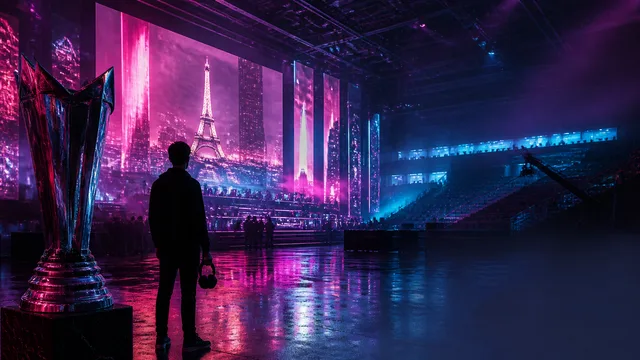
The Esports World Cup landed in Paris after an 8-week scramble out of Riyadh. Here's what the build actually looked like — and the questions it leaves open.

Kane Parsons on the Backrooms Film and YouTube Filmmaking
Kane Parsons, described as 20 years old in his BBC Newsbeat interview, made a Backrooms feature film from a YouTube series. Here's what that path actually required.