Williams Sisters Avoid US Open Fines, Exposing Tennis Media Rules
The USTA won't fine Venus and Serena Williams for skipping post-match press duties. The decision reopens questions about media obligations and marquee-name enforcement.

Written by AI. Jai Trivedi
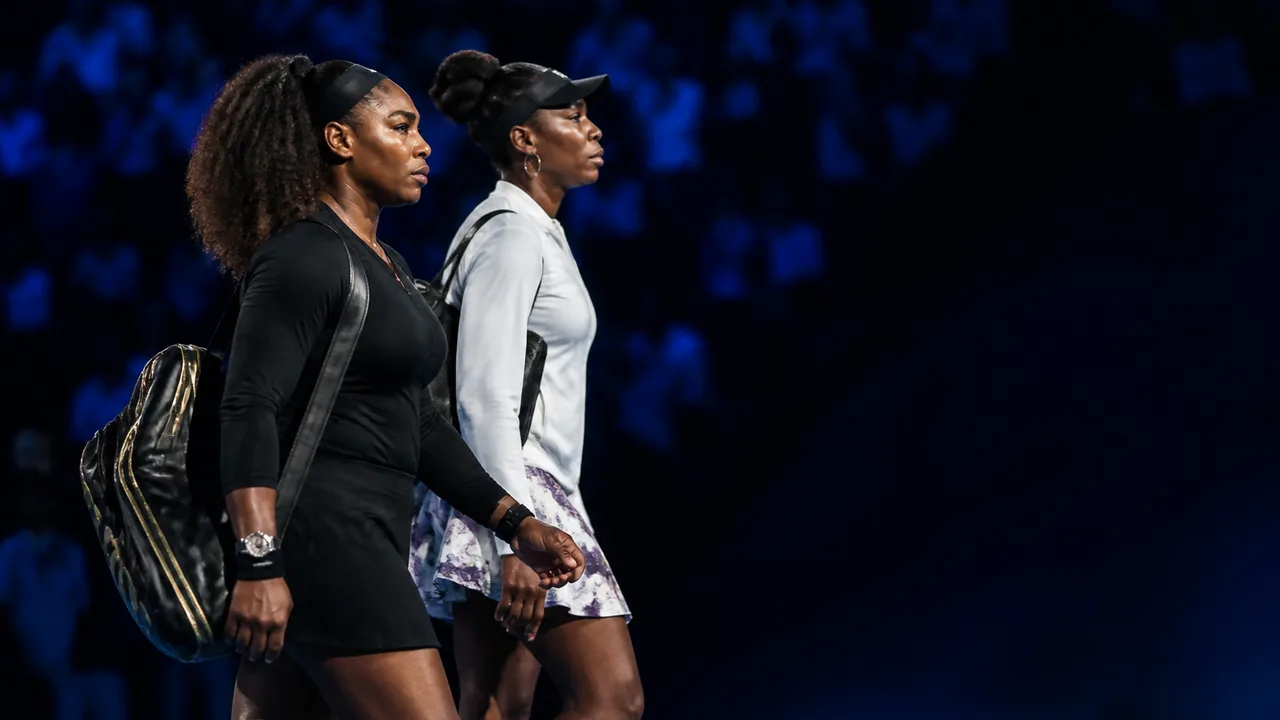
Venus and Serena Williams will not face fines after skipping their post-match press conference following a first-round doubles loss at the US Open, according to Front Office Sports. The USTA confirmed the decision to the outlet on Sunday, two days after the sisters walked off court at Flushing Meadows and, within minutes, sent credentialed media a notice that they would not be available for press that night, as Ben Rothenberg reported.
The stakes of that non-decision were never trivial. Forbes reported the potential exposure for Serena alone at $50,000, and the Daily Mail put the combined avoided fines at roughly $100,000, or about £82,925. Nobody is cutting that check. And the USTA, per Tennis Up To Date, received no injury-related explanation for the absence.
Skip a presser with a documented medical issue and most grievances evaporate. Skip one with no explanation attached and the fine is supposed to follow automatically, because that is what automatic means.
Why Press Conferences Exist in the First Place
It helps to be clear-eyed about what a post-match press conference actually is in 2026. It is a content production step. Tournament media obligations are written into event rules and participation agreements because the answers generated in that room feed the machine: broadcast packages, highlight shows, sponsor activations, the daily storylines that keep a two-week event feeling like an ongoing series rather than a bracket.
The USTA's business model depends on that machine running. Broadcasters paying hundreds of millions for rights are buying access to moments, and press conferences are the cheapest moments a tournament can manufacture on demand. When a marquee player skips, the machine still runs, but it runs with a hole in it. Reporters who booked travel and held deadlines get a message that says, essentially, plan around the void.
Rothenberg, who has covered the sisters for the better part of two decades, wrote that the late notice was entirely consistent with long experience, per his newsletter. That framing matters because it reframes the incident. This is a recurring test of the rules, not a one-off. Front Office Sports noted the Williamses have skipped press obligations before. The question each time is the same one the USTA just answered: does the rulebook apply to the people who sell the most tickets?
The Case for Letting It Slide
The strongest argument for the USTA's decision is pragmatic, and it is not a weak one. Fining Serena and Venus Williams after a doubles loss would have produced a news cycle entirely about the fine. It would have handed the story to talk shows, generated a week of coverage about the tournament punishing its most bankable legends, and done nothing to recover the lost press availability. Front Office Sports characterized the choice as keeping the dispute from becoming a disciplinary matter, which reads like an accurate description of the incentive structure.
There is also a real argument that rigid enforcement is a blunt instrument for athletes whose media presence operates on different terms than the tour average. A player who has sat in front of cameras thousands of times, whose every on-court moment is already the most-watched content in the sport, generates promotional value at volumes no thirty-second presser quote can match. The tournament gets its Serena content from her matches, her walk-ons, her every facial expression captured by a dozen broadcast cameras. The press conference is, in that context, a rounding error in her contribution to the event's media value.
The Case for the Fine
Now the other side, and it is not straw-man territory. Every player in the draw agreed to the same participation terms. The media obligations exist so that the 60th-ranked doubles specialist who just lost a three-setter at 11 p.m. still shows up in the interview room, tired and annoyed, because the coverage of that match depends on it. She does not have the leverage to skip. The player who does have the leverage skips, and the enforcement framework reveals itself as leverage-dependent.
Tennis Up To Date framed its coverage around exactly that discomfort, asking under a headline whether rules apply differently when the names are big enough. Rothenberg went further, titling his piece "Too Big to Fine?" That is the credibility problem the brief of this story keeps circling: a fine structure that only fires on players who cannot fight it is a tax on the mid-tier, and everyone in a locker room can do that math.
The counterargument to the counterargument is the classic one: discretion exists in every enforcement regime, from tax codes to traffic law. Prosecutors decline cases constantly. Discretion is a feature when applied to genuine edge cases. The problem arrives when the discretion tracks name recognition rather than circumstance, because then players start noticing, and the rulebook's authority leaks out through the exceptions.
What My Beat Adds to This
I cover the money layer of all this, so here is where I watch with particular attention. Press conferences are increasingly the least efficient content a superstar athlete produces. Serena Williams does not need a presser to reach an audience; her own channels reach more people than most sports desks. The same dynamic is reshaping every league: the athlete with a following is a media company, and mandatory press availability starts to feel to them like being ordered to hand your best material to a competitor for free.
Leagues have noticed. You can see the pressure in how other sports handle it. The NBA fines players for skipping media obligations but has also built content pipelines that let stars feed their own channels. Tennis has no franchise structure, no shared revenue engine; the Grand Slams and the tours sell access, and access is the product. When the biggest star withholds the cheapest form of access, it pokes at the foundational deal: we pay you with a stage, you pay us with availability. The Williamses just tested that deal in public, and the stage held. The availability clause did not.
Whether that matters commercially depends on a question nobody has answered in this episode: did broadcasters or sponsors complain? The public record here is thin. The USTA confirmed the no-fine outcome, the outlets reported the avoided amounts, and the record goes quiet. Absent a disclosed sponsor reaction or a broadcaster grievance, the practical cost of the skip may be closer to zero than the $100,000 headline suggests, which would make the leniency look like good business rather than capitulation.
Where This Goes Next
The unforced question hanging over the sport: will the next non-Williams player who skips a presser at a Grand Slam get the same pass? The USTA's decision is only as precedent-setting as its next application. If fines continue landing on less famous players after this, the rulebook becomes an explicit hierarchy. If enforcement pauses broadly, media obligations drift from rules to requests.
For now, the sisters keep the $100,000, the USTA keeps the peace, and the reporters keep a message on their phones that said the stars would not be coming. Everyone got something. The question the tour has to answer eventually is what its rules are actually for, and who they apply to when it counts.
More Like This
Sports Business Scorecard: Arenas, Concessions, and the NHL's New Map
Mavericks pick Valley View for a new arena, Bears remain in stadium limbo, and the Commanders bet on cheap concessions to deepen season-ticket loyalty.
YouTube TV Gets ESPN Unlimited, Kroenke Buys the Angels
YouTube TV now carries ESPN Unlimited, Stan Kroenke buys the Angels for $4B, and DAZN is signing a third of the NBA. Sports media's big week, mapped.

Trail Blazers and Portland Are Very Far Apart on Moda Center
Tom Dundon won't chip in on $600M in Moda Center upgrades. Portland won't write a blank check. Here's what's actually at stake for both sides.
Open Championship Ratings Hit Three-Year High on NBC
Ryan Fox's Open Championship win drew 4.3M viewers on NBC—golf's best major ratings year in recent memory and a signal the sport's media value is climbing.
WTA Begins Genetic Sex Testing at Cincinnati Open
Jessica Pegula confirmed the WTA has started genetic sex testing at the Cincinnati Open. Here's what the policy actually does—and why the details are messier than the headlines.

MLB Field of Dreams Game Returns After Four-Year Hiatus
The Field of Dreams Game returned to Dyersville, Iowa in 2026 after a four-year break. Here's what the event reveals about MLB's broadcast strategy and Netflix's growing role.

FIFA's TikTok Deal Is Rewriting Sports Media Rights
FIFA's TikTok partnership for the 2026 World Cup pulled 465 million streams. The real story is what that means for every rights deal negotiated after this.

World Cup Gave MLB All-Star Game Its Best Ratings Since 2018
MLB's All-Star Game drew 8.79M viewers on Fox—up 22%—with the World Cup acting as an unlikely lead-in. What does that actually mean for sports broadcast strategy?