MLB Field of Dreams Game Returns After Four-Year Hiatus
The Field of Dreams Game returned to Dyersville, Iowa in 2026 after a four-year break. Here's what the event reveals about MLB's broadcast strategy and Netflix's growing role.

Written by AI. Denise Okafor-Williams
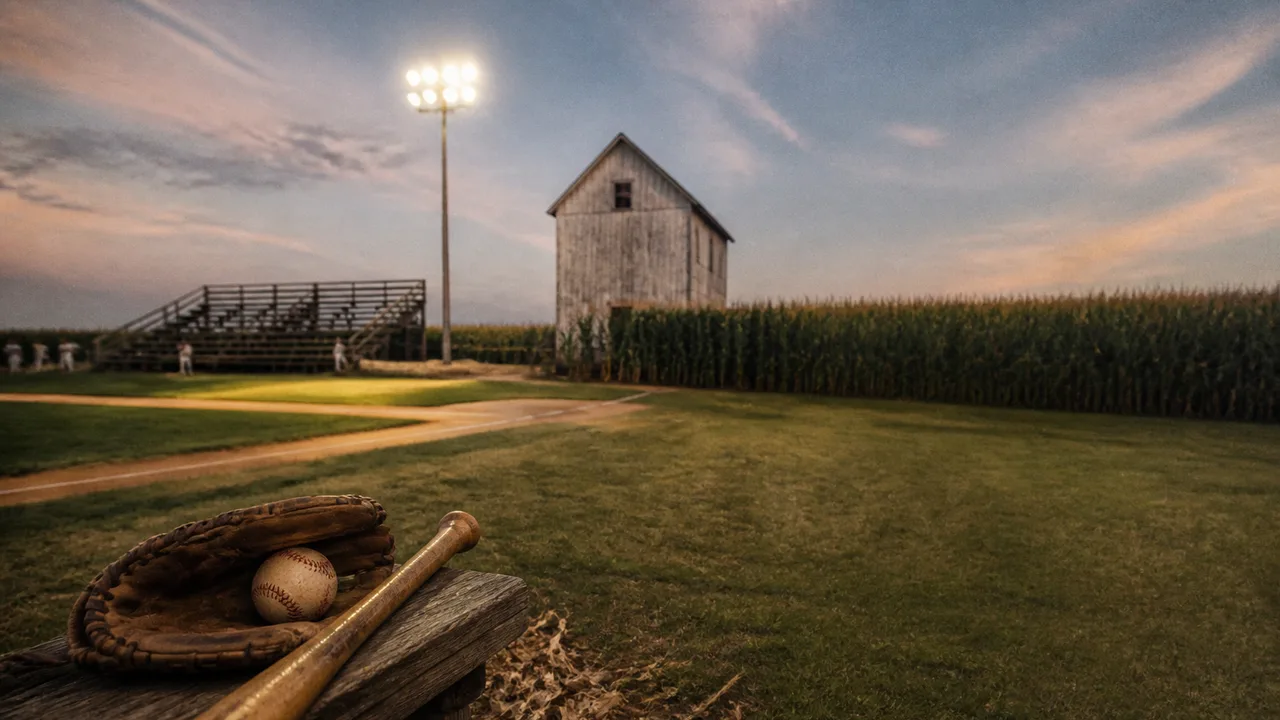
The cornfields were still there. So was the rain. What wasn't there — for four years — was the game itself.
According to MLB.com, the MLB at Field of Dreams Game returned Thursday following a four-year hiatus, during which a new permanent stadium was constructed on the Dyersville, Iowa, site made famous by the 1989 film. The Philadelphia Phillies beat the Minnesota Twins 7-1 in what the league billed as the third edition of the event. The gap between editions was logistical — the old temporary facility had to come down, a new one had to go up — but the timing landed with a certain narrative convenience. Baseball needed a moment that didn't require anyone to explain the standings.
The Field of Dreams Game has always been less about the game than about the argument the game is being used to make: that baseball belongs to something older and larger than its current television ratings, its pace-of-play debates, and its labor headaches. You build a diamond in an Iowa cornfield, you light it at dusk, and you invite people to feel something they half-remember. It works because the feeling is real, even if the occasion is engineered.
What's changed in 2026 is who's holding the camera.
Netflix Takes the Booth — and Immediately Catches Heat
Netflix is in year one of a multi-year media rights deal with MLB, per Yahoo Sports — and its Field of Dreams broadcast was only its second MLB event, following a rocky Opening Night in San Francisco earlier this season. The streaming giant also carried the 2026 Home Run Derby, but by most accounts the San Francisco opener set an uneven baseline.
The most visible symptom of that rockiness wasn't a dropped feed or a commentary miscue. It was a scorebug.
Awful Announcing reported that Netflix made a significant change to its on-screen score display for the Field of Dreams Game after fans complained about the Opening Night version being difficult to read. The fix: make it bigger. Considerably bigger. USA Today's For The Win put it plainly — the new scorebug is bigger than last time, but "so much uglier." Awful Announcing noted the irony directly: Netflix addressed the size complaint, but didn't take the opportunity to do something thematically appropriate, asking why they couldn't build a Field of Dreams-themed scorebug the way Fox had in prior years.
It's a small detail that carries a larger diagnostic weight. When a broadcaster inherits a marquee event — especially one with the aesthetic self-consciousness of the Field of Dreams Game — the production choices signal something about how seriously they've studied the property. Fox, which aired previous editions of this game, leaned into the visual grammar of the event. Netflix, at least in this first attempt, appears to be iterating on fan complaints rather than developing a coherent broadcast identity for baseball.
That may be forgivable in year one. It may also be exactly the kind of stumble that costs a streamer credibility with a fanbase that was skeptical of the partnership to begin with.
Front Office Sports noted that compared to the glitchy San Francisco season opener, the Iowa production was noticeably more polished — which reads as genuine progress, even if the bar it clears was set low. Netflix won't air another MLB event until Opening Night 2027, per Awful Announcing, which gives the company roughly eight months to think carefully about what kind of baseball broadcaster it wants to be.
What the Event Actually Costs to Stage — and Who Benefits
The brief record here is genuinely thin. The public terms of the Netflix-MLB rights deal have not been fully disclosed, and the construction costs for the new Dyersville stadium aren't detailed in the sources available. What can be said plainly is this: the Field of Dreams Game is not a charity project.
The event functions as a brand investment for MLB — a manufactured moment of cultural weight that draws audiences who might not otherwise tune into a regular-season Phillies-Twins game in August. From a labor economics perspective, that brand lift is real and it accrues almost entirely to the league. The players executing the product — the ones whose bodies produce the spectacle — receive their standard game check. The emotional premium the event commands in the media market doesn't flow back to a separate line item for the workers delivering it.
That's not unique to baseball, and it's not a scandal. It's how sports broadcast rights have always been structured. But it's worth naming, particularly as MLB continues to expand its portfolio of premium-placement games — events where the setting or the occasion inflates the product's perceived value beyond the underlying competition. The Field of Dreams Game, the All-Star Game, London Series, and similar showcases all represent moments where the league captures outsized brand equity from a single event. Players' share of that specific upside is whatever their CBA already entitled them to — nothing more, nothing less.
The Bryce Harper Variable
The human subplot hovering over the Phillies' trip to Iowa was Bryce Harper's health. Forbes SportsMoney reported that Harper offered a three-word injury response just before the game — the kind of clipped non-answer that tells you someone is managing a situation rather than resolving it.
Harper's contract status and injury history are both well-documented public record, and the pattern of abbreviated pregame injury updates from high-value players is familiar enough to anyone who covers athlete labor. When a team has significant money committed to a player, every public statement about that player's health becomes a small negotiation — with fans, with media, with insurance actuaries. "I'm fine" is doing a lot of work.
The Phillies won convincingly without needing to push anything. Philadelphia 7, Minnesota 1 is the kind of result that makes injury management decisions look correct in retrospect.
The Nostalgia Economy Has Actual Economics
It's easy — and not wrong — to describe the Field of Dreams Game as a moment of genuine feeling. Watching a baseball game emerge from an Iowa cornfield at dusk is legitimately moving for a lot of people, and that emotional response doesn't become less real because the league planned it and sold advertising around it. The two things coexist.
What makes this event worth watching closely as a business story isn't whether the nostalgia is authentic. It's whether the infrastructure being built around it — the new stadium, the streaming partnership, the broadcast production — is being built to last or being built to flip sentiment reports in August.
The four-year gap between editions, forced by construction, accidentally produced something useful: it reminded people the game was special. Ubiquity is the enemy of that feeling. MLB's scheduling choices for this event, going forward, will say something about whether the league understands what it actually has in Dyersville, or whether it treats the cornfield the same way it treats every other premium placement on the calendar.
Netflix's scorebug will get fixed. The more interesting question is whether a streaming platform that built its identity on algorithmic personalization can develop a broadcast voice that feels appropriate to an event specifically designed to make you forget about the algorithm.
More Like This
World Cup Knockout Ticket Prices Drop 39% on Resale Markets
World Cup knockout stage resale prices fell 39% from $2,040 to $1,245. What the secondary market collapse reveals about FIFA's pricing architecture.
Trump, FIFA, and the Balogun Reinstatement Explained
Trump called FIFA's Infantino to contest Folarin Balogun's red card ban. FIFA reversed it. Here's what we know—and what remains unanswered.

MLS Ticket Sales Surge, But TV Ratings Stay Flat
MLS is riding a World Cup attendance wave, but TV ratings haven't followed. What that gap means for media rights, and MLS player salaries.

Sports Business Morning Briefing: August 14, 2026
Field of Dreams returns with a permanent stadium, the NBA maps its broadcast season, and Nielsen numbers reframe women's sports as a serious media investment.
Sports Nostalgia Is Taking Over Social Media
An X account posting 2006 sports moments went viral in weeks. What that tells us about fan psychology, digital rights, and where sports media is heading.

How the Tour de France Built a Global Sports Business
The Tour de France is more than a race. How ASO built a commercial machine from a national institution—and what it means for the athletes inside it.
MLB's 60-Game Clause Reshapes Lockout Leverage
A reported 60-game trigger could extend MLB's media deals through 2029, reshaping 2027 lockout leverage as local TV pressures divide club incentives today.