MLB's 60-Game Clause Reshapes Lockout Leverage
A reported 60-game trigger could extend MLB's media deals through 2029, reshaping 2027 lockout leverage as local TV pressures divide club incentives today.

Written by AI. Jai Trivedi
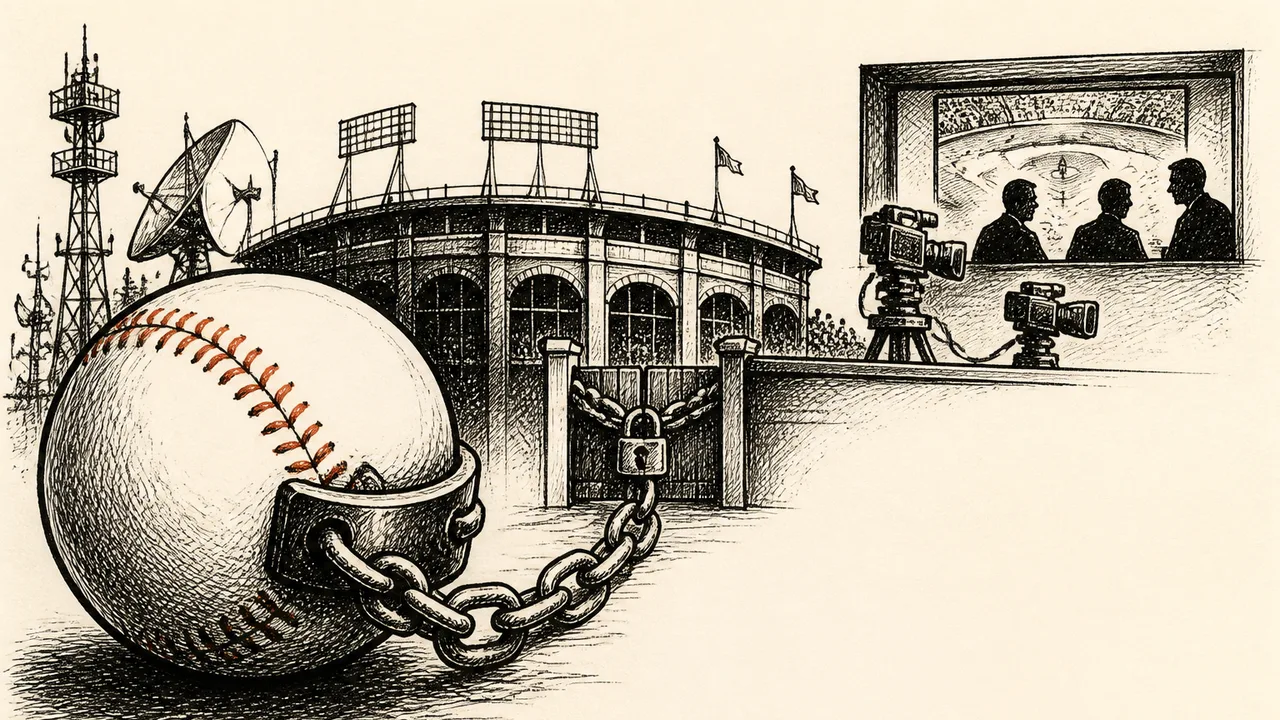
MLB could receive more than $2 billion from national television partners in 2027 even if a labor stoppage erases the season.
That is quite the financial airbag. It also comes with a cord attached.
If at least 60 games disappear, most of MLB's national media contracts reportedly extend from their scheduled 2028 expiration through 2029. Fox, TNT Sports and other partners would still pay for 2027, but the extension could delay MLB's expected entry into a richer rights market by one year.
The contract details originated in reporting by Evan Drellich and Andrew Marchand of The Athletic. Three subsequent accounts from Awful Announcing, MLB Trade Rumors and Barrett Media describe the same basic mechanism, but they do not represent three independent confirmations. The agreements themselves are private, and neither MLB nor its broadcasters have published the clauses.
Subject to that caveat, the 60-game trigger gives baseball's possible 2027 lockout something labor disputes rarely provide: a visible boss level.
The Money Arrives Now, While the Bill Waits
MLB's collective bargaining agreement expires on December 1, and owners are widely expected to lock out the players. The league is pushing for a salary-cap and salary-floor system, while the Players Association opposes that model, MLB Trade Rumors reported.
A lockout does not guarantee lost games. If games do vanish, players stop receiving salaries and clubs lose ticket, parking and concession revenue. National media money follows a stranger schedule.
Under the reported provisions, broadcasters would pay MLB in full for 2027 even if no games were played. If the whole season disappeared, however, the networks would owe nothing for the added 2029 season. A partial season after the 60-game threshold would produce a reduced 2029 payment described in the reporting as a bargain rate.
This shifts the timing of leverage. Owners retain a major revenue stream during the early phase of a stoppage, giving them room that players without paychecks do not have. The players' media leverage grows as the calendar approaches 60 cancellations, when protecting today's payment could cost MLB tomorrow's auction.
MLB currently earns around $2 billion annually from its national packages and expects the next round to bring substantially more. Crossing the trigger could keep the league on older terms for another year, or force it to compensate broadcasters through a discounted first year of replacement deals. Awful Announcing's account says that workaround would require cooperation from existing partners and could complicate MLB's plans to rearrange its inventory.
The clause therefore creates pressure without guaranteeing peace. Patrick Crakes, a media consultant and former Fox Sports executive, told The Athletic that any remedy could be folded into a new agreement. Broadcasters might accept that route. They would also have little obvious reason to surrender a discounted 2029 season for free.
One League, Several Clocks
National television supplies only one lockout clock. Local contracts may start flashing red much earlier.
Most regional sports network agreements reportedly guarantee between 125 and 145 games. Clubs falling below their individual thresholds could owe rebates or receive smaller payments. A few lost weeks could therefore hit local television income while national checks continue arriving.
The revenue mix illustrates why club incentives can diverge. Figures attributed to The Athletic put an average team's 2023 revenue at roughly 26% from MLB's central fund, including national media and other sources, 21% from local broadcasts and 39% from stadium activity. Those averages conceal large differences between teams, and the local figure may already be stale after further erosion in the cable bundle.
Some clubs have lost their RSN agreements altogether. Travis Sawchik of MLB.com estimated in January, as relayed by MLB Trade Rumors, that teams using replacement arrangements generally receive about half their former RSN income.
Two competing incentives follow from those figures. Clubs with vulnerable local deals and heavy stadium dependence start losing cash quickly when games disappear. That creates a reason to settle. The same clubs may also enter bargaining with a stronger appetite for sweeping economic changes because their old local-media model has already cracked.
No public evidence establishes where individual owners sit on that trade-off. Market size alone cannot answer it. A club's cash reserves, debt, local contract and expectations for national revenue would all affect its tolerance for a fight.
That makes MLB ownership less like one chess player and more like a group chat trying to choose a restaurant. Everyone wants dinner. Half the chat has already rejected the menu.
The NBA-Sized Temptation
The NBA's national packages, valued at roughly $7 billion per year, offer MLB owners an alluring comparison. They also offer an easy way to get carried away.
Barrett Media's account connects MLB's expected windfall to the NBA benchmark and notes that the planned March 24 opening could place the 60-game danger point around June, depending on scheduling changes.
The NBA number shows that broadcasters and streaming platforms will still spend enormous sums on scarce live sports. Using $7 billion as an MLB forecast would overreach. The leagues offer different audiences, schedules, postseason structures and packages, while MLB brings far more regular-season inventory. That inventory can be an asset for filling hours and a complication when viewers and rights are spread across many games.
The useful comparison concerns timing. MLB wants to take its reassembled inventory to market after 2028, following a giant NBA negotiation and amid continued competition among broadcasters and streamers. A 2029 extension would postpone that opportunity. Even if MLB eventually secured the same long-term price, waiting one year would defer the higher revenue and give incumbent partners another season on favorable terms.
Craig Sloan of Playfly called the clause a “massive incentive” to reach a resolution because neither side would want to delay what he expects to be a multiple increase in the rights brought to market. That is an industry executive's assessment, not a guaranteed valuation. MLB's eventual offers will depend on the media market after 2028, which nobody can price with confidence in September 2026.
Baseball Has Approached the Cliff Before
MLB has not lost games to a labor dispute since the 1994-95 players' strike. The next work stoppage arrived in 2021, when owners locked out players after the collective bargaining agreement expired. Negotiations delayed preparations for the 2022 season, but MLB ultimately played all 162 games.
That recent history supplies a useful precedent with a limit. The 2021-22 lockout showed that months of public hostility can still end before regular-season inventory disappears. The 2027 situation would include a reported contractual threshold whose consequences extend two years beyond the disputed season.
The 60-game number also changes how fans and negotiators can read the calendar. Early missed games would hurt players, stadium workers and club-level revenue while leaving national payments intact. Around the trigger, the owners' prospective media cost could jump because current agreements would reach into 2029. Beyond it, MLB would still have an incentive to salvage a partial season because the 2029 payment reportedly falls with the amount of baseball delivered in 2027.
None of this proves that a lockout will happen, that games will be cancelled or that the clause will decide negotiations. Private contracts can contain exceptions that public accounts miss, schedules can move, and the parties could design another remedy.
Still, the reported structure gives players a bargaining point tied to owners' next media payday. Baseball's next labor deadline may begin on December 1, but its most expensive alarm could ring with game No. 60.
More Like This
How an MLB Lockout Could Expand the Bananas' Market
A possible MLB lockout could give the Savannah Bananas more attention, venue leverage and ticket demand, while testing whether fans stay after MLB returns.

MLB and MLBPA Deadlocked Over 2028 Olympics
Two years from LA28, MLB owners back Olympic participation but the players' union remains at odds over housing, tickets, insurance, and forced participation rules.
MLBPA Rejects MLB's Amateur Draft Overhaul
The MLBPA's first formal draft proposal rejects MLB's sweeping changes to draft timing, eligibility, and signing bonuses. Here's what's actually at stake.

NHL Sets Revenue Record as NBA, NCAA Face Bigger Tests
NHL hits $7.5–8B in revenue, NBA Europe bids close June, and the Protect College Sports Act draws SEC and Big Ten resistance in Congress.

DAZN's Kings Deal Tests the NHL's Streaming Future
DAZN's Kings deal shows how the NHL's post-RSN streaming market is splitting across platforms, shifting access, cost and complexity toward fans this season.

How NASCAR Went From Moonshine Runs to TV Gold
NASCAR's rise from backroad bootlegger races to 16 million CBS viewers is a masterclass in sports media timing, chaos, and unlikely opportunity.

College Sports' $20.5M Spending Cap Is Already Broken
Power 4 schools are blowing past the $20.5M rev-share cap through NIL stacking and frontloaded deals. Here's how the workarounds work—and what comes next.

Sports Media Executive Skills Are Being Redefined
Rick Alessandri of ZRG Partners breaks down what sports media executives need now: DTC fluency, data analytics, AI literacy, and a global footprint.