How an MLB Lockout Could Expand the Bananas' Market
A possible MLB lockout could give the Savannah Bananas more attention, venue leverage and ticket demand, while testing whether fans stay after MLB returns.

Written by AI. Elena Vasquez-Moreno
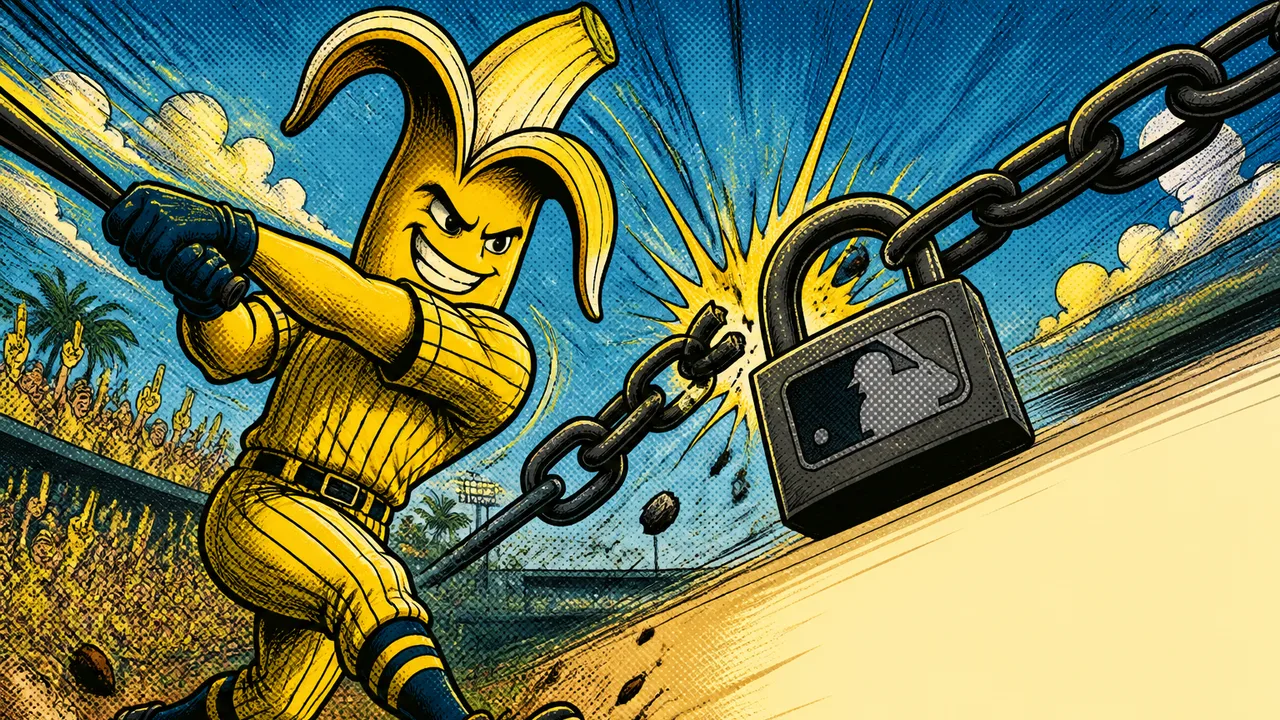
The Savannah Bananas could enter a Major League Baseball lockout with something the league cannot schedule into a collective bargaining agreement: a ready-made baseball show.
That difference could become especially important during a work stoppage. MLB is built around elite competition stretched across a long season, with media rights, sponsorships, ticket sales and generations of statistics reinforcing the product. The Bananas are selling something different: a tightly produced live event built to travel from the ballpark to social media almost instantly.
MLB depends on fans caring what happens over six months. The Bananas only need to make one night feel unmissable.
That contrast becomes more relevant as talk of a possible MLB lockout returns. The business logic is easy to see: if MLB games disappear from the calendar, another baseball product suddenly has more room to capture attention.
But the opportunity is not as simple as displaced MLB fans automatically becoming Bananas customers. Any benefit would depend on several factors, from scheduling and ticket availability to geography, media exposure and how much demand actually carries over from one product to the other.
The actual opportunity has several layers, and none amounts to a conveyor belt carrying MLB customers directly to the Bananas' ticket window.
What a Stoppage Would Actually Open
A lockout would create empty inventory across television schedules, sports news coverage, sponsor campaigns and fans' calendars. Those vacancies have commercial value. Broadcasters and publishers still need programming. Brands that planned to advertise around baseball still want audiences. Stadium operators still prefer occupied dates to locked gates and dark concession stands.
The Bananas could pursue each opening without promising a substitute major-league season. Their format already emphasizes personality, direct audience participation and clips that can circulate independently of game results. That gives the company a better chance of benefiting from a disrupted media environment than a conventional club whose appeal depends heavily on standings, rivalries and championship stakes.
Attention would probably arrive before revenue. A burst of social views can increase awareness within hours; turning that audience into ticket buyers requires suitable venues, available dates and a tour schedule capable of absorbing demand. Sponsorship money moves on another clock because contracts involve category rights, deliverables and brand approvals. An MLB shutdown could widen the sales funnel while leaving much of the cash conversion for later.
Competition would also remain. Depending on their schedules and the scope of any labor dispute, minor-league, independent, college and international baseball could continue offering games. Concerts, festivals and other touring shows would chase the same household entertainment budget. A family with an unexpectedly free baseball night has many choices, including keeping the money.
The Bananas Sell Scarcity Differently
MLB depends on volume. A long season provides dozens of home dates for every club, feeding media rights, sponsorships, ticket sales and premium seating. The business works because the product keeps coming.
The Bananas lean on scarcity. Fewer appearances concentrate demand, create urgency and make each stop feel like an event. Strong demand can also improve their leverage with venues over rental costs, ticketing, concessions, merchandise and promotion.
What is harder to measure is the underlying economics. Venue contracts and financial statements are not public, so revenue per event, margins and the potential value of an MLB lockout remain unclear. Touring still carries substantial costs such as travel, labor, insurance, production and venue setup. The applause may travel for free; the equipment does not.
Scarcity also creates a ceiling. More dates mean more revenue opportunities, but expand too quickly and the sense of urgency can fade while execution becomes harder. A lockout could create pressure to grow at exactly the moment consistency matters most.
Popularity and affordability are separate questions, too. Demand may be enormous, but what families actually pay depends on ticket availability, fees and resale prices. Without those numbers, popularity alone cannot prove accessibility.
Digital Reach Changes the Revenue Sequence
Traditional baseball starts with the game, then distributes it through tickets and media. The Bananas can work in reverse: a viral clip or player personality can create attention first, then help drive demand for the tour.
That model could become more valuable during an MLB work stoppage, when labor disputes replace highlights and leave more room for another baseball product to capture attention. Bananas players and personalities could benefit simply because fans, media and sponsors still have baseball interest to fill.
But digital reach is not the same as revenue. A viewer can watch from hundreds of miles away without buying a ticket, merchandise or anything else. The real measures are how well that attention converts into ticket sales, merchandise, sponsor value and repeat attendance.
So the lockout opportunity rests on a simple question: Can the Bananas turn more attention into customers without raising touring and production costs just as quickly? The opportunity is plausible, but the economics remain unclear.
Venue Leverage May Be the Most Durable Prize
A temporary surge in ticket interest would help. Better venue relationships could last longer.
Booking larger or more prominent stadiums can expand capacity and strengthen the perception that the Bananas belong on a national entertainment calendar. A period of reduced MLB inventory could make facility operators, commercial partners and media companies more receptive to alternatives. Even conversations that produce no immediate contract can supply demand data for later negotiations.
Venue leverage has limits. MLB stadiums operate through leases, concession agreements, labor arrangements and event calendars that do not disappear when players are locked out. A cancelled baseball game does not necessarily become an open date available to another operator. Preparation time, field requirements, staffing and contractual restrictions can block a simple substitution.
The Bananas also benefit from controlling the design of their event. That control supports consistent branding and pacing, yet each larger venue introduces operational variables. Sightlines, crowd proximity and fan interaction can change when a production moves from an intimate park into a building designed for major-league scale. More seats improve gross-revenue potential only when the show remains persuasive from the upper levels.
Novelty Must Survive Its Own Success
The bigger test comes when MLB returns. A lockout could give the Bananas a rare burst of attention, but the real challenge would be keeping those new fans once major-league baseball is back every night.
Because the Bananas tour, repeat demand does not always mean repeat attendance. Social content, merchandise and anticipation between stops can keep fans engaged, though long gaps also give audiences time to move on.
Direct comparisons with MLB only go so far. The two businesses have different cost structures, revenue models and levels of control, and the available financial data is too limited for a meaningful profitability comparison.
A lockout could still bring the Bananas more attention, new customers and better venue opportunities. It could also tempt them to expand faster than their scarcity-driven model can handle.
If MLB goes dark, the Bananas get a bigger spotlight. The real test is whether that spotlight still matters once the lights come back on.
More Like This
Stephen A. Smith Tests Sports Media's Political Reach
Stephen A. Smith's 2028 speculation shows how sports media can convert recurring attention into political capital, while creating new risks for ESPN and its audience.
Rays Stadium, US Open Records and Prediction Markets
The Rays finally got their votes. The US Open set a prize record. And prediction markets got a legal gut-punch. Here's what it all means financially.
Dodger Stadium's 4th of July Fan Experience Reviewed
A Dodgers fan vlog captures rock climbing, a $22 burger, commemorative coins, and a Yamamoto gem against the Padres on Independence Day.

IOC Lifts Russia Ban, Opening Path to LA28
The IOC has provisionally reinstated the Russian Olympic Committee ahead of LA28, deferring final participation decisions to individual sports federations.
MLBPA Rejects MLB's Amateur Draft Overhaul
The MLBPA's first formal draft proposal rejects MLB's sweeping changes to draft timing, eligibility, and signing bonuses. Here's what's actually at stake.

MLB at Midseason: Attendance, ABS Data, and Fanatics Fest
MLB's All-Star break numbers show attendance gains, ABS data reveals umpire accuracy, and Fanatics Fest eyes profitability in year three at the Javits Center.
Agentic AI Is Reshaping Sports Business Economics
How autonomous AI agents are moving from experimentation to operational deployment across NFL teams, sponsorship sales, and broadcast production.
Tracy McGrady's Real Business Education
Tracy McGrady went from 18-year-old millionaire with zero financial knowledge to NFL owner. The lessons in between belong to all of us.