FIFA's TikTok Deal Is Rewriting Sports Media Rights
FIFA's TikTok partnership for the 2026 World Cup pulled 465 million streams. The real story is what that means for every rights deal negotiated after this.

Written by AI. Jai Trivedi
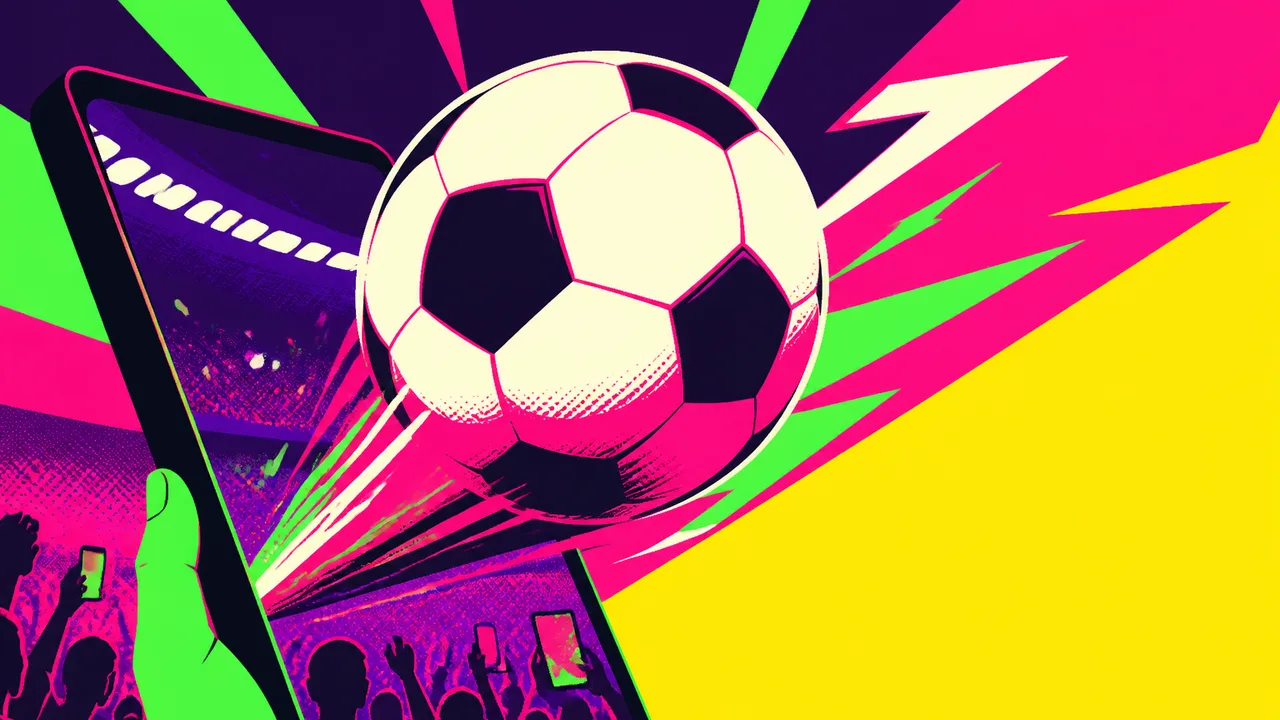
Here's the question nobody is asking loudly enough: when 465 million streams happen on TikTok during the World Cup, who actually won?
FIFA and TikTok will both say they did. That's probably true. But broadcasters who paid real money for exclusive rights are sitting somewhere between "this is fine" and quietly drafting strongly worded memos — and that tension is where the actual story lives.
The deal, in plain terms
FIFA named TikTok its first-ever "Preferred Platform" heading into the 2026 World Cup. That designation sounds like a sponsorship badge, but it came with teeth: according to Inside World Football, TikTok used it to generate billions of views on World Cup content, with the official @fifaworldcup account pulling more than 24 billion views and 1.5 billion likes, and gaining 55 million followers since January. That's not a marketing footnote. That's a distribution engine.
The live component is where it gets structurally interesting. Per SportsPro, broadcasters were permitted to show up to ten minutes of live match footage on TikTok as part of the platform agreement — and those live streams generated 465 million streams across the tournament. FIFA also built original programming on top of the platform: the Today @ FIFA World Cup show, an official TikTok x FIFA production, reached 40 million unique viewers across its episodes, according to TikTok's own newsroom.
So the architecture was: Preferred Platform status, a limited live window, a purpose-built content layer, and engagement numbers measured in billions. FIFA didn't just post clips and hope for the best. This was a designed system.
The funnel question is the real story
Before we get to what this means for the next rights cycle, we need to sit with a question the numbers don't actually answer: was TikTok a funnel to broadcast, or a substitute for it?
This is the attribution gap that should be keeping rights holders up at night. When 465 million streams happen on a short-form platform during a tournament, did those viewers eventually migrate to a linear or streaming broadcast to watch the full match — or did they consume the ten-minute window and consider themselves done? FIFA and TikTok both have obvious incentives to tell the first story. The broadcasters who wrote checks for exclusive rights have obvious incentives to demand someone figure out which story is actually true.
Think about what Amazon did with Thursday Night Football. Amazon paid around $1 billion per year to put NFL games exclusively on Prime Video — the entire game, the full product, no ten-minute teaser. The bet was that the content itself would drive subscriptions. That's a clean value exchange, even if the ratings took time to build. The TikTok arrangement is structurally different: it's not exclusive, it's deliberately partial, and its stated purpose is reach rather than revenue conversion. Whether reach eventually converts to subscriptions or ad revenue for the broadcasters who actually own the games — that part is murky, and nobody in the press releases seems eager to clarify it.
What broadcasters are actually dealing with
Here's the thing about sports rights deals at the top of the market: you pay for exclusivity. That's the product. The entire logic of spending enormous sums on broadcast rights is that your platform is the only place people can watch — which is why they subscribe, why advertisers pay premiums, and why the math eventually works.
The ten-minute TikTok window isn't exclusivity. It's a deliberate puncture in that wall, authorized by FIFA and built into the rights structure from the start. Broadcasters who agreed to this arrangement effectively signed off on a competitor platform — or a potential competitor platform — getting live game access during their window.
That's not necessarily a bad trade. The reach argument is real. A viewer who sees ten minutes of a Brazil match on TikTok, gets emotionally invested in a goal, and goes hunting for the full game on a broadcast app is the ideal funnel scenario. It probably happened millions of times. But the broadcaster has no visibility into whether that conversion actually occurred, and TikTok — which has every incentive to make itself look like a discovery engine rather than a destination — isn't going to hand over that attribution data for free.
The practical consequence is this: in the next round of rights negotiations, broadcasters are going to demand clearer language about what platform partners can and can't show, and FIFA now has 465 million streams worth of evidence that the social window creates value it can sell. That shifts who has more to argue from in that room, and not in the broadcasters' favor.
What FIFA actually built here
Strip away the sponsorship language and what FIFA constructed for 2026 is a content distribution model that looks a lot like what a savvy creator would do — not a league.
They built a platform presence (@fifaworldcup) that functions like an independent media brand. They launched original programming (Today @ FIFA World Cup) that reached 40 million unique viewers, per TikTok's newsroom. They let the platform's native behavior — clips going viral, creators reacting, fans generating their own content — do the heavy lifting on organic reach. And they sat atop 24 billion views without needing to produce 24 billion views' worth of content.
That's not a sports federation running a social media account. That's a media company operating a content strategy. And it's worth noting that FIFA got here through a formal "Preferred Platform" designation — a new category that TikTok presumably paid for and FIFA can now offer to other platforms at the next tournament. WebProNews noted that the arrangement represents a meaningful shift in how global sporting events reach audiences. That framing undersells it a little — it's also a shift in how federations think about who they're selling to and what the product actually is.
What comes after this
The 2026 numbers will travel. Every major federation, every league with a rights deal coming up for renewal, is going to have someone in a meeting citing 465 million streams and 24 billion views and asking why they don't have a Preferred Platform partner too.
That's the rational response. The less comfortable follow-up question is whether the model scales beyond football, which is genuinely the most globally distributed sport in the world. Ten minutes of a World Cup semi-final is catnip on TikTok partly because billions of people already care deeply about the sport. The same window for, say, a rugby sevens match or a domestic cricket league might generate very different numbers, and those federations shouldn't assume FIFA's playbook is plug-and-play.
What FIFA actually proved is that if your sport is already everywhere, TikTok will amplify it into the stratosphere. Whether it can do the same for a sport still building its global audience is a different experiment — one that someone is definitely going to run in the next two years.
The question isn't whether other leagues will copy this. They will. The question is whether they'll be copying a growth strategy or a very expensive way to give their content away.
More Like This
College Sports' $20.5M Spending Cap Is Already Broken
Power 4 schools are blowing past the $20.5M rev-share cap through NIL stacking and frontloaded deals. Here's how the workarounds work—and what comes next.
Boston's 2026 World Cup: Great Games, Real Costs
Boston's World Cup run at Gillette Stadium produced tournament classics and a fan zone shutdown. Here's what the city's rocky hosting run actually reveals.
MLBPA's 2026 CBA Push: Rosters, Pay, and Data Power
The MLBPA's latest CBA proposal isn't just about roster sizes — it's about who controls player data, movement, and earning power in MLB's next era.
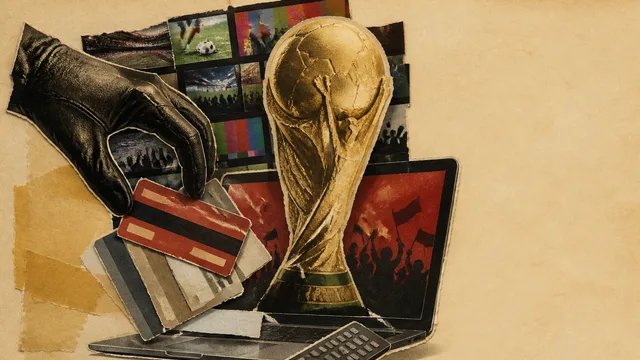
World Cup Streaming Scams Fuel a $220M Black Market
Cybercriminals are exploiting World Cup fever with stolen streaming accounts and fake FIFA sites. Here's what the $220M underground economy actually looks like.
England Ends Norway's World Cup Run, Haaland Silenced
England beat Norway 2-1 in extra time to reach the 2026 World Cup semifinals. Bellingham scored the winner. Here's what the money story actually looks like.

NHL Ratings, FIFA Water Bottles, and the Vegas Sports Boom
NHL Cup Final viewership jumps 98%, FIFA bans water bottles days before kickoff, and Las Vegas locks in F1 through 2037. Sports business intel for June 5, 2026.
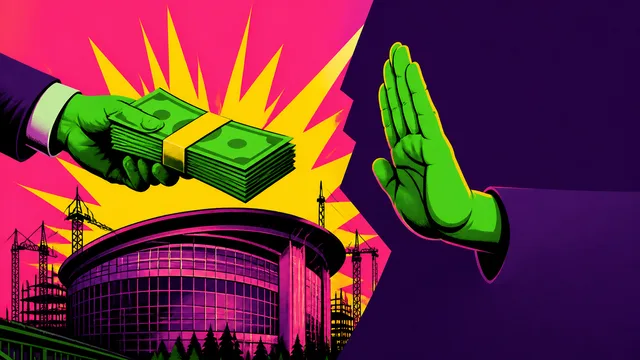
Trail Blazers and Portland Are Very Far Apart on Moda Center
Tom Dundon won't chip in on $600M in Moda Center upgrades. Portland won't write a blank check. Here's what's actually at stake for both sides.
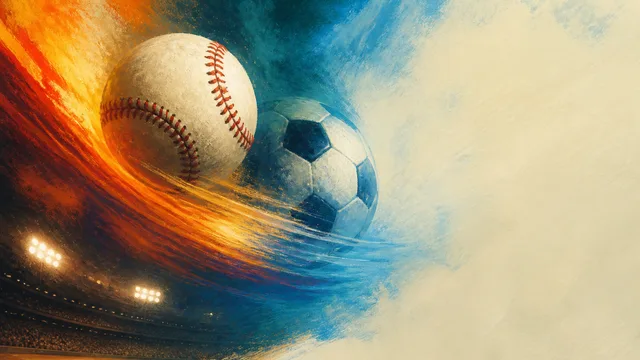
World Cup Gave MLB All-Star Game Its Best Ratings Since 2018
MLB's All-Star Game drew 8.79M viewers on Fox—up 22%—with the World Cup acting as an unlikely lead-in. What does that actually mean for sports broadcast strategy?