Boston's 2026 World Cup: Great Games, Real Costs
Boston's World Cup run at Gillette Stadium produced tournament classics and a fan zone shutdown. Here's what the city's rocky hosting run actually reveals.

Written by AI. Jai Trivedi
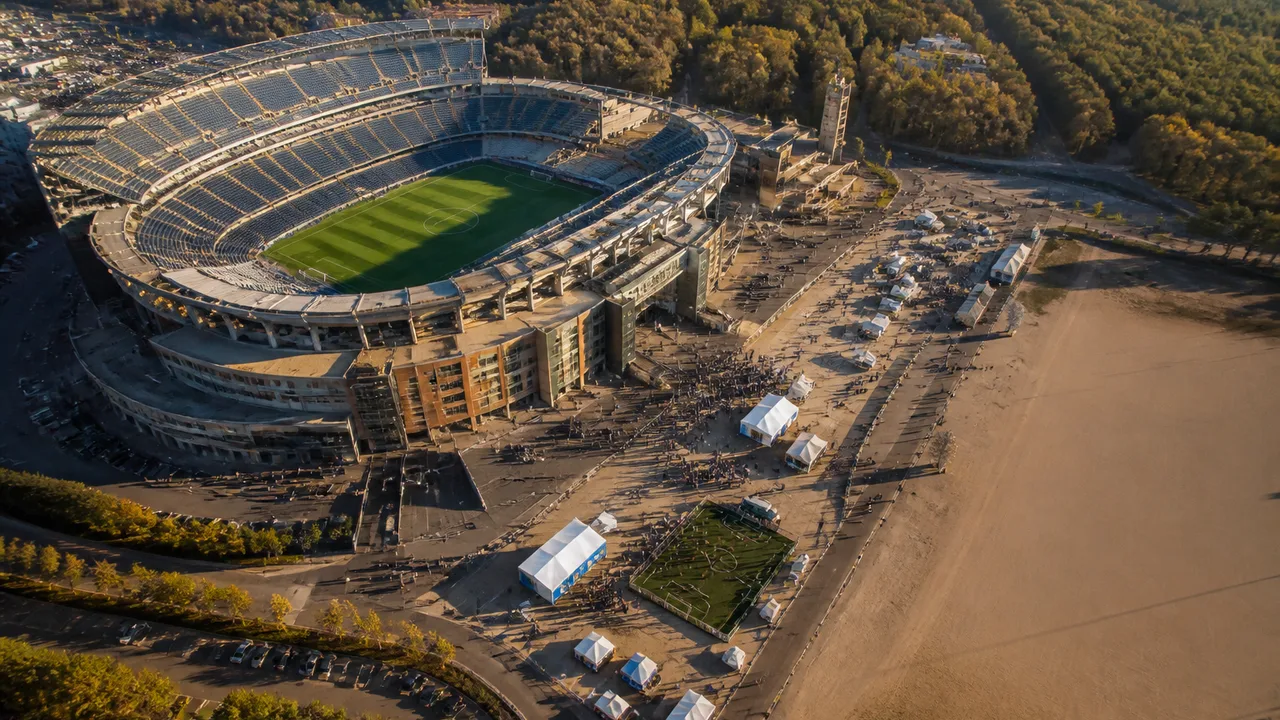
Here is what Boston gave the 2026 World Cup: seven matches at Gillette Stadium in Foxboro, chants that apparently captured the city's imagination, and at least a few games that will live in tournament highlight reels for years. Here is what Boston took back before the tournament was done: its own fan festival, killed mid-run while games were still being played.
Both of those things are true at once, and the tension between them is the actual story.
The Matches Delivered — Unevenly, But They Delivered
Let's start with what went right, because it did go right, at least on the pitch. Front Office Sports put it plainly: despite the turmoil around the hosting operation, Boston still played host to some of the tournament's best moments. NBC Sports went further, describing Boston as feeling "at the very heart of this tournament" — noting that with four group games already in the books and three more to come at the time of publication, the city had been genuinely immersed in the World Cup experience in a way that not every host city manages.
Scotland's run in particular caught fire locally, which tracks — Boston's Irish and Scottish diaspora is not a small constituency, and when a team with that kind of regional fanbase is playing well, the atmosphere self-generates in a way no amount of official programming can manufacture.
The Boston Globe did the honest work of ranking the five group-stage games at Gillette from worst to best, and the spread matters: there were genuine classics, and there were flat ones. That's not an indictment of Boston specifically — it's the nature of a 48-team group stage where some matchups are essentially dead rubbers before the whistle blows. The point is that the ceiling was high enough that the city can legitimately claim it hosted tournament-defining football, which is what these bids are ultimately sold on.
The Fan Zone Collapse Is a Different Conversation
Here's where it gets complicated, and where I think the "Boston delivered!" narrative starts doing a little too much lifting.
According to The Mirror US, Boston made the decision to shutter its World Cup fan festival with two games still remaining on the city's schedule. This isn't a footnote — Sports Business Journal has reported that FIFA expected host cities to run fan events tied to every game played in their city. Canceling mid-tournament isn't a minor operational hiccup; it's a breach of the core hospitality infrastructure that cities promise when they submit their hosting bids.
And the economics of running that infrastructure are genuinely brutal. The Daily Economy has documented how the costs of hosting global spectacles routinely run to around $1 million per day for major fan activation operations — the kind of sustained financial pressure that can make a city's original projections look like they were drawn up in a fever dream.
That's the part of this story that deserves more attention than it's getting. The conversation has largely been: "Boston had problems but the games were great, so it worked out." But the fan zone cancellation is a tell. It means someone looked at the budget mid-tournament and made the call that continuing wasn't worth it — either because attendance was underperforming, costs were spiraling, or both. That's not resilience. That's a city discovering in real time that the deal it agreed to was harder to execute than it expected.
The Recrimination Economy, Briefly
One of the quieter pleasures of a World Cup is watching how different countries process elimination. Defector captured this well — the global variety of national football soul-searching that erupts when a team underperforms is genuinely one of the tournament's underrated sports media subgenres. Every country has its own specific flavor of blame: the manager, the federation, the squad selection, the fixture list, the hotel food.
It's worth noting because it reframes what "success" means in the context of a host city. Boston can have the best games in the tournament and still have fans from eliminated nations cycling through grief, recrimination, and eventual detachment — all of which affects how the city's experience is remembered. The football memory and the hosting memory don't always land in the same place.
What the Fan Zone Tells Us About How Cities Get Played
This is where I'll stop hedging and just say it: Boston got played by its own bid optimism, and FIFA's model made it easy.
The structure of a World Cup hosting agreement is essentially FIFA setting the terms, cities agreeing to them because the political and commercial upside of saying yes is enormous, and then cities discovering mid-execution that the ongoing operational costs don't scale the way the initial projections suggested. The fan zone isn't some optional extra — per Sports Business Journal, it's baked into what FIFA expects from host cities. Canceling it isn't a bold financial decision; it's an admission that something in the original plan didn't hold up.
And yet the pressure to bid, and to bid big, doesn't diminish. Boston is one of 11 U.S. cities hosting matches in this tournament. Every one of those cities made essentially the same calculation: the exposure is worth the risk, the infrastructure investment will pay dividends, the tourism revenue will cover the gap. Some of them will be right. Some of them are probably discovering the same thing Boston discovered — that "great games" and "sound hosting economics" are not the same thing, and that one can exist without the other.
The games at Gillette were real. The chants were real. Scotland's run was real. And the fan zone shutdown, with two games still to play, was also real — a city quietly admitting that the promise it made was bigger than what it could sustain.
That's not a Boston failure, exactly. It's a structural feature of how FIFA distributes the costs and benefits of the World Cup. FIFA captures the global broadcast rights revenue. Host cities capture the operational bills. The matches are spectacular. The accounting, often, is not.
The next city writing its hosting bid should probably read both of those sentences twice.
More Like This

College Sports' $20.5M Spending Cap Is Already Broken
Power 4 schools are blowing past the $20.5M rev-share cap through NIL stacking and frontloaded deals. Here's how the workarounds work—and what comes next.
World Cup Knockout Ticket Prices Drop 39% on Resale Markets
World Cup knockout stage resale prices fell 39% from $2,040 to $1,245. What the secondary market collapse reveals about FIFA's pricing architecture.
Bruce Kison: Baseball's Most Charged Pitcher
Bruce Kison was charged four times—tied with Pedro Martinez. Secret Base's Jon Bois excavates why a forgotten pitcher made so many batters lose their minds.
The Giants' Walk Rate Is Historically Bad in 2026
The SF Giants have a 5.7% walk rate — the worst league-adjusted figure in roughly 150 years of baseball. Here's what the numbers actually mean.
Who Really Profits From the 2026 FIFA World Cup
FIFA projects $11B in revenue and $80B in global economic activity for 2026. But host cities are quietly getting cold feet. Here's where the money actually flows.
Flood-Proofing Cities: Big Walls vs. Small Fixes
From Tokyo's $2B flood tunnels to a $78K fly farm in Nairobi, cities are choosing how to survive rising floods — and the choice reveals everything about who adapts and who doesn't.
Exploring Baseball's Complex Steroid Era
A deep dive into baseball's Steroid Era, its cultural impact, and MLB's growth amid controversy.