MLBPA's 2026 CBA Push: Rosters, Pay, and Data Power
The MLBPA's latest CBA proposal isn't just about roster sizes — it's about who controls player data, movement, and earning power in MLB's next era.

Written by AI. Jai Trivedi
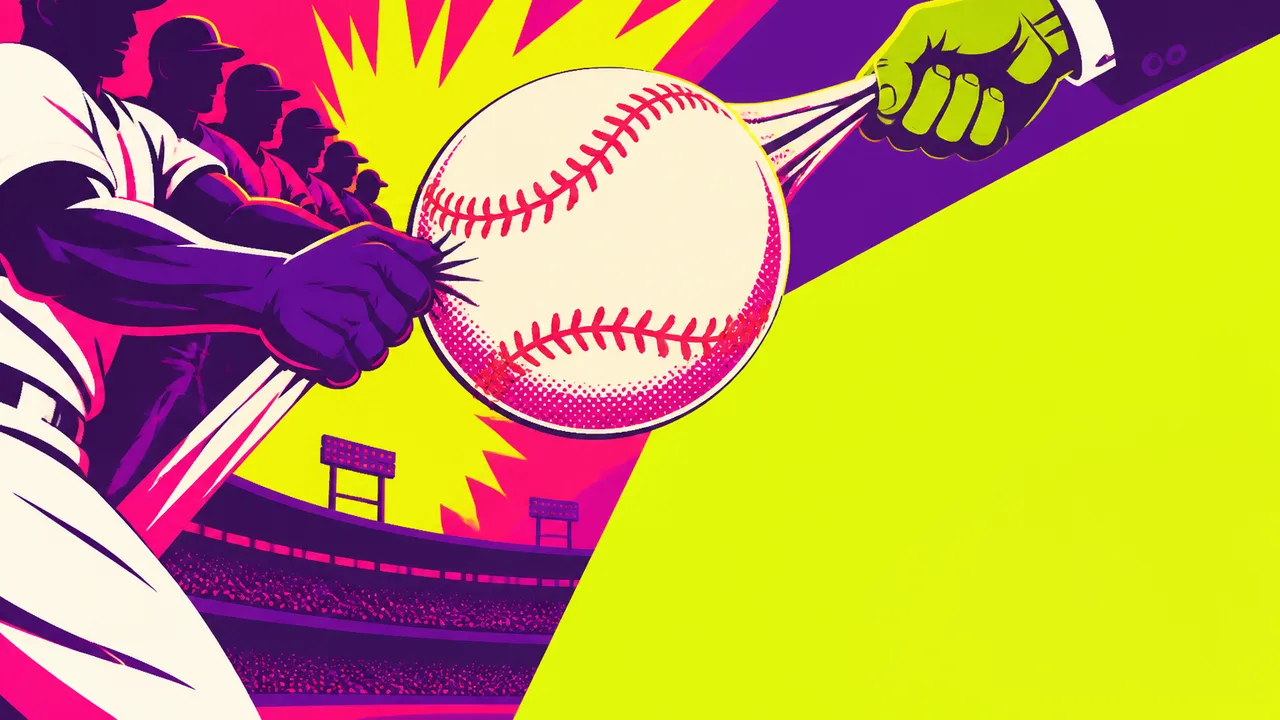
If you follow the creator economy at all, you already know this plot: the platform has the data, the algorithm, and the contract leverage. The creator has the talent and the audience. And every few years, someone proposes a deal that sounds like progress but mostly just formalizes who stays in charge.
That's not a stretch of an analogy for what's happening right now in MLB labor talks. The MLBPA has put a new CBA proposal on the table, and the surface-level story is about roster sizes and salary protections. The deeper story — the one that's going to matter in five years — is about who gets to see the numbers that determine a player's professional fate.
Start with the mechanics, because they actually matter here.
The Roster Math
The MLBPA's proposal asks to expand active rosters from 26 to 28 players for the first 15 days of the season. That sounds like a minor tweak until you do what MLB Trade Rumors did and run the numbers: 60 new Opening Day roster jobs, and a total of 900 additional days of major league service time and salary across the league. That's not rounding error. That's real money and real careers for players who currently spend April bouncing between the majors and Triple-A.
ESPN frames the union's rationale as twofold: protect established big leaguers from being overworked early in the season, and create more paths onto Opening Day rosters. Those goals are a little in tension with each other — roster expansion generally favors depth players, not stars — but the service time math unites them. More days on the active roster means faster eligibility clocks, which means players reach free agency and arbitration sooner.
That's the actual threat to ownership, and everyone in the room knows it.
Bleacher Report adds that the union is also proposing salary protections for pitchers who are optioned to the minors over the All-Star break or immediately after games where they hit certain performance thresholds — a provision that would close one of the more brazen manipulation loopholes in the current system. Under the existing structure, a team can send a pitcher down after a strong start, essentially docking his pay at the precise moment his performance has proven his value. The proposal targets exactly that.
The MLBPA is also pushing to reduce the number of times a player can be optioned to the minor leagues in a single season, according to Front Office Sports. No verified specific threshold has emerged from reporting on this yet, but the direction is unambiguous — the union wants to make churning players between levels harder and more expensive for clubs.
And then there's the 60-day injured list provision. Per Front Office Sports, the proposal would allow clubs to place players on the 60-day IL before 40-man rosters are finalized, letting teams protect more players from the outset. This one mostly serves organizational flexibility rather than individual player earnings, which is worth noting — not every plank in this proposal is purely adversarial toward ownership.
The Part Everyone Is Underplaying
Here's the piece I keep coming back to: data transparency.
Sportsnaut characterizes the MLBPA's proposal as "directly challenging the league's push for a strict salary cap" — and that framing is accurate as far as it goes. Owners want a salary cap and maximum contract lengths; the union wants none of it. But the data transparency demand is where this negotiation gets genuinely interesting, and it's not getting nearly enough attention.
Teams now have biomechanical modeling, exit velocity curves, spin rate data, and predictive injury modeling on every player they employ. This data shapes roster decisions, informs contract offers, and in some cases probably precedes a demotion by days or weeks before the player himself has any inkling. The player is the subject of the analysis. He just doesn't get to see it.
Think about that in the creator economy frame again. Imagine YouTube knowing your watch-time trends, your audience retention data, your revenue projections — and making monetization decisions based on that information while keeping all of it from you. That's not hypothetical anywhere; it's roughly what happens. And the creator community has spent years fighting for algorithmic transparency, data access, and clearer terms around how platform decisions get made. The MLBPA appears to be running a version of that same play.
This isn't just a labor issue. It's a structural power issue. When one party in a negotiation has comprehensive predictive data on the other party's value and the other party is flying blind, no contract term can fully compensate for that information asymmetry. Salary protections and roster rules adjust outcomes at the margins. Data access changes the actual terms of the negotiation.
What Owners Want — And Why They Want It
The owners' asks sit at the other end of the spectrum. As Bleacher Report notes, they're pushing for a salary cap and limits on maximum contract lengths — structural mechanisms that shift financial risk back toward players and cap the upside for anyone who ages into a long-term deal.
The salary cap fight is existential for the union. Every major North American sports league that has implemented a cap has seen its labor dynamics restructure around it, and not in ways that tend to benefit the players who bargain from the bottom of the market. MLB is the last of the four major leagues without one, and the union has defended that position for decades with good reason.
Max contract lengths are a different flavor of the same argument. Limiting how long a player can lock in guaranteed money constrains the biggest earners, yes — but it also reduces the financial security of anyone trying to sign a deal late in their prime. CBS Sports has been tracking the broader timeline here, and the distance between the two sides on these structural questions remains substantial.
The Vibe Underneath the Mechanics
We are in a specific cultural moment right now. Athletes in every sport are more publicly assertive about their labor value than they were even five years ago — partly because social media gives them a direct channel to their audiences, partly because the NBA generation of empowered players normalized the conversation, and partly because the broader cultural mood around workers vs. platforms has shifted enough that "I want to know how you're using my data and I want fair pay" is a statement that reads as obvious rather than radical to most people under 35.
The MLBPA's proposals land in that context whether they intend to or not. Expansion of roster protections, limits on how freely teams can shuffle players through the minors, salary guarantees tied to performance — these all signal a union that understands the game being played at the organizational level and is trying to legislate around it.
The owners' counterproposals — cap structures, contract limits — signal organizations that want to re-establish financial predictability in an environment where top player salaries keep climbing.
Both positions have internal logic. But one of them is riding a cultural tailwind and the other is paddling against it.
Who Has Leverage Right Now
The current CBA expires after the 2026 season, which means negotiations are happening with a real deadline in view. The owners may be betting that as the deadline approaches, the union blinks on the cap question. The union may be betting that public sentiment — and players' social media reach — makes a work stoppage politically costly enough for ownership to fold.
My read: the data transparency demand is the canary here. If that plank gets quietly dropped from future proposals, it's a signal that the union traded it for something structural. If it survives into serious negotiation, it means the union has decided this is the cycle where information asymmetry becomes part of the fight.
Watch what they're willing to give up. That's usually where the actual power lies.
More Like This

College Sports' $20.5M Spending Cap Is Already Broken
Power 4 schools are blowing past the $20.5M rev-share cap through NIL stacking and frontloaded deals. Here's how the workarounds work—and what comes next.

Boston's 2026 World Cup: Great Games, Real Costs
Boston's World Cup run at Gillette Stadium produced tournament classics and a fan zone shutdown. Here's what the city's rocky hosting run actually reveals.
The Giants' Walk Rate Is Historically Bad in 2026
The SF Giants have a 5.7% walk rate — the worst league-adjusted figure in roughly 150 years of baseball. Here's what the numbers actually mean.

US AI Dominance Is Slipping. Workers Will Feel It First.
China is closing the AI gap with the US. The geopolitical story is getting plenty of coverage. The labor story beneath it isn't. Here's what's missing.

AI Training Data: The Legal Vacuum No One Is Filling
AI companies built trillion-dollar products on data they never paid for. Courts are starting to push back—and Congress still hasn't shown up.

College Sports Bill, MLB CBA, and Gucci F1: May 28
The Protect College Sports Act advances in Congress, the MLBPA opens CBA talks, the Lakers restructure, and Gucci titles Alpine F1. What it all means.

Telemundo's World Cup Ratings Win Beyond Spanish Speakers
Non-Spanish speakers are tuning into Telemundo's World Cup coverage in surprising numbers. Here's what the ratings reveal about how Americans want to watch soccer.
Exploring Baseball's Complex Steroid Era
A deep dive into baseball's Steroid Era, its cultural impact, and MLB's growth amid controversy.