Why Big Streamers Built a Sports Lobbying Alliance
Amazon, Netflix and YouTube are taking their sports streaming fight to Washington as regulators revisit media rights, fan access and a 1961 antitrust law.

Written by AI. Jai Trivedi
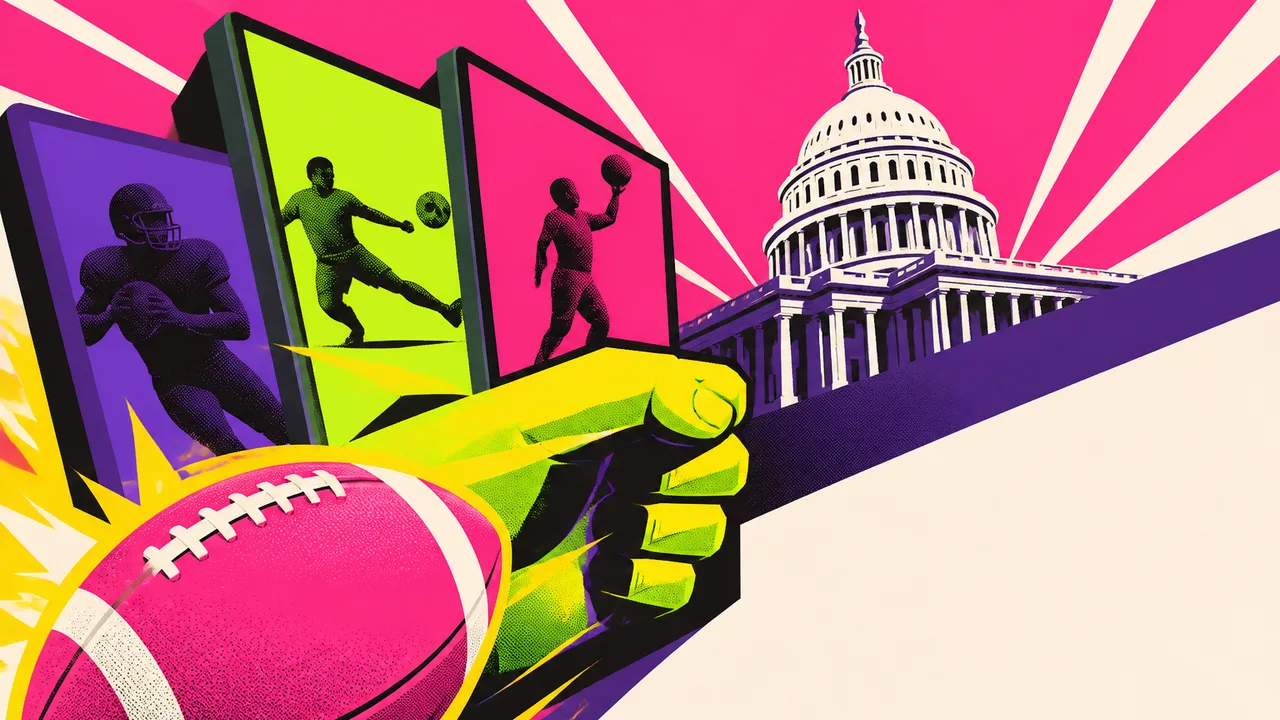
Amazon, Netflix and YouTube launched a Washington policy group in September 2026 while federal officials were examining how sports move from television to streaming.
The Streaming Access and Choice Alliance, or SACA, will advocate for consumer access, viewing choice and regulation that treats competing technologies alike. TechNet, a trade association representing major technology companies, will lead it.
That sounds like the standard launch copy for a lobbying coalition, polished until you can see your reflection in it. The timing provides a sharper explanation. All three founders now own valuable positions in live sports, and regulators are questioning the rules governing how leagues package and distribute those games.
SACA therefore works as an insurance policy for the founders' sports strategies. That is an inference from their rights portfolios and the federal scrutiny surrounding them, rather than a stated purpose or proof of coordinated commercial behavior. The alliance has announced no spending commitment, membership fee or legislative proposal, so its eventual influence remains impossible to measure.
Three Streamers, Three Different Sports Strategies
Amazon distributes the NFL's Thursday Night Football and has expanded across basketball, football and other sports. YouTube holds NFL Sunday Ticket in the United States. Netflix carries NFL Christmas games alongside WWE programming, boxing and other live properties, according to a summary of the founders' portfolios.
Those portfolios differ. Amazon has major recurring league packages. YouTube combines premium rights with a platform built around creators, highlights and user-uploaded video. Netflix has entered live sports through selected events and properties rather than a full calendar resembling a sports network.
Their policy interest still overlaps: each needs leagues to remain free to sell valuable inventory to digital platforms. Rules that restrict streaming exclusivity, alter the treatment of pooled rights or favor conventional broadcasters could change what those packages are worth and which bidders can acquire them.
This does not mean every regulatory proposal would damage all three companies equally. A rule affecting an NFL package could matter immediately to Amazon or YouTube and barely touch another Netflix event. SACA can coordinate the shared message while the members retain very different balance sheets, products and appetites for rights.
That distinction also helps decode the coalition's consumer pitch. SACA argues that streaming gives viewers more choice, control and viewing features. It also says broadband reaches more households than pay television, making digital distribution a mainstream route to fans.
The strongest version of that argument is straightforward. A policy written around broadcast or cable could protect an older delivery system rather than access itself. Streaming can bring sports to cord-cutters and cord-nevers without requiring a conventional pay-TV subscription, while competition from technology companies gives leagues more potential buyers.
Fans experience the other side one login screen at a time. Rights split among several services can require multiple subscriptions to follow a team or competition. Each app may look affordable alone, yet the combined bill and the weekly scavenger hunt can recreate cable's least charming features without the convenience of one channel guide.
Choice for a league selling packages and choice for a fan buying access are different measurements. SACA's founders emphasize the first kind because more eligible bidders and distribution models support their ability to buy rights. Policymakers are concentrating on the second because consumers bear the cost and complexity after those rights are divided.
A 1961 Law Meets the App Menu
The argument runs through the Sports Broadcasting Act of 1961. The law gives professional sports leagues an antitrust exemption allowing teams to pool broadcast rights and sell them collectively in packages. That structure became foundational to the modern sports-media business: a league can take a unified national product to networks rather than requiring every team to negotiate alone.
Streaming has strained the vocabulary and assumptions surrounding that arrangement. The Federal Communications Commission opened an inquiry into whether the act applies to games sold to streaming services. The Department of Justice also began investigating whether the NFL's broadcast practices involve anticompetitive conduct that harms consumers, according to reporting on the federal scrutiny.
The political pressure crosses party lines. Senators Tammy Baldwin, Mike Lee and Elizabeth Warren, plus Representative Pat Ryan, have introduced sports-streaming legislation or urged federal action. The House Judiciary Committee held a subcommittee hearing on the subject. SportsPro reported that Lee argued the NFL was violating the spirit of its legislative settlement by spreading games among more subscription platforms.
That history explains why a coalition appeared now. Thursday Night Football, NFL Christmas games and other selected matchups were created as streaming packages. The next policy fight could reach further if a league considers moving marquee inventory previously associated with a traditional broadcaster.
The 1961 exemption itself does not settle whether a game belongs on CBS, Prime Video or a service that has yet to escape a product manager's slide deck. It establishes the legal setting in which leagues aggregate rights. The current dispute asks how far that protection extends when pooled inventory is divided across broadcast, cable and apps, and whether consumers receive enough access in return.
Regulators could answer narrowly, leaving most streaming acquisition untouched. Congress could pursue access requirements instead. An investigation might also produce no major change. SACA's formation shows that Amazon, Netflix and YouTube consider the debate important enough to build a joint voice before the outcome becomes clear.
Big Tech Borrowed the Broadcasters' Playbook
The closest institutional comparison is the National Association of Broadcasters. The NAB has represented television and radio stations in Washington for years, including advocacy intended to help broadcasters keep competing for sports rights. SACA gives digital distributors their own table in the same policy food court.
The resemblance has limits. Broadcasters share a delivery model and a long regulatory history tied to licensed spectrum. Amazon sells cloud computing and retail subscriptions alongside video. YouTube runs a vast advertising and creator platform. Netflix remains centered on entertainment subscriptions. Their agreement on sports access does not erase the business conflicts waiting outside the meeting room.
Their coalition history underlines that risk. All three companies left the Internet Association in 2021 after their interests diverged. Barrett Media also compared SACA with the Streaming Innovation Alliance playbook launched in 2023. Those precedents show that technology companies can organize around a defined policy threat, but they do not establish that the partnership will survive once the threat changes.
SACA may prove more durable because its remit is narrower. Amazon, Netflix and YouTube do not need to agree on privacy, app stores, advertising or every other Big Tech migraine. They need enough common ground to argue that sports policy should remain technology-neutral and that streaming investment benefits viewers.
The first signals will come from what the coalition actually requests. Specific proposals, additional members and disclosed advocacy spending would indicate an institution built for a sustained fight. A broad consumer-choice campaign without policy detail would look more like a defensive press layer around existing rights positions.
For viewers, the useful question is also the simplest: does a proposal make a game easier and more affordable to find, or does it mainly preserve one distributor's place in the bidding room? SACA has arrived to ensure streaming companies help answer that question. Washington now gets to decide how much of the answer it buys.
More Like This

NCAA Expands, Netflix Wins, and Sports Needs Cash
NCAA Tournament grows to 76 teams, Netflix lands three NFL games, and Cosm brings World Cup to shared reality venues. The week's sports business, mapped.
Main Street Sports Sues Comcast and Charter Over Fees
Main Street Sports Group is suing Comcast and Charter over unpaid RSN licensing fees—a lawsuit that exposes the financial fault lines in sports broadcasting.
NFL Challenges Nielsen Over Audience Undercounting
The NFL says Nielsen is missing millions of viewers. The dispute over audience measurement is really a fight over how much broadcast rights are worth.
Panthers, WNBA, and the A's Shape Sports Business
Charlotte's $1.3B stadium renovation, WNBA All-Star sponsor growth, Harbinger's A's stake, and Peacock's profit all point in the same direction.
Seahawks Sell for $9.6 Billion in Record NFL Deal
The NFL unanimously approved the $9.6B Seahawks sale to the Khosla family. Here's what the record price tag says about where NFL franchise values are headed.
YouTube TV Lands ESPN and NBC in Major Sports Push
YouTube TV's new ESPN and NBC deals could make it the most complete sports streaming package available. Here's what the deals actually mean for the industry.

TypeScript 7 Rewrites Its Compiler in Go for 10x Speed
TypeScript 7's RC rewrites the compiler in Go, delivering roughly 10x faster type checking. Here's what actually changed and what it means for your build.

A Stonehenge Precursor Found Under a Housing Estate
A 5,000-year-old solar structure found near Stonehenge raises sharp questions about prehistoric astronomy—and how Britain treats unprotected heritage sites.