NFL Challenges Nielsen Over Audience Undercounting
The NFL says Nielsen is missing millions of viewers. The dispute over audience measurement is really a fight over how much broadcast rights are worth.

Written by AI. Denise Okafor-Williams
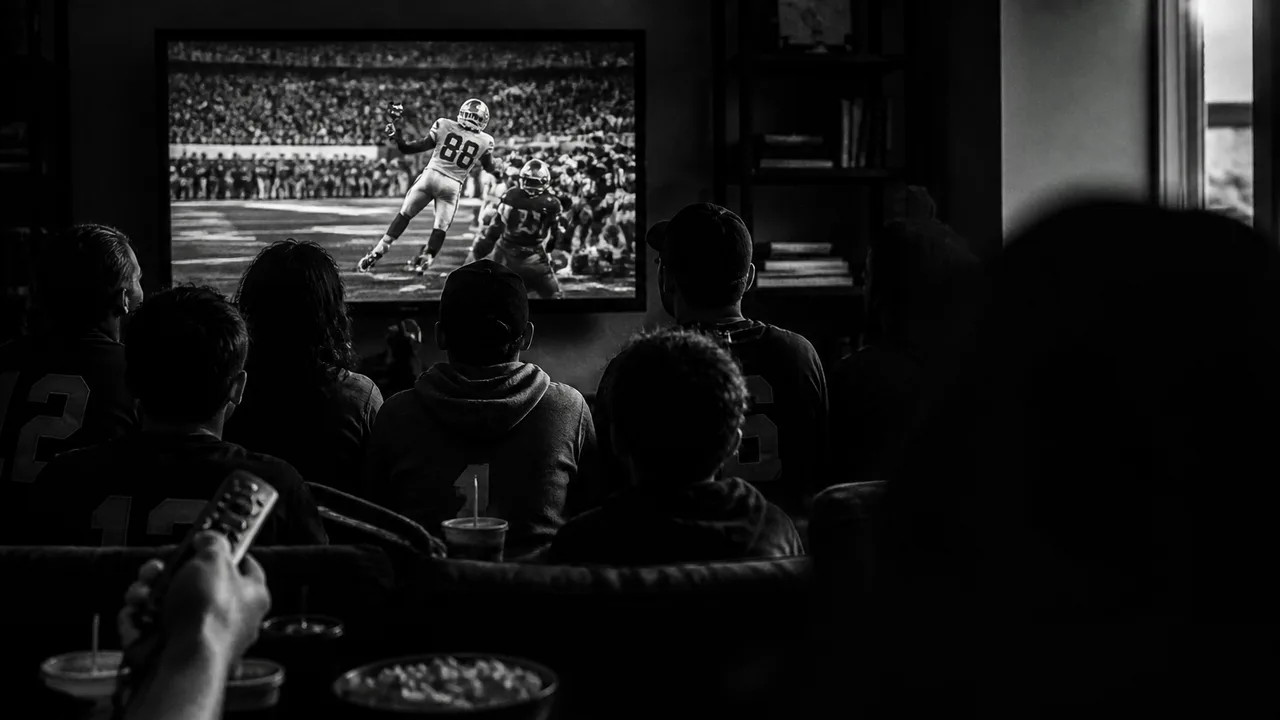
Every few years, someone in the sports media ecosystem remembers that the ruler they've been using to measure everything might be wrong. Right now, that someone is the NFL, and the ruler is Nielsen.
The league's chief data and analytics officer, Paul Ballew, has gone public with a pointed accusation: Nielsen's audience measurement methodology is systematically undercounting NFL viewership, missing millions of actual viewers in the process. According to The Current, Ballew's claim — first surfaced in a Wall Street Journal report — is that the undercounting is not marginal rounding error. It's structural. And the league is no longer content to wait for Nielsen to fix it quietly.
"It is time for us to double down on our efforts to determine alternatives in the marketplace," Ballew said, as quoted by Yahoo Sports.
That sentence is worth sitting with. The NFL is not just lodging a complaint with a vendor — it's signaling to the entire media measurement industry that it is actively shopping.
What Nielsen Actually Changed
Nielsen has been in the middle of a significant methodological transition, shifting its ratings framework toward what it calls a "Big Data + Panel" hybrid model. The idea, in theory, is to combine the precision of large-scale data inputs — automatic content recognition data from smart TVs, for instance — with the demographic granularity of its traditional panel. According to The Current, Nielsen moved all ratings to this new framework, a change that has drawn skepticism from several parts of the industry, not just the NFL.
The league's specific objections center on two measurement gaps. The first is streaming. As more NFL games have migrated to platforms like Peacock, Amazon Prime Video, and Netflix, counting the audience watching on connected devices has become increasingly complicated. Nielsen has been working to incorporate streaming viewership more comprehensively, but the NFL contends that viewers are still slipping through.
The second, and apparently more intractable, problem is co-viewing — the practice of multiple people watching the same screen counted as a single viewer. This is not a niche phenomenon. A family of four watching a Sunday afternoon game from the same couch registers as one viewer in panel-based sampling systems. For appointment television like live NFL games, which draws among the most communal viewing experiences in American media, the gap between actual bodies in the room and measured audience could be substantial.
Front Office Sports reports that Ballew believes an accurate co-viewing count is likely "at least two years away" — a timeline that is, charitably, not reassuring to a league whose next generation of media rights deals will be negotiated in the meantime.
Why the Numbers Are Never Just Numbers
NBC Sports put it plainly: no one disputes that NFL games are the most-watched programming on American television. The NFL is not fighting for its legitimacy as a cultural product. It is fighting over the price tag that legitimacy commands.
Audience measurement in the broadcast industry is not a neutral technical exercise. It is the foundation on which advertising rates are set, broadcast deals are valued, and rights fees are negotiated. Nielsen's numbers are, in effect, a currency. When the NFL argues those numbers are wrong, it is arguing that advertisers — and by extension, broadcast partners — are paying for a smaller audience than they're actually reaching. From the league's perspective, that means leaving money on the table, structurally, every season.
The specific dollar figures at stake in any measurement gap are difficult to quantify without access to the underlying advertising contracts, and the public record here is thin. But the directional logic is not complicated: if millions of viewers are being systematically excluded from the count, and CPMs (cost per thousand viewers) are set against that count, then the NFL's broadcast partners and their advertisers are effectively getting a discount the market never explicitly agreed to.
This is also, notably, a dispute that breaks differently depending on where you sit. CBS Sports president and CEO David Berson was described in the Yahoo Sports reporting as less alarmed than the NFL — a detail that, while brief, is telling. Broadcasters buying NFL rights already know their inventory is scarce and valuable. A measurement correction that validates higher viewership could raise rights fees down the road. It is not in every broadcaster's short-term interest to loudly champion the idea that they've been undervaluing their own product.
The Competitive Measurement Landscape
What makes the NFL's posture genuinely significant is not just the criticism of Nielsen — it's the threat of exit. Ballew's "alternatives in the marketplace" language points to a real, if still developing, ecosystem of measurement competitors. Companies like Comscore, VideoAmp, and iSpot.tv have been positioning themselves as Nielsen alternatives, particularly as streaming viewership has made traditional panel-based measurement look increasingly inadequate.
The NFL is not the first entity to push for measurement diversification. The television industry broadly has been wrestling with this transition since the pandemic-era acceleration of streaming. What makes the NFL different is leverage. It is, by most measures, the most valuable programming block in American television. If the NFL formally endorses an alternative measurement currency — or even credibly threatens to — it creates pressure across the industry to take that alternative seriously.
According to Yahoo Sports and Awful Announcing, Nielsen is already eyeing further methodology changes ahead of the football season, suggesting the company is not unresponsive to this pressure. Whether those changes will satisfy the NFL's specific concerns about co-viewing and streaming capture remains an open question.
Nielsen has held its position as the industry's dominant measurement authority for decades in part because the industry coordinated around it — not because it was provably perfect, but because a shared, consistent (if imperfect) metric was more useful than fragmented, competing ones. That logic still has weight. But it has less weight when the entity pushing back is the most-watched content property in the country.
What This Looks Like from the Labor Side
It's worth noting who this dispute ultimately affects beyond the league office and its broadcast partners.
NFL players — whose compensation is tied to league revenue through the collective bargaining agreement — have a structural interest in the accuracy of these numbers. Total revenue drives the salary cap. The salary cap sets the ceiling on what players collectively earn. If the NFL is correct that Nielsen has been systematically undercounting viewership, and if that undercounting has suppressed the market value of broadcast rights even marginally, the downstream effect runs through the CBA and into player earnings.
This is not to suggest the NFL is primarily motivated by concern for player salaries — the league's incentives here are institutional and financial in the most direct sense. But the measurement argument is not purely a corporate one. The accuracy of the audience count sits at the foundation of a revenue structure that eventually reaches the locker room.
Ballew's two-year timeline for accurate co-viewing measurement is the detail that should hang in the air longest. The next wave of NFL media rights negotiations will not pause to wait for the measurement infrastructure to catch up. Which means, whatever the actual viewer count turns out to be, the deals that shape how billions of dollars flow through the league — to franchises, to players, to the network partners — will be struck against numbers everyone already suspects are wrong.
That's not a technical problem. That's a structural one.
More Like This

World Cup Knockout Ticket Prices Drop 39% on Resale Markets
World Cup knockout stage resale prices fell 39% from $2,040 to $1,245. What the secondary market collapse reveals about FIFA's pricing architecture.

Trump, FIFA, and the Balogun Reinstatement Explained
Trump called FIFA's Infantino to contest Folarin Balogun's red card ban. FIFA reversed it. Here's what we know—and what remains unanswered.

MLS Ticket Sales Surge, But TV Ratings Stay Flat
MLS is riding a World Cup attendance wave, but TV ratings haven't followed. What that gap means for media rights, and MLS player salaries.

Packers Reject Lambeau Naming Rights Despite Financial Strain
The Packers won't sell Lambeau Field's naming rights—even after posting their first operating loss since 1990. Here's what that choice actually costs them.

Sports Business Morning Briefing: August 14, 2026
Field of Dreams returns with a permanent stadium, the NBA maps its broadcast season, and Nielsen numbers reframe women's sports as a serious media investment.

Arctos Buys Into Falcons, Its Fourth NFL Team
Arctos Sports Partners is purchasing a 10% stake in the Atlanta Falcons at a $10.6B valuation, extending its NFL portfolio to four franchises.

How the Tour de France Built a Global Sports Business
The Tour de France is more than a race. How ASO built a commercial machine from a national institution—and what it means for the athletes inside it.
USMNT Beats Bosnia, Advances Despite Balogun Red Card
The USMNT beat Bosnia 2-0 to reach the World Cup Round of 16, despite Folarin Balogun's controversial red card. Here's what it means on and off the field.