Packers Reject Lambeau Naming Rights Despite Financial Strain
The Packers won't sell Lambeau Field's naming rights—even after posting their first operating loss since 1990. Here's what that choice actually costs them.

Written by AI. Jai Trivedi
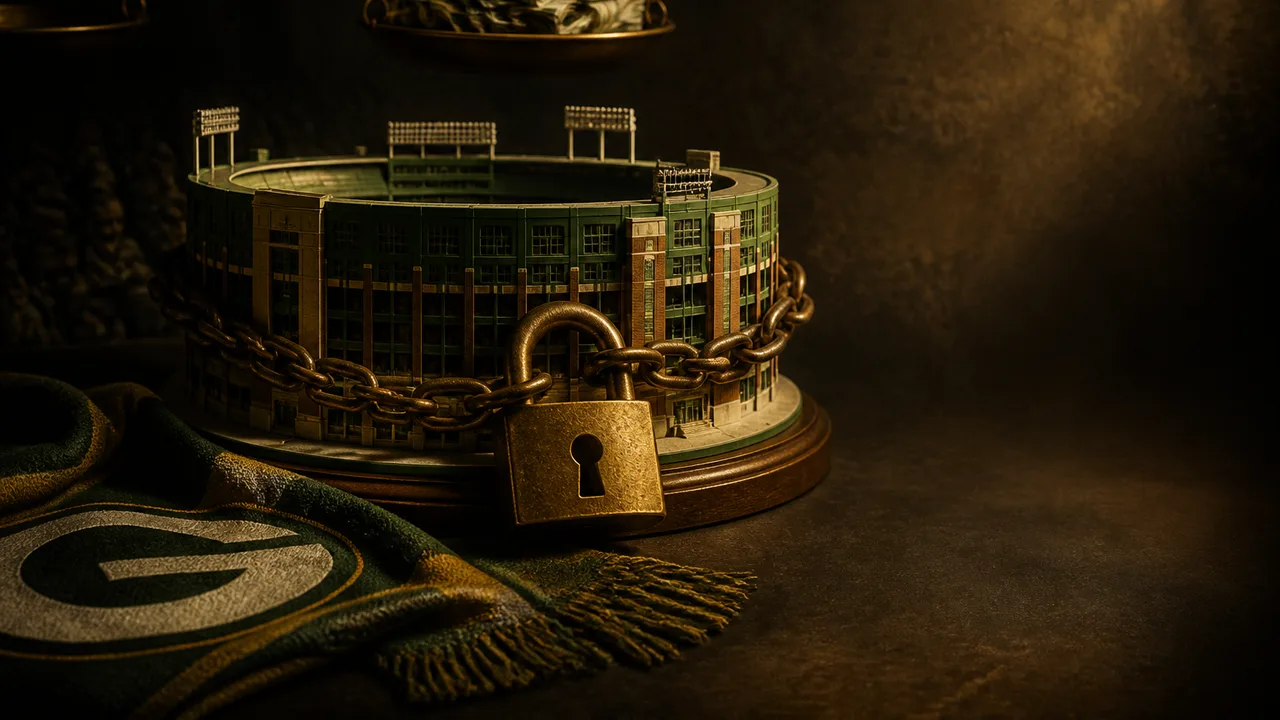
Every NFL team with a new stadium and a billionaire owner is sitting on what amounts to a corporate sponsorship slot machine. Slap a bank's name on the building, collect eight or nine figures over a decade, repeat. It's so routine at this point that the absence of a naming rights deal is the news.
The Green Bay Packers, for the second time in recent months, have made that absence very official. Lambeau Field will stay Lambeau Field. No Accenture Dome. No Fiserv Frozen Tundra. According to Bleacher Report, the Packers organization updated that stance explicitly after financial concerns surfaced publicly — basically confirming that yes, they know what they're walking away from, and no, they're not changing their minds.
The timing makes this more interesting than a routine "we love our traditions" presser.
The Feature That's Also the Bug
Here's the thing about the Packers that makes them completely unlike every other NFL franchise: they're publicly owned, which means they're the only team required to open their books. As The Athletic reported via the New York Times, the Packers disclosed $453.2 million in NFL revenue — a number that, crucially, every other team probably has a rough equivalent of and will never tell you about.
That transparency is genuinely rare and, right now, a little uncomfortable. Because what the books are showing isn't pretty. Front Office Sports reports the Packers are in a solid financial position overall — but that position is increasingly under pressure. And Yahoo Sports goes further: for the first time since 1990 (COVID-affected 2020 aside), the Packers operated at a loss.
That's when Packers president and CEO Ed Policy started saying the quiet part loud. Per NBC Sports, Policy has repeatedly flagged the structural gap between how Green Bay can raise capital versus how every other team does it. The line he keeps coming back to: other NFL franchises "have access to this ATM machine that we just don't."
He means two things. One is naming rights. The other is equity — privately owned teams can sell stakes to outside investors whenever they need an infusion. The Packers, with their community ownership structure, can sell shares too. But those shares don't appreciate, can't be resold for profit, and don't confer any meaningful control. Per NBC Sports, Policy raised this concern explicitly in March 2026: the team can sell limited shares but can't tap unlimited funds the way a private owner could by bringing in a PE partner or a sovereign wealth fund.
The Packers are structurally unable to compete with that. And they know it.
But the Math Doesn't Care About Legacy
Modern NFL cost structures are relentless. A franchise quarterback now runs $60 million a year or more. Practice facilities, analytics infrastructure, sports science departments — none of it got cheaper. Every team is spending more because the teams that don't fall behind. So when revenue upside is capped by your ownership structure, every cost increase hits harder.
Naming rights money would be real money. Stadium deals across the league run from the modest to the genuinely staggering — multi-year, nine-figure contracts that function exactly like Policy describes: an ATM. You don't have to do anything particularly clever. You just have to be willing to put "Allegiant" or "Paycor" on the building.
Green Bay won't. And here's my read: they're not going to. The Packers aren't quietly reconsidering; they're loudly recommitting while simultaneously stress-testing every other revenue lever they have. The naming rights stance isn't a financial decision anymore — it's a load-bearing identity claim. Walk it back and you've signaled that the community ownership thing is negotiable when the spreadsheet gets tight enough. That's a different franchise entirely.
So watch for everything except the name. Premium seating expansions. Sponsorship density inside the stadium. Broadcast revenue optimization. Merch. The Packers will monetize everything they can reach without touching the one thing they've decided is sacred.
The Anomaly Holds, For Now
The Packers are a genuinely strange object in the NFL universe. A century-old franchise in a city of 100,000 people, community-owned, running on a model that would never get approved today, publicly disclosing finances that every other team gets to hide — and now publicly working through the tension between what that model stands for and what it costs.
Most sports business stories about "tradition vs. money" are fake. The money wins, the team finds a way to make the tradition angle part of the press release, everyone moves on. This one has actual stakes because the constraint is structural, not philosophical. The Packers can't just decide to be more like other teams. The ownership model is the team.
Which brings you to the shares. If you buy a piece of the Green Bay Packers — and people do, enthusiastically, because of course they do — you get a certificate, a vote at shareholder meetings, and the particular satisfaction of being able to say you own an NFL team. What you don't get is any return on investment, any right to sell your stake at a profit, or any actual say in how the organization operates.
It is, and I mean this with genuine affection for the whole absurd enterprise, the world's most expensive piece of memorabilia that technically entitles you to nothing except a vote and the feeling.
And somehow, that's still the business model keeping one of the NFL's most storied franchises alive — choosing the feeling over the ATM, every time, on purpose, in public.
More Like This

College Sports' $20.5M Spending Cap Is Already Broken
Power 4 schools are blowing past the $20.5M rev-share cap through NIL stacking and frontloaded deals. Here's how the workarounds work—and what comes next.
Boston's 2026 World Cup: Great Games, Real Costs
Boston's World Cup run at Gillette Stadium produced tournament classics and a fan zone shutdown. Here's what the city's rocky hosting run actually reveals.
Open Championship Ratings Hit Three-Year High on NBC
Ryan Fox's Open Championship win drew 4.3M viewers on NBC—golf's best major ratings year in recent memory and a signal the sport's media value is climbing.
Stadium Food Prices and the Captive Fan Economy
How exclusive concession contracts, private stadium operations, and public subsidies created a system where fans pay 249% more for a hot dog.
England Ends Norway's World Cup Run, Haaland Silenced
England beat Norway 2-1 in extra time to reach the 2026 World Cup semifinals. Bellingham scored the winner. Here's what the money story actually looks like.

Packers, WNBA, and NASCAR: Sports Business Roundup
Green Bay's PE problem, Engelbert's uncertain future, NASCAR's Daytona return, and Cooperstown weekend — the week's sports business stories mapped.
Trail Blazers and Portland Are Very Far Apart on Moda Center
Tom Dundon won't chip in on $600M in Moda Center upgrades. Portland won't write a blank check. Here's what's actually at stake for both sides.

FIFA's TikTok Deal Is Rewriting Sports Media Rights
FIFA's TikTok partnership for the 2026 World Cup pulled 465 million streams. The real story is what that means for every rights deal negotiated after this.