Space Is Accelerating Brain Disease Research on Earth
UC San Diego researcher Aline Martins explains how brain organoid experiments aboard the ISS are generating new leads for Alzheimer's, Rett syndrome, and aging.

Written by AI. Amelia Nwofor
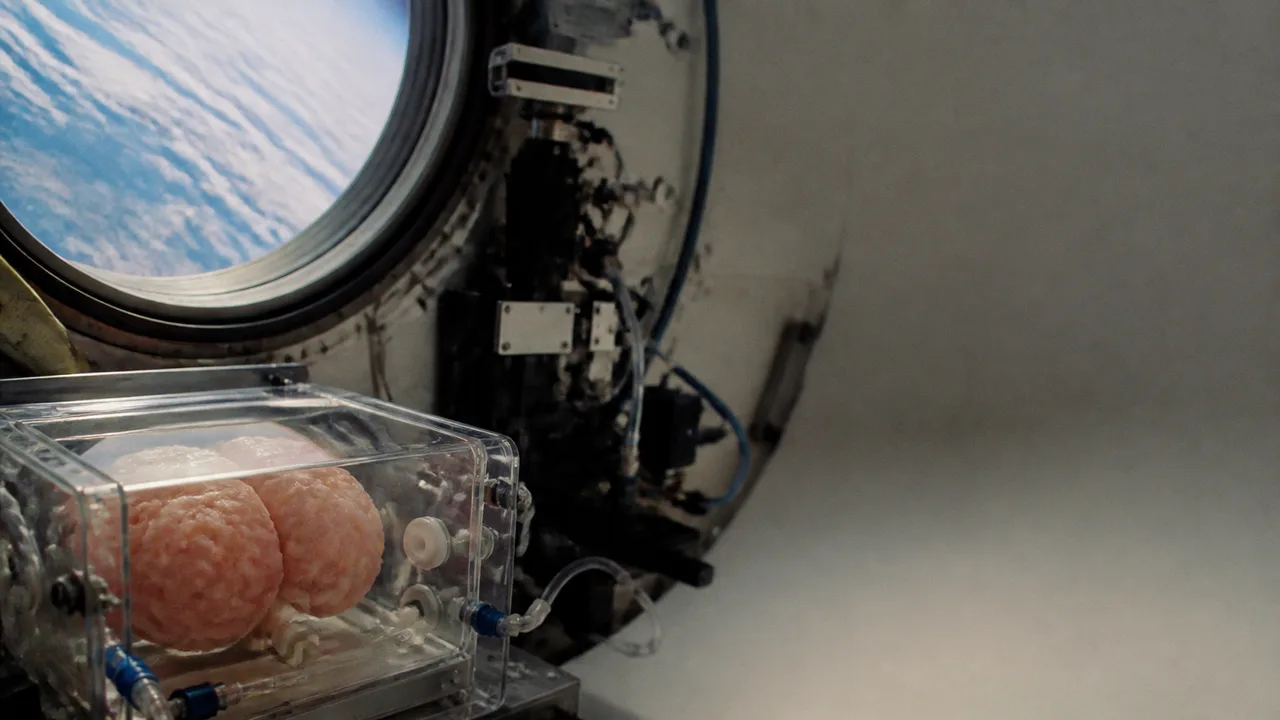
Photo: AI. Marcel Dubois
There's a pitch that gets made a lot in science communication: the extreme environment reveals what normal conditions hide. Deep-sea biology gave us pressure-resistant enzymes. Antarctic microbes gave us the PCR revolution. The logic has a good track record. So when Aline Martins, a translational medicine researcher at UC San Diego, argues that orbital spaceflight is the next productive extreme environment for neuroscience, it's worth taking the argument seriously on its own terms—and asking exactly what the evidence does and doesn't support.
Martins presented this work at a UCTV-recorded lecture in early March 2026, speaking as part of a broader session on space biology. Her framing was unapologetically ambitious: "Today I will talk about how we can leverage space to cure Earthling diseases." That's a large claim. The research underneath it is more nuanced, and more interesting for being so.
The organoid as astronaut
The core experimental model here is the brain organoid—a three-dimensional cluster of human neurons grown from stem cells, roughly mimicking early brain development. Organoids aren't brains. They lack vasculature, immune infiltration from the periphery, and the full architectural complexity of an adult human organ. Researchers working with them are careful, usually, to flag those limits. What organoids do offer is a human-derived cellular system that's ethically sendable to space, which is the whole point.
Martins' group has participated in multiple missions to the International Space Station—nine in collaboration with the center she references, drawing on data from five of those missions for the findings she presented. The organoids go up, spend time in microgravity, and come back for molecular analysis. What the team is measuring, primarily, is the proteome: the full complement of proteins a cell is expressing at a given moment, read out via mass spectrometry and proximity-based assays.
The proteomics angle matters because proteins are where biology actually happens. Genes are the blueprint; proteins are the construction crew. If space is doing something meaningful to brain cells, you'd expect to see it first in protein expression patterns, before it shows up as gross structural damage or behavioral change.
What space does to neurons—so far
Two findings from this work stand out as scientifically substantive, even accounting for the preliminary nature of some of the results.
The first is what Martins' team is calling space-induced neurosenescence. Cellular senescence is the process by which cells stop dividing, accumulate damage, and begin secreting inflammatory signals—a key mechanism in both normal aging and neurodegenerative disease. The group reports that organoids exposed to spaceflight show accelerated molecular markers of senescence compared to ground controls, alongside evidence of mitochondrial impairment.
That mitochondria showed up here isn't surprising to anyone following neurodegeneration research. Mitochondrial dysfunction is implicated in Alzheimer's, Parkinson's, ALS, and a growing list of other conditions. Martins put it plainly: "We know that [mitochondria are] not just a powerhouse in the cell, but the mitochondria are a signal of health." The framing is a mild corrective to the reductive textbook definition—mitochondria as cellular generators, full stop—and it's scientifically accurate. Mitochondria regulate apoptosis, calcium signaling, and inflammatory cascades. Their impairment in space-exposed organoids is a thread worth pulling.
The second finding concerns age-dependence. Martins' group sent organoids of different developmental ages to space, reasoning that all current astronauts are adults but the population of people eventually living and working in space may be broader. The result: spaceflight affected younger and older organoids differently. In younger organoids, the burden fell on corticogenesis—the process of cortical neuron development. In older organoids, the mitochondrial impairment was more pronounced and persistent. "Space burdens differently in different ages," Martins said, which is a compact way of saying that a one-size-fits-all model of space-induced neurological risk is probably wrong.
The Rett syndrome thread
The most clinically forward-looking piece of this work involves Rett syndrome, a rare neurological disorder caused by mutations in the MECP2 gene, affecting primarily girls and causing severe cognitive and motor regression. The group used Rett syndrome organoids as a disease model in space—and reports that spaceflight exposure triggered significant neuroinflammation in those models.
The practical implication Martins draws: that neuroinflammatory signal pointed toward antiretroviral therapy as a candidate intervention, a finding that has since moved into a Phase 2 clinical trial in Brazil. She described the Rett-related work as having been a preprint that is now under revision at a peer-reviewed journal.
A few things to hold in mind here. First, the clinical trial in Brazil is testing a hypothesis generated partly from space-based organoid data—it is not itself a space experiment, and the trial's outcomes will depend on the quality of the original mechanistic reasoning, not just the novelty of the setting where the data was generated. Second, organoid models of Rett syndrome capture some but not all disease features; results in organoids have not always translated cleanly to patient outcomes in other disease contexts. Third, "under revision" means the Rett findings haven't cleared peer review yet, which is a meaningful epistemic status.
None of this makes the work uninteresting. It makes it exactly as interesting as a promising early-stage research program should be—not more.
The infrastructure argument
One of the more underappreciated aspects of Martins' presentation is the infrastructure case she makes for space neuroscience. Her group claims to operate what she describes as the first multi-omic platform in a space lab setting, incorporating not just mass spectrometry-based proteomics but also proximity-based protein detection—a newer technique that allows measurement of lower-abundance proteins that mass spec tends to miss. They've also developed proprietary software tools to track individual biomarkers across missions, timepoints, and organoid ages, two of which have been published with a third under review.
The infrastructure investment matters because it signals that this isn't a one-off experiment. It's a systematic research program with data architecture built to support longitudinal comparison. The group has published what Martins describes as the first openly available proteomics dataset for a disease model in space, which means other labs can now use their data for independent drug screening—a genuine contribution to the research commons regardless of how the specific findings hold up.
The NASA Twins study as context
Martins mentions the NASA Twins Study—a landmark investigation comparing astronaut Scott Kelly, who spent nearly a year aboard the ISS, with his identical twin brother Mark, who remained on Earth. Published in Science in 2019, the Twins Study documented a range of molecular and physiological changes in Scott Kelly during spaceflight, many of which reversed after return to Earth. The cognition findings were more mixed and, as Martins notes, not all cognitive effects fully resolved post-flight.
The Twins Study was important precisely because it was a single subject. It was a n=1 case study with an unusually well-matched control. Its findings were hypothesis-generating, not conclusive—a distinction the original authors were careful to make and that some subsequent coverage blurred. Martins' organoid program can be read partly as an attempt to get at the mechanistic why behind those observations at cellular resolution, with the scalability that a human twin study could never offer.
What the evidence supports, and what it doesn't
The honest summary: this research program has generated interesting molecular observations about how human-derived brain cells respond to spaceflight conditions, identified potential biomarkers of neural aging and disease, and produced at least one clinical hypothesis now being tested in a human trial. That's a reasonable return on the investment so far.
What it doesn't yet support is the strong version of the "curing Earthling diseases" framing. That's not a criticism of the science—it's a description of where it sits in the development pipeline. Organoid findings need replication, preferably in independent labs. The Rett work needs peer review and eventual clinical validation. The connection between space-accelerated aging in organoids and the lived experience of neurodegeneration in humans involves inferential steps that the data hasn't fully bridged yet.
None of that is unusual for translational neuroscience. What is unusual is using orbital spaceflight as a compression tool—treating microgravity and radiation not as hazards to be mitigated but as analytical instruments that stress-test cells in ways that might take years to observe at normal terrestrial aging rates.
That's the bet. The next data point will come from a six-month "endurance flight" study, putting organoids through a long-duration mission and measuring what accumulates. If the age-dependent and disease-specific signals hold up in that larger dataset, the case for space as a neuroscience accelerator gets considerably stronger.
Until then, the claim that space can help cure brain disease is a hypothesis with early supporting evidence—which is exactly what good science looks like before it becomes consensus.
More Like This
BrainTap's 40Hz Light Claims: What Science Says
Dave Asprey and Dr. Patrick Porter make bold claims about BrainTap's flickering light headset. Here's what the science actually supports—and what it doesn't.
Exploring the Enigma of Antimatter at CERN
CERN's antimatter factory reveals mysteries of the universe's matter-antimatter asymmetry and the quest for new physics.
The Deeper Geometry Behind the Pythagorean Theorem
Explore why the Pythagorean Theorem appears in unexpected places, from geometry to relativity.
ALS Gene Therapy Hits Multiple Targets At Once—Finally
UC San Diego researchers developed a gene therapy that can target up to nine disease pathways simultaneously in ALS, solving a problem that's plagued the field.

Why Light Beams Seem to End: Physics Explained
Discover why searchlight beams appear to stop and how physics and atmospheric conditions contribute to this phenomenon.
Epic's EHR Vision for Space Medicine and Genomic Care
Epic's Peter DeVault makes the case for using EHR infrastructure, genomics, and AI to power space medicine. The promise is real—and so are the questions.

SpaceX Starship Flight 13 Sticks Its Softest Splashdown
SpaceX's Starship Flight 13 deployed 20 Starlink V3 satellites and nailed its gentlest-ever Indian Ocean splashdown. Here's what that actually means.

The Double Slit Experiment's Real Mystery
Physicist Sabine Hossenfelder dismantles common misconceptions about the double slit experiment—and reveals the one question nobody is actually asking.