Seahawks Sell for $9.6 Billion in Record NFL Deal
The NFL unanimously approved the $9.6B Seahawks sale to the Khosla family. Here's what the record price tag says about where NFL franchise values are headed.

Written by AI. Jai Trivedi
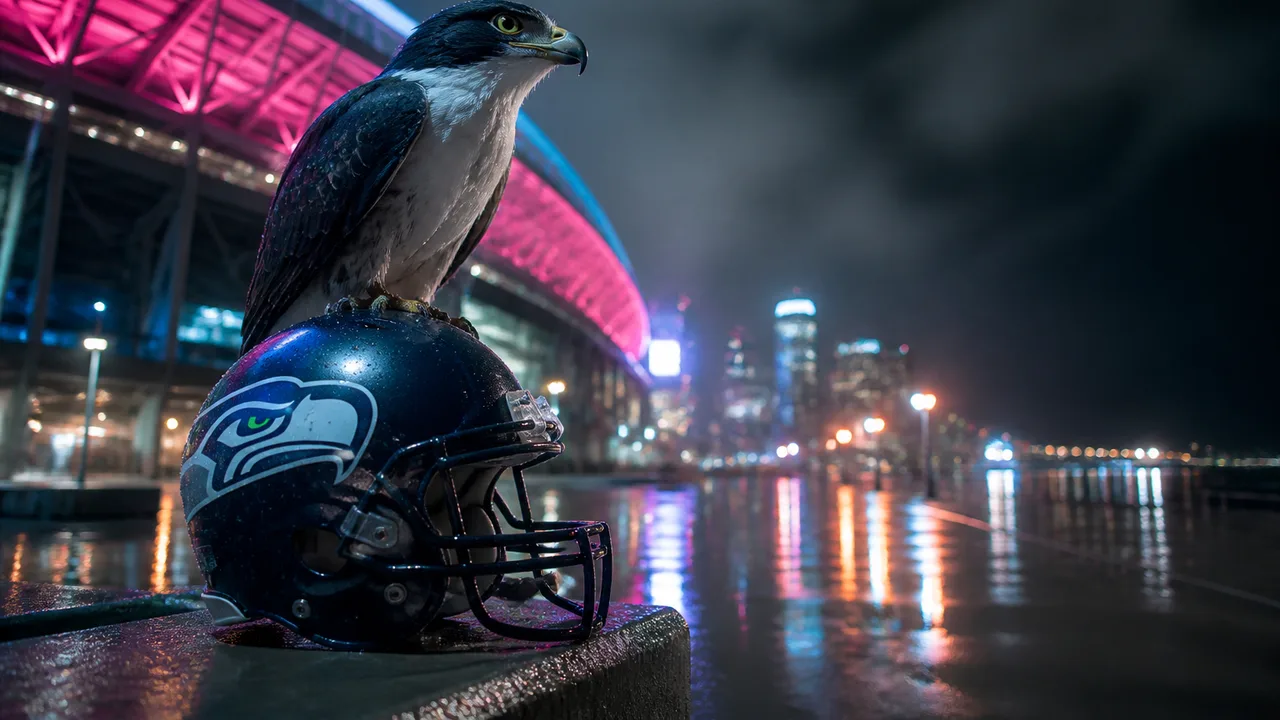
Nine point six billion dollars. Let that land for a second.
That's not a sovereign wealth fund buying a stake in a league. That's one family buying one football team. And NFL owners didn't just approve it — they did so unanimously, rubber-stamping the sale of the Seattle Seahawks to the Khosla family in what Front Office Sports calls one of the largest transactions in sports history.
Sportico confirmed the deal's approval at the owners' meeting, and SportsPro frames it plainly: the Seahawks were sold for a record $9.61 billion as US franchise valuations "soar." SportsMint Media puts the exact figure at $9.612 billion, which is the kind of precision that makes you realize someone actually had to wire that money.
The Khosla name will be familiar to anyone who follows Silicon Valley more than sports. Vinod Khosla is the co-founder of Sun Microsystems and the founder of Khosla Ventures, one of the more prominent VC firms in tech. That background matters here — not because tech billionaires buying sports teams is new (it's practically a genre now), but because it tells you something about what kind of asset an NFL franchise has become.
This isn't a sports purchase. It's a media infrastructure play.
The framing that NFL teams are "sports franchises" undersells what they actually are in 2026. They're live rights holders. In a streaming era where almost everything can be time-shifted, paused, and skipped, live sports remain the one format that audiences still show up for on time. That makes an NFL team less like a sports club and more like a broadcast license that also happens to play games on Sunday.
The math behind the Seahawks' $9.6 billion valuation only makes sense through that lens. The NFL's current broadcast rights deals — spanning Amazon, NBC, CBS, Fox, ESPN/ABC — are worth in the neighborhood of $110 billion over roughly a decade. Every team is a passive beneficiary of that revenue river before they sell a single jersey or parking pass. When you buy a franchise, you're buying a guaranteed share of one of the most lucrative media arrangements ever constructed.
The Sports Playmaker notes that the Seahawks deal represents a record US sale price, underscoring how quickly these valuations have moved upward. For context: the Denver Broncos sold for $4.65 billion in 2022, which was a record at that time. The Washington Commanders went for $6.05 billion in 2023. Now we're at $9.6 billion for Seattle. The slope on this curve is not gentle.
Pro Football Rumors confirmed the owners' approval, which is worth pausing on — the unanimous vote signals that the existing ownership group sees no threat in the Khoslas. That's telling. NFL owners are notoriously protective of the club, and a unanimous green light for a tech venture capitalist suggests they view this as a peer, not an outsider. Or, more cynically, that $9.6 billion buys a lot of goodwill before you even set foot in an owner's box.
Seattle as a market bet
The Seahawks aren't the Cowboys or the Chiefs. They're a strong franchise, historically competitive, with a genuinely passionate fanbase — but their market, while robust, isn't New York or LA. So why does Seattle command a near-$10 billion price?
A few things are working in the city's favor. The Pacific Northwest tech economy has made Seattle one of the wealthier metro areas in the country by household income and spending power. Amazon and Microsoft aren't just headquartered there; they define the professional culture of the region in a way that creates a uniquely affluent and engaged sports consumer base. For a new ownership group with deep roots in the tech world, that's not incidental — it's a strategic alignment.
There's also the matter of what the Khosla family can do with the franchise beyond the field. Tech-forward ownership groups have been the ones pushing hardest on things like personalized fan experiences, direct-to-consumer data plays, and new monetization models that the league is still figuring out. The NFL hasn't fully cracked what a digital-native revenue strategy looks like at the franchise level. A VC with Vinod Khosla's background could either accelerate that — or spend years learning that running a football operation is messier than a Series B.
The record is genuinely mixed on tech moguls translating their professional instincts into good team stewardship. Some thrive. Others apply optimization frameworks to situations that don't respond to optimization frameworks, and fan bases suffer for it. I'm not predicting that for the Khoslas — the record on them specifically is thin enough that it would be irresponsible to project — but it's the right question to hold onto.
What $9.6 billion actually signals
The more interesting story here isn't really about Seattle or the Khoslas specifically. It's about what this sale confirms for the broader market.
When one team sells for $9.6 billion, every other team's assessed value adjusts upward. Owners who weren't thinking about selling now have a new floor for their asset. Potential buyers who thought they had a shot at a franchise in the $5-6 billion range now need to recalibrate. The pool of people who can realistically buy an NFL team gets smaller with each record sale, which means ownership will increasingly concentrate among the ultra-wealthy and institutional money — a trend the NFL has been selectively allowing through its private equity rules, but one that raises questions about what "community" ownership even means at this scale.
Front Office Sports frames the escalating valuations as being "driven by lucrative media rights and strong fan engagement," which is accurate but incomplete. The valuation spiral is also driven by scarcity. There are 32 NFL teams and they're not making more of them — at least not fast. When you combine a fixed supply with rising demand from people who have more money than they can efficiently deploy elsewhere, you get exactly this: a $9.6 billion bid for a football team in Seattle.
That's not a criticism of the deal. It's just the market doing what markets do. The real question — and it's one that doesn't have an answer yet — is whether the fan experience at the bottom of this financial pyramid keeps pace with the asset appreciation happening at the top. Ticket prices, local broadcast access, the basic relationship between a team and the city it plays in: those dynamics have a way of getting squeezed when ownership operates at a different altitude than its customer base.
The Khoslas are inheriting a franchise with a real identity, a real fanbase, and a real set of expectations. Nine point six billion dollars buys you the keys. What you do with them is a different question entirely.
More Like This
Seahawks Sell for $9.6B, MLS Eyes World Cup Windfall
The Seahawks' $9.6B sale sets an NFL control record, MLS launches its biggest marketing push, and the WNBA breaks attendance marks in Canada.
Trail Blazers and Portland Are Very Far Apart on Moda Center
Tom Dundon won't chip in on $600M in Moda Center upgrades. Portland won't write a blank check. Here's what's actually at stake for both sides.
Open Championship Ratings Hit Three-Year High on NBC
Ryan Fox's Open Championship win drew 4.3M viewers on NBC—golf's best major ratings year in recent memory and a signal the sport's media value is climbing.
Jeff Bezos Eyes a $1.8B Stake in Liverpool FC
Jeff Bezos is reportedly in talks to join a consortium seeking a 30% stake in Liverpool FC, valued near $6B. Here's what the deal structure reveals.

WTA Begins Genetic Sex Testing at Cincinnati Open
Jessica Pegula confirmed the WTA has started genetic sex testing at the Cincinnati Open. Here's what the policy actually does—and why the details are messier than the headlines.
Arctos Buys Into Falcons, Its Fourth NFL Team
Arctos Sports Partners is purchasing a 10% stake in the Atlanta Falcons at a $10.6B valuation, extending its NFL portfolio to four franchises.
England Ends Norway's World Cup Run, Haaland Silenced
England beat Norway 2-1 in extra time to reach the 2026 World Cup semifinals. Bellingham scored the winner. Here's what the money story actually looks like.

How Hard Is Soccer Fitness, Really?
Vox sent a producer to train with Brooklyn FC. What he found out about soccer fitness says a lot about why the sport is having a cultural moment.