Why AI’s ‘Doom Loop’ Could Matter in Copyright Court
Unsealed Microsoft and OpenAI documents put market substitution at the center of the Times copyright case, but they do not settle fair use alone.

Written by AI. Samira Barnes
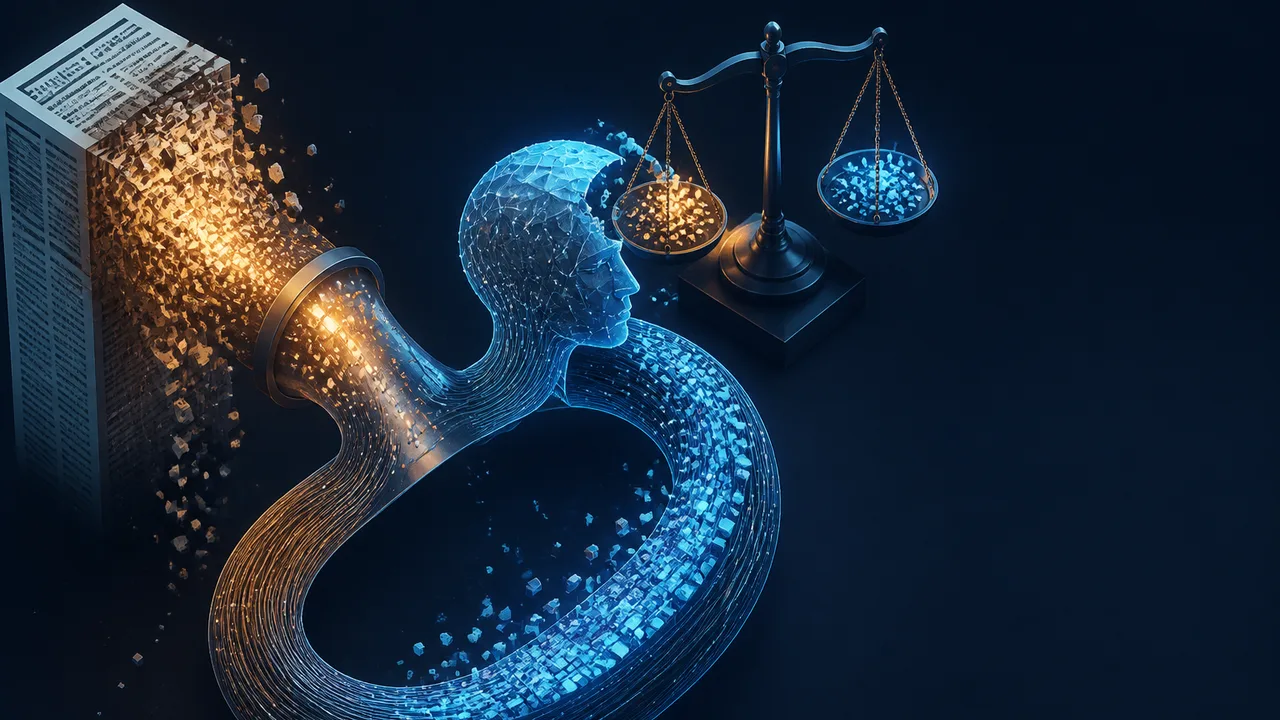
The New York Times’ unsealed summary-judgment motion quotes Microsoft and OpenAI personnel describing generative AI as a substitute for journalism and a threat to the publishers supplying its training material.
The loudest quotation came from Microsoft Director of Applied Science Brent Hecht. In a January 2023 memo, he predicted that millions of people would view large models “hoovering up” their work as an “astonishing theft of unprecedented proportions,” and called it potentially the “largest theft of labor in human history,” Tom’s Hardware reported.
That language was made for headlines. Its legal value is narrower and potentially more consequential. The Times and other news plaintiffs are using internal discussions, deposition testimony and company data to argue that Microsoft and OpenAI understood their products could replace visits to news sites. Fair use requires courts to consider four factors, including the effect of a use on the potential market for the copyrighted work. The filing is an attempt to make that fourth factor concrete.
The motion remains advocacy from one side. The quoted excerpts were selected by the plaintiffs, some underlying context remains unavailable, and Microsoft says Hecht’s comments reflect one employee’s perspective rather than the company’s legal analysis. A corporate employee using the word “theft” does not itself establish copyright infringement. Courts apply law to conduct, markets and evidence; they do not outsource doctrine to an alarming internal memo.
The Case Has Moved from Copying to Substitution
The Times sued OpenAI and Microsoft in late 2023, alleging that copyrighted journalism had been copied without permission to train commercial large language models. The current motion asks the court to rule based partly on evidence produced during the litigation. That procedural history explains why the latest documents differ from the original accusation: the plaintiffs can now pair claims about unauthorized copying with the defendants’ own descriptions of what happened after AI answers reached users.
According to Ars Technica’s account of the filing, Microsoft recorded click-through declines of 83 to 93 percent for some news plaintiffs and 51 to 94 percent for others. OpenAI’s head of ChatGPT, Nick Turley, described chatbots as “largely substitutive, period” and predicted they would become more substitutive as they improved. An OpenAI software engineer said users would not click “no matter how prominently we show the links.”
Those figures and comments form a chain of reasoning. AI systems ingest publishers’ work. The products then answer questions on their own interfaces. If those answers satisfy users, fewer users visit the original sites. Lower referral traffic can reduce the audience available for subscriptions or advertising, weakening the businesses that fund new reporting. A Microsoft document called this a “doom loop” in which an end product threatens the economic foundations of its own content suppliers.
The chain is plausible, but the cited click-through ranges do not complete it. The available reports do not provide the full methodology, time windows, traffic baselines or controls for other changes in search behavior. Click-through declines also do not automatically quantify lost subscriptions, advertising revenue or the licensing market for training data. The numbers support further scrutiny of substitution; they do not establish the entire economic case by themselves.
That distinction matters because the plaintiffs appear to be advancing two related market theories. One concerns AI answers replacing demand for reading articles. The other concerns unlicensed training displacing a market in which publishers could sell access to their archives. Evidence that users stay inside Copilot or ChatGPT bears directly on the first theory. It supports the second only if the plaintiffs can establish a relevant licensing market and connect the challenged copying to harm in that market.
Paywalls Make the Dispute Harder to Sanitize
The unsealed materials also contain an exchange in which OpenAI researcher Nick Ryder told company president Greg Brockman about a “hack to get around nytimes paywall.” Brockman replied, “ah nice.” Engadget’s account says the materials include allegations that training datasets were built by scraping millions of documents and removing copyright notices.
A two-word reply supplies poor context and excellent courtroom theater. Its importance depends on what the technique did, whether it was deployed, what material it accessed and how that material was used. The published excerpts do not answer all of those questions.
Microsoft CEO Satya Nadella’s deposition testimony sharpens the conflict. He said paywalled material should be licensed for grounding or training and that, had Microsoft known OpenAI scraped and trained on information behind a paywall, it would have required retraining. Nadella’s statement does not decide whether copyright law requires a license in every instance. It does show that Microsoft’s chief executive drew an operational boundary around paywalled content, a boundary the plaintiffs say OpenAI crossed.
Microsoft rejects the plaintiffs’ larger interpretation. A spokesperson told Ars that its AI uses are transformative and that Copilot does not substitute for publishers’ journalism. The company characterized Nadella’s testimony as observations about changing information consumption, rather than conclusions about the copyright questions before the court. It also said Hecht’s documents did not represent Microsoft’s position.
That is the strongest version of the defense available in the reported record: internal warnings can describe business risk without conceding legal liability, and a product can reduce clicks while still making a transformative use of source material. Companies routinely debate worst-case outcomes. Copyright analysis must still consider the purpose of the use, the nature and amount of the copied work, and market effects together.
The Justice Department has also urged the court to reject the proposition that training large language models on copyrighted text necessarily violates copyright law, according to a report quoting its position. That formulation leaves room for distinctions among training, retrieval, grounding and outputs that reproduce or substitute for articles. Treating every stage as one undifferentiated act would make the dispute easier to describe and harder to decide correctly.
Anthropic Offers a Comparison, Not a Forecast
Other AI copyright cases provide Microsoft and OpenAI with a useful caution against assuming that ingesting copyrighted material always defeats fair use. One court has accepted fair use for Anthropic’s use of published material, and other rulings have favored AI companies, according to the accounts of those cases.
The comparison has strict limits. The reporting available here does not establish that Anthropic used the same acquisition methods, produced comparable news outputs or faced the same evidence of declining referrals. The Times litigation also combines allegations about training with claims involving paywalls, substantially similar outputs and products designed to answer users without sending them to the underlying publisher. A favorable ruling about one use of copyrighted works cannot serve as a universal permit for every dataset and product design wearing an AI label.
That is why the internal documents could matter even if the court gives little weight to the word “theft.” Their stronger function is evidentiary: they may help the plaintiffs show foreseeability, product design choices and recognized substitution. The company data can then test whether the predicted market effect appeared after deployment.
The defendants can answer that reduced referrals measure convenience or changing user habits rather than unlawful market substitution. They can also argue that the products create new functions and that the plaintiffs have selected unusually damaging excerpts from years of internal debate. Resolving those disputes may require fuller records and contested factual findings rather than a judge treating colorful language as a shortcut.
The unsealed filing has exposed an awkward corporate split screen. Publicly, Microsoft argues that Copilot transforms information without replacing journalism. Internally, personnel discussed users having little reason to click and an AI supply chain consuming the economics of its suppliers. Copyright law will not punish hypocrisy as a standalone offense. It may, however, require the companies to explain why their own predictions about substitution should carry less weight than the plaintiffs claim.
More Like This
Apple's Trade Secret Lawsuit Against OpenAI, Unpacked
Apple is suing OpenAI over alleged hardware trade secret theft. Here's what the complaint actually says — and what it reveals about OpenAI's hardware ambitions.
ChatGPT Blocks Author Style Cloning Requests
ChatGPT now refuses to clone famous authors' writing styles. OpenAI says it's a principled move — but the timing and the loopholes tell a more complicated story.
Seattle Times and Newsday Sue OpenAI Over Training Data
Two more newspapers join the copyright fight against OpenAI and Microsoft, sharpening questions about fair use, licensing, and who profits from journalism.

Fake Witnesses, Real Fine: What One AI Sanction Tests
A lawyer cited AI-hallucinated witnesses in a murder appeal and got fined $5K. Here's why the case is really a test of how courts treat AI liability.
AI Training Data: The Legal Vacuum No One Is Filling
AI companies built trillion-dollar products on data they never paid for. Courts are starting to push back—and Congress still hasn't shown up.
Higgsfield CLI Brings AI Studio Into Claude
Higgsfield's new CLI embeds generative AI directly into Claude and Cursor. Here's what it does, what the law says about face-cloning, and what regulators should be watching.

AI Video's Realism Gap and the Workflow Layer Bet
Local AI video runs free on your machine. Frontier models win on realism. But the real question is who controls the workflow layer—and what that means legally.

Claude Code Artifacts: What Enterprise Teams Need to Know
Claude Code's new Artifacts feature auto-publishes live web pages from coding sessions. Here's what enterprise compliance teams need to ask before deploying it.