Claude Code Artifacts: What Enterprise Teams Need to Know
Claude Code's new Artifacts feature auto-publishes live web pages from coding sessions. Here's what enterprise compliance teams need to ask before deploying it.

Written by AI. Samira Barnes
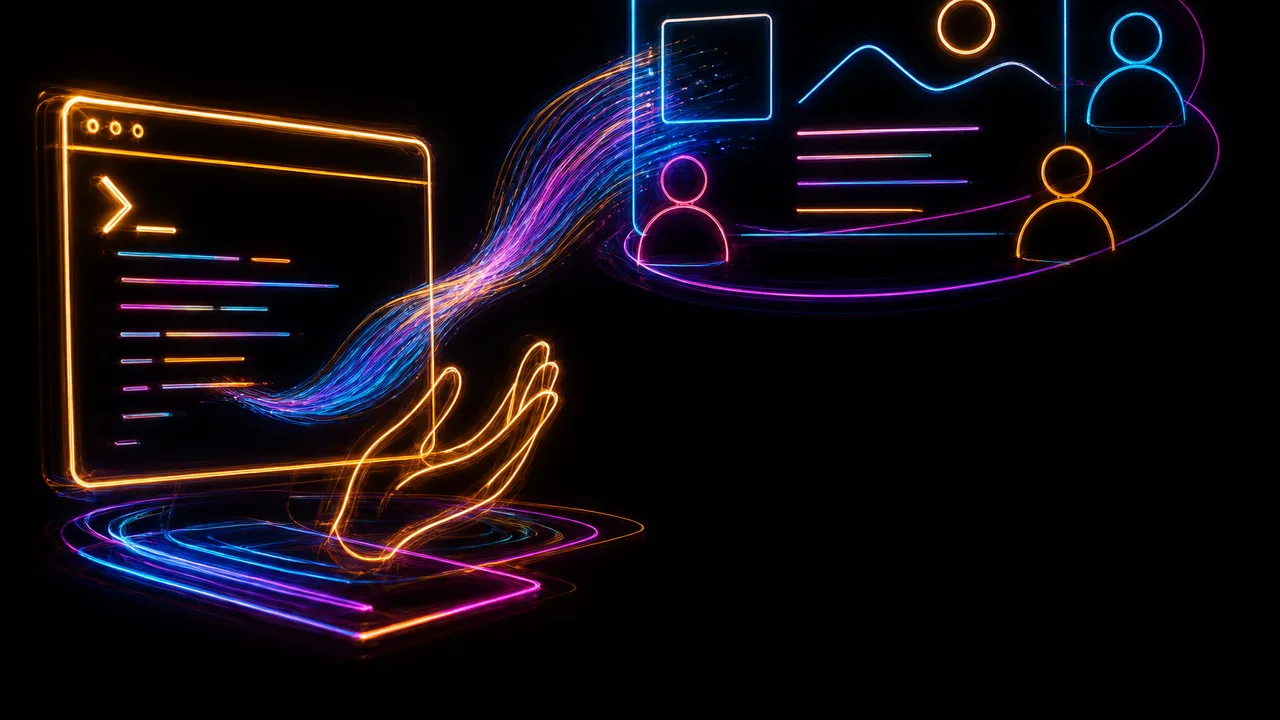
Photo: AI. Phaedra Lin
When Anthropic ships a feature designed to turn AI coding sessions into auto-published, org-scoped web pages, the interesting question is not whether engineers will love it. They will. The interesting question is who in the organization is responsible when an artifact containing proprietary system architecture goes to the wrong set of eyes — and what the policy framework looks like for that accountability.
That is the question Claude Code Artifacts puts on the table, and most of the coverage so far has not gotten there.
What the feature actually does
The mechanics, briefly: Claude Code's Artifacts update — described in a recent walkthrough by Julian Goldie on his YouTube channel — allows users to convert an active Claude Code session into a live, interactive web page. Not a screenshot of terminal output. A real page with filterable dashboards, side-by-side layout comparisons, self-updating checklists, and interactive controls like sliders and toggles. "An artifact takes the work from your Claude Code session and turns it into a live, interactive web page," Goldie explains. "It builds it from the full context of your session — your codebase, your connected tools, and the actual conversation you just had."
The pages update in real time as Claude works. Every published version is saved at a persistent link, giving teams full version history. Anyone who has the link open sees changes the moment they publish, without receiving a new link.
Goldie notes, relaying what he describes as a use case from Anthropic's own documentation, that the canonical enterprise scenario goes something like this: an engineer kicks off a log investigation before a morning standup, Claude works through the findings and publishes a page with a timeline and chart, and by the time the meeting starts, the page has already updated itself. No one needs to be walked through anything.
That is a genuinely useful workflow. It is also the moment a compliance officer should start asking questions, because the session context feeding that artifact includes your codebase, your connected tools, and whatever sensitive data those tools surface.
Note: The launch timing, the 16-megabyte page size ceiling Goldie cites as a hard limit, and the specific standup use case attributed to Anthropic's documentation are sourced here through Goldie's walkthrough rather than verified directly against Anthropic's official release documentation. Readers making deployment decisions should confirm these specifics with Anthropic's published materials before acting on them.
The architecture of privacy is a policy choice
The feature ships with no public sharing option. Artifacts are private to the creator by default, and when shared, they are scoped to signed-in members of the creating organization. You cannot make one public. Goldie presents this as a benefit — "a big deal for teams who care about keeping work secure" — and functionally, he is right.
But the absence of public sharing is not merely a security convenience. It is a deliberate product positioning choice that tells us something about who Anthropic built this for and under what compliance assumptions. Enterprise software that routes proprietary data through an AI layer and then auto-publishes outputs to persistent organizational URLs sits in territory that data governance teams — particularly those operating under GDPR, HIPAA, or sector-specific information security frameworks — will need to map carefully before deployment.
The relevant questions are not difficult to enumerate, even if the answers require direct engagement with Anthropic's documentation and your own legal team. What data classification governs the artifacts Anthropic's infrastructure stores on your behalf? Who has access to artifact content on the infrastructure side, and under what conditions? Does the version history feature — which retains every published state of an artifact at a persistent link — interact with your organization's data retention and deletion policies? And if an artifact is shared with an organizational member who should not have had access to the underlying session data, what is the remediation path?
None of these questions are dealbreakers on their face. But the feature is currently rolling out in beta on Team and Enterprise plans specifically — a scoping decision that implies Anthropic understands the compliance surface area — and enterprise procurement processes exist precisely to work through this terrain before deployment, not after.
The access restriction is a procurement signal, not a footnote
That Team and Enterprise gate deserves more scrutiny than it typically receives in product-launch coverage. Restricting a collaboration feature to paid organizational tiers is standard SaaS practice, but in the context of AI tools that process proprietary code, it carries additional weight.
Enterprise AI tool adoption — at companies with functioning security review processes — generally requires a vendor assessment before engineers start feeding production codebases into new AI features. That assessment will want to know: where does the artifact content live, how long is it retained, what are the data processing terms in the enterprise agreement, and does the feature's behavior change based on plan tier in ways that affect the security model?
The last question is not trivial. Features that behave differently across tiers — particularly around sharing permissions and data handling — can create inconsistent security postures if an organization has users on different plans. The no-public-sharing constraint Goldie describes may apply uniformly, but that assumption should be confirmed in writing before rollout.
For organizations that have already gone through an Anthropic enterprise agreement for Claude Code broadly, Artifacts may be in-scope under existing terms. For those who have not, this feature is a reasonable prompt to start that conversation.
The accountability gap that productivity tools routinely skip
The feature's core promise, as Goldie frames it, is eliminating the most friction-heavy part of collaborative engineering work: "It saves you the most annoying part of the job, which is explaining your work to other people. You spend less time writing status updates and more time actually building."
That framing is honest about what the productivity gain actually is. What it does not address — and what enterprise teams deploying this at scale will need to think through — is the accountability structure that replaces the human-authored status update.
When an engineer writes a status update, there is an implicit review layer: the engineer decides what to include, how to frame ambiguity, what to flag as uncertain. When Claude auto-generates a dashboard from a session's full context, that selection and framing judgment moves to the model. The artifact may be more comprehensive and faster to produce, but it is also less curated — and the engineer whose name is associated with the session is now implicitly responsible for outputs they did not author sentence by sentence.
This is not an argument against the feature. It is a description of a governance gap that organizations will need to fill deliberately. Who reviews an artifact before it is shared with the broader organization? What is the process when an artifact contains an error that informed a decision — say, a bug investigation dashboard that mischaracterized the scope of an incident before a post-mortem?
These are the same questions that apply to any AI-generated output in a consequential workflow. Artifacts make them more concrete because the output is a persistent, version-controlled, organizationally shared document. That is a compliance artifact in the traditional sense of the word, not just a productivity tool.
What to actually watch for in beta
The beta rollout will surface real answers to some of these questions faster than any vendor documentation will. What enterprise teams in beta should track: how the feature interacts with existing data loss prevention tooling, whether the persistent artifact links create any unintended indexing or caching behavior within organizational infrastructure, and how version history deletion works when a former employee's session artifacts remain accessible to current org members after offboarding.
Goldie's walkthrough is a useful entry point for understanding what the feature does. The questions above are what you bring to your security review, your Anthropic account team, and your legal counsel — in that order, probably, before you let engineers start building artifacts from your production codebase.
The productivity case for Claude Code Artifacts is real enough that those conversations are worth having. The conversations worth having are rarely the ones that get skipped.
More Like This
Inside Anthropic's Daily Claude Code Workflow
The tools Anthropic's team actually uses in Claude Code—from open-source plugins to internal skills reverse-engineered from leaked source code.
OpenAI's Workspace Agents: The Governance Question No One Asked
OpenAI's new Workspace Agents automate team workflows—but the real product isn't the AI. It's the permission model enterprises can actually live with.

Google Stitch's Free AI Design Tool Has Market Consequences
Google Stitch's latest update is a product story and a market power story. The competitive and regulatory questions it raises deserve more than a shrug.
Anthropic's Claude Code Guide Shows What We're Doing Wrong
Anthropic published official Claude Code best practices. Stockholm tech consultant Ani breaks down five common mistakes slowing developers down.
Higgsfield CLI Brings AI Studio Into Claude
Higgsfield's new CLI embeds generative AI directly into Claude and Cursor. Here's what it does, what the law says about face-cloning, and what regulators should be watching.
Anthropic Launches Claude Fable 5 at Tokyo Keynote
Anthropic unveiled Claude Fable 5 and Mythos 5 at its Tokyo keynote, with new managed agents, dynamic workflows, and a novel approach to AI safety guardrails.

Constrained AI Agents and the Governance Gap
Mateo Torres's framework for constraining AI agents maps directly onto what the EU AI Act and FTC guidance are demanding. Enterprise deployments should pay attention.

OpenAI's IPO Is a Regulatory Filing First
The OpenAI and Anthropic S-1s will be financial documents, yes — but first they're SEC filings with disclosure obligations no AI lab has faced before.