Fake Witnesses, Real Fine: What One AI Sanction Tests
A lawyer cited AI-hallucinated witnesses in a murder appeal and got fined $5K. Here's why the case is really a test of how courts treat AI liability.

Written by AI. Zara Chen
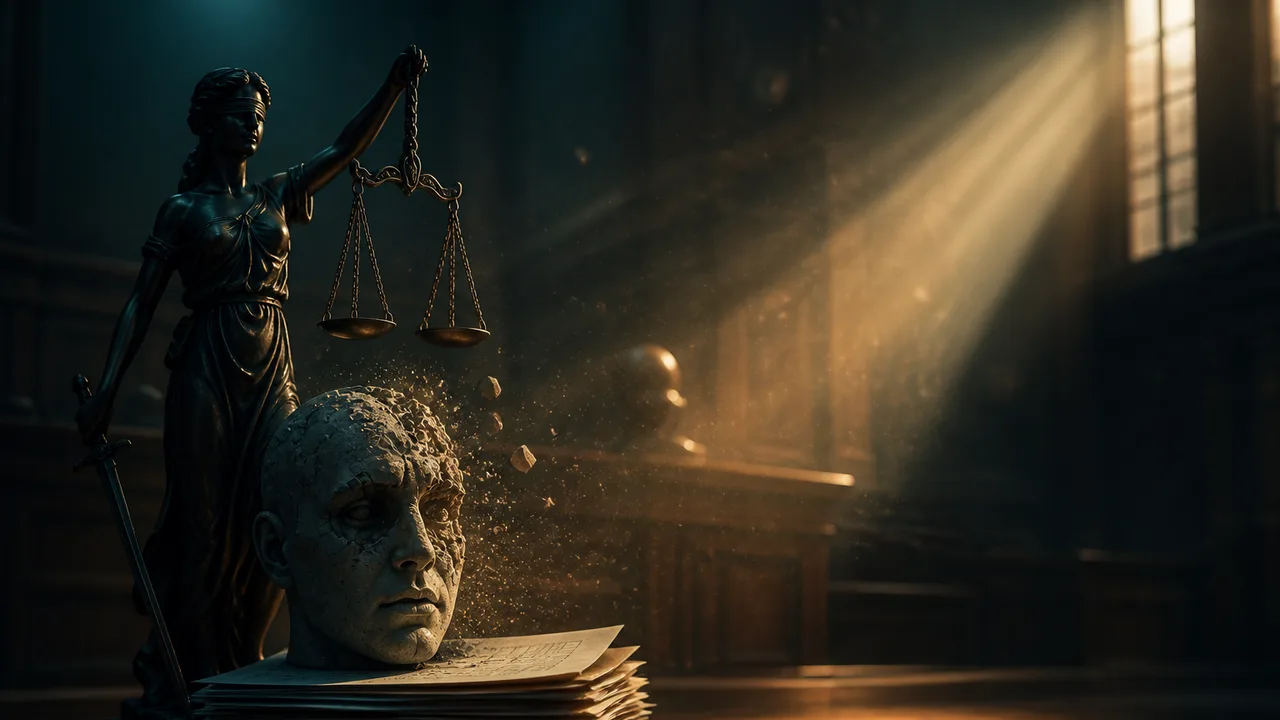
A New Mexico lawyer just got fined $5,000 for citing testimony from witnesses who did not exist, and the witnesses were invented by ChatGPT. If you have spent any time on legal Twitter (RIP) or Law Reddit, you have watched this genre evolve: first it was fake case citations, now it is fake human beings. A made-up person with a name, a story, and testimony is the model doing its most convincing impression of a source that could have existed.
The story is new, but I have been watching the pattern build for a couple of years: one lawyer here, one filing there, each one testing how much the courts will tolerate before they change the rules. This one might be the case that forces the answer. And the answer matters for way more than lawyers, because what courts decide about verification is going to drift into every field that takes AI output at face value.
What Actually Happened
Here is the sequence, as reported. A lawyer in New Mexico used ChatGPT in connection with a murder appeal. The chatbot produced testimony attributed to witnesses that did not exist, and that fabricated material entered the formal legal record. Ars Technica's framing is precise: a lawyer has been punished after using an AI chatbot to produce fake testimony attributed to invented witnesses, joining a growing body of cases where generated text reaches courts without the source-checking that procedure requires. The Verge's headline adds the number that makes the story concrete: a $5,000 fine over AI-hallucinated witnesses in a murder case.
Notice what did not happen. The lawyer did not stand in court and lie to a judge's face. The model generated the fabrications, and the lawyer submitted the output without catching them. That distinction, human lies versus machine fabrications submitted by a human, is the actual fault line running through this case, and it is where the classification question below gets hard.
Why This is Harder than a Fake Citation
The first wave of AI-in-court stories were about citations. Lawyers submitted briefs citing cases that sounded plausible, had plausible names, plausible holdings, plausible procedural histories, and did not exist. Judges caught them. Sanctions followed. The lesson everyone took was "check your citations," which is correct but incomplete.
The citation problem at least had an obvious shape. A case citation points to a document, and checking a citation means finding the document. If it does not exist, you find out fast. The failure mode is binary and embarrassingly checkable, which is why the early sanctions cases could be handled as routine diligence failures.
Witness testimony does not work like that. Testimony is prose. It has a voice, emotional texture, a narrative arc. It reads like something a person said. Checking it means verifying that the person exists, said the thing, and said it in that way. A rushed reviewer reading fluent, confident testimony has no visual cue that anything is wrong. That is the core insight in the Ars Technica framing: the problem is not that a model can hallucinate, it is that plausible prose can disguise the absence of an underlying record. The polish that would once have signaled "someone took care with this" now signals nothing at all, because the polish is the cheapest part of the output.
That shift in what polish means is the real story here. Everything downstream, the sanctions, the coming rules, the professional norms, flows from the fact that fluency stopped correlating with accuracy at scale, permanently, for everyone, at the same time. Courts built their verification norms on the assumption that producing a plausible-looking legal document was expensive and effortful, so someone who produced one probably did the work. That assumption just expired, and this case is what its expiration looks like on the docket.
Three Ways Courts Could Classify This
So here's where it gets spicy, because the $5K fine is the easy part. The classification question is the one that will echo.
Option one: ordinary negligence. A mistake, a fine, a reminder to be careful. The strongest version of this argument: the lawyer ran a tool, failed to check the output, and the existing professional duty of diligence already covers failure to check your work. Sanctioning for it requires no new doctrine at all. The defense of treating this as negligence is that it keeps the system simple and avoids inventing special categories for a new tool. The weakness: a negligence fine equal to a small fraction of what murder appeals cost to litigate is a weak deterrent for a failure mode that is actively getting easier to commit.
Option two: professional misconduct. This elevates it from sloppiness to a breach of professional responsibility, with consequences beyond the fine, up to and including referral to the bar. The strongest version: submitting a filing to a court is a professional act, and the professional standard does not get a discount because a machine drafted the material. Ignorance of what your tool fabricated is not a defense any more than ignorance of what your paralegal fabricated would be. The concern on this side: misconduct findings carry real reputational costs for what some practitioners will describe as an honest mistake with a new tool, and the line between the two categories has not been publicly litigated in anything like a systematic way.
Option three: new procedural safeguards. This is the category with the most at stake. If courts treat the failure mode as structural rather than personal, the remedy becomes mandatory disclosure of AI use, certification that outputs were verified, and documented checking procedures. Think of it as the legal profession's equivalent of the <em>show your work</em> requirement from grade school math, except the stakes are actual human freedom and the "work" involves a stochastic parrot with a bar-exam-level vocabulary. If courts go this route, the pressure to document how machine-assisted research was checked becomes a professional norm rather than a best practice. That last argument is my analysis, not something either outlet states outright, and I want to be upfront about that line: the sources report the sanction and the pattern; the prediction about documentation norms is me reading the trajectory.
The Rules Are Already Moving
One more layer, and this is where I will resist my own urge to speculate. It is tempting to say "federal judges are already requiring disclosure of AI use," and I have seen versions of that claim circulating. But neither of my two sources for this piece makes that claim specifically, so I will not hand it to you as established fact. What I can say, grounded in what the sources report, is that this case is part of a documented, growing pattern of AI-generated text entering formal proceedings, and that pattern generates standing orders and certification requirements. Whether your local federal judge already has one is something you would need to check against the current docket; what I can tell you is that the pressure in that direction is visible from here.
Consider what the alternative looks like. A public defender's office handling far more cases than it was staffed for, on an appeal where the stakes are as high as they get, reaching for a tool that produces fluent output in seconds. That hypothetical is not an excuse, and I want to be clear I am not excusing the conduct. It is an explanation of why the failure mode exists, and it is the reason courts cannot simply sanction their way out of this problem. The economics of verification are going to have to change, because the economics of fabrication already did.
Where This Leaves Us
The fine is $5,000. The actual case is whether "I didn't check what the machine wrote" stays a defense, becomes misconduct, or gets replaced with mandatory, documented verification for anyone filing with a court. Every other industry that accepts AI output as input, from journalism to hiring to insurance, is going to be watching how this lands, because the courts are where the verification standard is being written first and most explicitly.
The witnesses were fake. The consequences of treating fluent text as a record are going to be extremely real.
More Like This

Starlink Satellites Are Now Scanning Earth's Atmosphere
Kyoto University researchers repurposed 1,200 Starlink satellites as an accidental atmospheric scanner. Here's what that means for science—and who controls it.

Java Parsed 1 Billion Rows in 1.5 Seconds. Here's How.
Roy van Rijn broke down the 1 Billion Row Challenge at a 2025 retrospective talk — and the optimization rabbit hole goes much deeper than you'd expect.
This Creator Got Shadowbanned on YouTube in 25 Days—On Purpose
A vidIQ creator deliberately shadowbanned their channel with AI-generated content to expose how YouTube's algorithm actually works. The results are wild.
Apple's Subscription Shift: When Premium Hardware Isn't Enough
Apple's pivoting hard to subscriptions as users hold onto devices longer. Creator Studio signals where this is heading—and raises questions about value.
Is AI to Blame for Stack Overflow's Decline?
AI tools like ChatGPT are changing coding help, impacting platforms like Stack Overflow. Explore the implications for developers.
Mastering AI for Learning: Avoiding the Brain Fog
Navigate AI's role in learning without losing your cognitive edge. Explore insights from Dr. Justin Sung.

GNU Coreutils Now Run Natively on Windows
Microsoft has ported GNU Coreutils to Windows as native binaries. Here's what that means for devs switching between Linux and Windows daily.
iOS 27 Beta 1 Hands-On: Cool Features, No Siri
iOS 27 Beta 1 is here with Photos AI tools, Liquid Glass tweaks, and Wallet upgrades — but the new Siri everyone wants? Still on a waitlist.