Who Really Paid When a Hedge Fund Remade Chipotle
A hedge fund turned Chipotle into a margin machine. Workers, customers, and the brand itself absorbed the costs. Here's how the playbook ran.
Written by AI. Dorothy "Dot" Williams
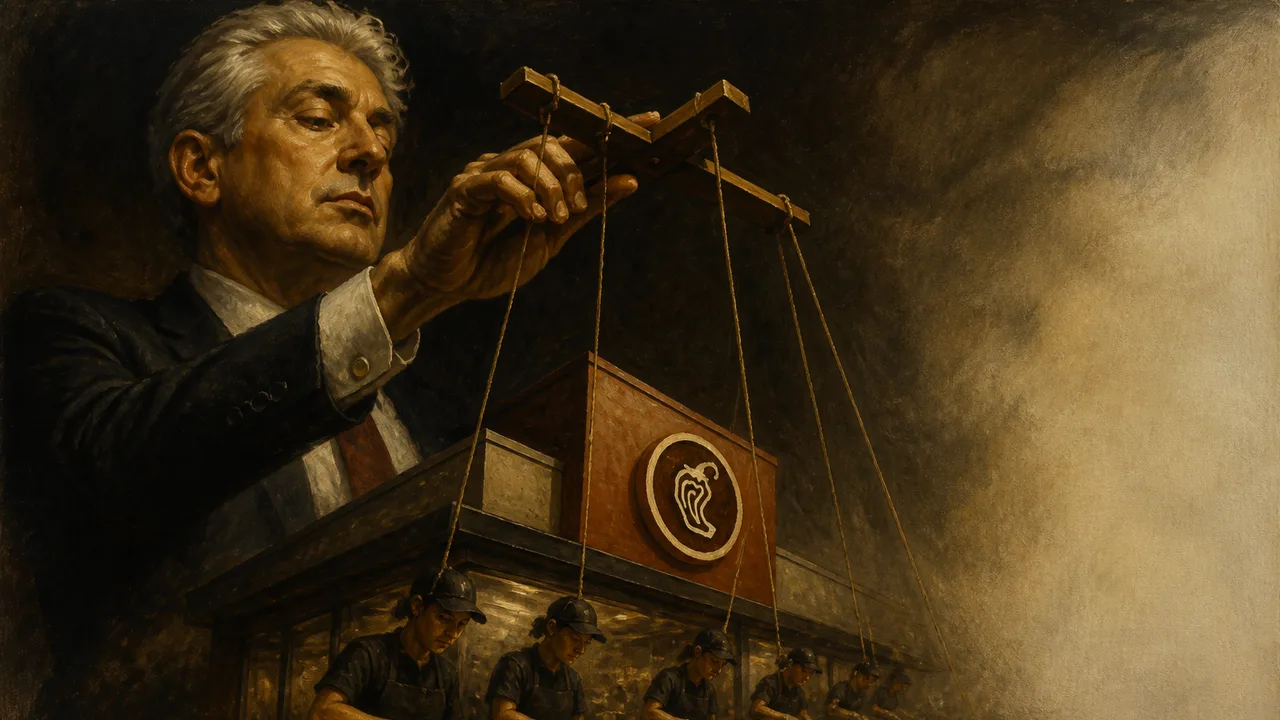
Photo: AI. Henrik Solberg
Somewhere between the golden age and the slop bowl, there's a story that didn't make the shareholder letters.
Modern MBA's 46-minute breakdown of Chipotle's transformation is framed as a hedge fund story — and it is. But the version that sticks with me is simpler and less tidy: a company that built something genuinely good, watched it get taken apart piece by piece, and handed the tab to the people least equipped to fight back. The line workers. The regional managers. The customers who stopped filming their bowls for TikTok in admiration and started filming them in outrage.
Walk through what actually happened and you can see the mechanism clearly enough.
What Made Chipotle Worth Taking
Chipotle's golden age, roughly 2010 to 2014, was the product of an operating philosophy that most restaurant executives would dismiss as naive. Founder Steve Ells held the line on a ruthlessly short menu — not because the math was perfect, but because he believed it was the only way to deliver quality at speed without cutting corners. He refused to franchise. He evaluated store managers on staff morale and team cohesion, not just P&L. He sourced from small farms and paid managers at the top of the industry scale.
The results were, by any measurable standard, extraordinary. The stock ran from roughly $200 to $800 in four years, outperforming the S&P 500 by a factor of four. Per-store economics beat most fast food brands, and margins rivaled steakhouses. Investors weren't looking at Chipotle like a restaurant chain — they were pricing it like a consumer tech platform.
The catch: none of this gave Bill Ackman's Pershing Square Capital a reason to get involved. You can't run an activist campaign against a company that's performing. You need a wound.
The Food Safety Crisis and the Opening It Created
In 2015, the wound arrived, and it was catastrophic. A series of separate foodborne illness outbreaks struck Chipotle locations across multiple states within a matter of months — salmonella, E. coli, norovirus, cascading one after another in a way that had no real precedent in American fast food history. The CDC, FDA, and Department of Justice opened investigations. The stock dropped more than 35% in a single month and continued falling.
The root causes, according to Modern MBA's account, were baked into Ells's own philosophy. He had decentralized the supply chain toward smaller regional farms that lacked the traceability infrastructure of industrial suppliers. All produce was still hand-prepped at every store. Food safety, at scale, was resting on the daily execution of tens of thousands of hourly workers. That's a fragile system even when everyone does everything right.
Ells moved fast on remediation. Barcode traceability was mandated on every ingredient shipment. Steak shifted to sous vide pre-cooking. Tomatoes and cilantro got centralized processing. But the structural damage was done — not just to consumer trust, but to the boardroom.
The crisis exposed what investors had been quietly tolerating: a co-CEO structure with Ells and his childhood friend Monty Moran splitting responsibilities, compensation packages for both that surpassed what most Fortune 500 CEOs were earning, and a CMO who was arrested in an NYPD drug bust mid-crisis and then reinstated by Ells within three months. None of that was indefensible in isolation. Together, it read as a company whose governance was built on personal loyalty rather than professional accountability.
Ackman had found his wound.
The Playbook
Pershing Square sank over a billion dollars into Chipotle and acquired roughly 9.9% of the company. Ackman didn't need majority control. He needed math: with more than 95% of Chipotle's shares held by institutions, he only had to flip the biggest ones — Vanguard, BlackRock, Fidelity — and the rest would follow. Modern MBA puts it plainly: "Wall Street, like Silicon Valley, runs on soft power, and Ackman had no shortage of it."
The settlement gave Pershing Square four board seats, filled with Ackman's picks. Monty Moran was out. The co-CEO structure was permanently abolished. In exchange, Ackman agreed not to publicly attack the company or attempt a hostile takeover.
Here's what that looks like from ground level — because it's worth pausing on. When a proxy fight resolves at the board level, store managers don't get a memo explaining what just happened. They don't vote. They don't negotiate. They wake up one day and Monty Moran — the guy whose whole job was to champion the human side of the operation — is simply gone. A new set of priorities arrives from a board they've never heard of, through a management layer that has every incentive to fall in line. The culture shift doesn't come in a single directive. It accumulates in the changed metrics on the weekly report, the new language at the all-manager meeting, the gradual sense that the old values were the old regime.
Ackman's stated thesis was that Chipotle didn't need reinvention — it needed discipline. The product was already good enough. The company just needed to make it easier to buy and more profitable to sell.
The Digital Lever
The double makeline was the mechanism. Ackman pushed hard for Chipotle to treat digital ordering not as a convenience feature but as a parallel sales channel — a second assembly line inside every restaurant dedicated exclusively to fulfilling app orders. The operational logic was genuine: one line handles in-store customers, the other runs online orders without interruption. Throughput doubles without doubling the building.
But the operational innovation came with a wrinkle that Ackman was happy to treat as a feature, not a bug. In-store, customers watch every scoop. Workers give larger portions to avoid confrontation, to keep the line moving, to not have that particular conversation. On the digital line, no one is watching. Corporate serving specifications get followed with "far greater consistency," as Modern MBA puts it — which is a precise way of saying that the same burrito ordered online costs less to produce and nets more profit.
The crew working the digital line experienced this differently than the spreadsheet did. Two parallel lines in the same kitchen means two different rhythms, two different pressures, and a back-of-house that's now optimized for throughput in ways the front-of-house never was. The separation wasn't just physical. It created two classes of order with different economics — and the workers running the digital line were the ones executing the margin capture, often without being told that's what they were doing.
By 2020, digital orders accounted for nearly $3 billion in annual sales. The stock hit all-time highs.
The Squeeze
New CEO Brian Niccol — brought in from Taco Bell within weeks of Ells's departure — delivered what Ackman had hired him to deliver. The headline numbers were real: 25% profit margins, aggressive expansion, a digital business that became the company's structural backbone. The methods were just as real: consistent price hikes calibrated zip code by zip code, food costs pushed to a record low, and a portion control system that used nightly inventory reconciliation to flag and audit stores that were giving away too much chicken.
That last mechanism produced the dynamic now familiar to anyone who has been on TikTok for five minutes. Managers watching workers with food scales. Workers underportioning to protect their jobs. Customers filming their bowls and posting them as evidence. "The next Chipotle is Chipotle itself," Niccol said at one point, arguing the business could compound growth through scale alone.
By mid-2024, same-store sales went negative for the first time in a decade. Niccol responded with a $100 million food cost increase to temporarily restore portions — then announced his departure. Ackman, according to Modern MBA's account, had already substantially exited his position before the news broke. Pershing Square's total return on the investment: roughly $3 billion on a $1.2 billion stake. The timing of the exits, as Modern MBA frames it, was not coincidental.
Chipotle's current leadership is now framing larger rice cookers and prep robots as the next chapter of innovation.
The question I keep turning over is this: what exactly was destroyed, and can it be rebuilt? The operational DNA — the supply chain, the food safety protocols, the assembly line efficiency — that's still there. What isn't there is the institutional knowledge of how to run a restaurant where the staff genuinely wanted to be. That knowledge walked out the door with the Denver headquarters, with the managers who couldn't afford to move to Orange County, with the culture that treated high employee morale as a financial input rather than a soft metric.
You can install better grills. You can't install that.
More Like This
Bill Ackman's Art of Finding Invisible Money
Explore Bill Ackman's strategy of finding hidden value in companies, beyond standard metrics.
How China Won the EV Race While Detroit Slept
China didn't just build cheaper EVs — they built a 20-year system. Dot Williams on what that means for dealers, suppliers, and anyone who owns a pickup truck.
US Airlines Are Profitable and Getting Worse
US airlines make billions but deliver miserable service. Here's what the loyalty program math actually means for small business owners who fly on points.
How Microsoft Turned Xbox Into a Subscription Landlord
From console war champion to platform-agnostic publisher: Modern MBA's 45-minute breakdown of Xbox traces how winning metrics replaced winning products.
The Broken Economics of the Car Rental Business
Car rental companies aren't just greedy—they're structurally trapped. A look at the unit economics that make the industry's misery nearly unavoidable.
How Uber's AI Edits Food Photos for Small Restaurants
Uber built an AI system that retouches food photos for small restaurants — then had to teach it not to invent shrimp. Here's what that actually required.
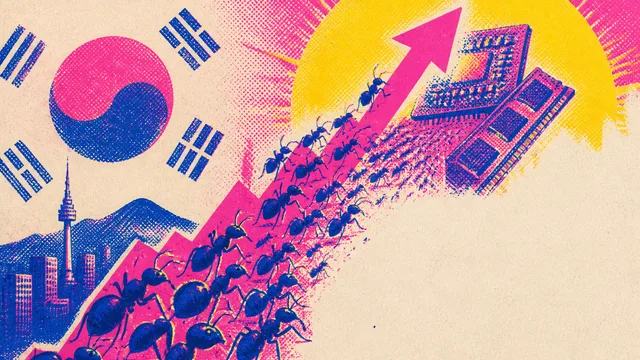
South Korea's Retail Investors Are All-In on AI Chips
South Korea's 14 million retail "ants" have powered a 200% KOSPI surge on AI chip stocks. A Bloomberg report maps the rally—and the risks hiding inside it.

How FIFA Engineered the 2026 World Cup Grass
FIFA spent $5M+ with a UT turf scientist to grow, test, and install 16 World Cup pitches. The farms, the students, and the contract pressure behind the grass.