Who Gets the Unhurried Conversation in the NBA Offseason
NBA front offices frame the offseason as strategy. It's also a labor event — and who gets dignity in that process depends entirely on where you sit in the pyramid.

Written by AI. Carmen Rodriguez

Photo: AI. Saskia Aaltonen
The NBA offseason is usually covered as a chess match. Trades, draft picks, free agent targets — the currency of sports media from May through July. Bobby Marks, Tommy Sheppard, and Ryan McDonough spent over an hour on a recent Sports Business Classroom podcast pulling back that curtain, and the operational detail they offered is genuinely useful if you follow the league.
But the more I sat with their conversation, the more I kept circling back to a different set of questions. Not "how do front offices build rosters" — but who in these organizations carries the weight of that process, who gets protected inside it, and who absorbs the cost when it goes wrong.
Because the NBA offseason isn't only a roster-management event. It's a labor event, playing out in real time for dozens of people whose employment contracts — where they exist — are measured in weeks.
The Shot Clock Problem
Sheppard's description of the exit interview process is worth reading carefully, because buried inside the basketball operations logic is a pretty stark account of organizational hierarchy.
"You want that to be an authentic experience," Sheppard said. "You don't want it to be on a shot clock — okay, we got 10 minutes, let's download about the whole season."
His solution: start exit interviews earlier in the season, so that by the time it ends, the most important conversations can be unhurried. McDonough framed it similarly — veteran players get more rope, more leeway, because "they kind of know what to do and you trust them to come back later in the offseason." Young players get the quicker turnaround, a push to take their break now and come back ready for summer league.
None of this is surprising. It's how organizations work. The people whose labor the institution depends on most get the most consideration. But it's worth naming what's being described: a tiered dignity system, where the quality of your exit experience — how much time they give you, how much they listen, whether anyone asks what you need — tracks almost exactly with your leverage and your star on the depth chart.
The bench player logging 12 minutes a night does not get the same exit interview as the guy playing 36. That probably feels obvious. It should feel worth noticing.
The Staff on the Clock Nobody Mentions
The more uncomfortable version of this conversation involves people who aren't players at all.
McDonough raised it, briefly: most player contracts in the NBA are structured on a July 1 to June 30 calendar — and while this is broadly true for players, it's worth noting that staff and front office employment arrangements vary more widely. But the underlying point stands. If a coaching search is happening, if a front office is being restructured, the people on the margins of those decisions — the video coordinators, the player development staffers, the scouts who spent the year on the road — are looking at a June 30 deadline with no golden parachute in sight.
"It's tough to get jobs in the NBA at a high level," McDonough noted. "You wanted to give them some time to go find work elsewhere."
That's the ethical baseline being described: tell people early enough that they can look for another job before their contract expires. That's the floor. And given how these timelines compress — coaching searches running hot into June, roster decisions cascading — it's genuinely unclear how often even that baseline gets met.
Nobody on the podcast went further with this thread. Which is understandable; they're executives, not labor organizers. But the people whose job security depends on how fast the front office moves, and how honestly — that's a real population of workers. It just doesn't get counted in the draft board analytics.
Protecting the Scout's Honest Opinion
There's a different kind of labor story buried in the draft board section, and it's one I find more structurally interesting.
Sheppard described a practice he used to insist on: scouts submitting their individual player rankings before group meetings, so that going into a room, each person's assessment was on record. The problem he was solving for is organizational groupthink — the way hierarchical pressure in a room can erode honest professional judgment. A scout who spent a week watching a player at Baylor on a Saturday night has real information. But if they walk into a meeting where three other people — including, say, a coach or a GM — have already declared strong opinions, that information gets contaminated.
"What if you're the only one that was right and all these other people are wrong?" Sheppard said. "You got to really defend it."
What he's describing, in workplace terms, is a structural protection for workers' professional integrity against the distorting effects of status. The scout's job is to evaluate players, and the institution built a mechanism — pre-submitted rankings — to keep the hierarchy from doing their job for them.
That's not a small thing. Most workplaces don't build those guardrails. The fact that this one does, in this particular domain, is worth understanding. The fact that it doesn't necessarily extend to other parts of the organization is also worth understanding.
The Unprepared Executive and Who Absorbs the Cost
Ryan McDonough made a point about modern NBA general managers that's framed as management advice but reads differently from the bottom of the org chart up.
"Nowadays, you have to be a CEO," he said. "Most of us are pretty ill-prepared from those CEO aspects to sit in that top chair for the first time because there's so many different things coming at you."
The podcast treated this as a sympathetic problem: GMs come up through scouting and basketball operations, not through managing large staffs or navigating ownership relationships, and the job has swelled around them. Sheppard's pivot to executive coaching is presented as a genuine solution — learning to listen at a deeper level, becoming a more present leader.
Fine. But here's the question that didn't get asked: when an executive is ill-prepared for the management dimensions of the job, who absorbs that dysfunction? It isn't the owner. It isn't usually the head coach, who has their own power base and a guaranteed contract. It's the layers of staff underneath — the people doing the work that makes the front office function, who have no formal recourse when the person at the top doesn't know how to delegate, doesn't know how to receive feedback, can't hold the room together through a late-night draft meeting without letting someone's bad mood rearrange the board.
Sheppard's executive coaching work is genuinely valuable if it makes organizations more humane places to work. The question is who it gets applied to. The conversation suggested it's most likely to reach the people already at the top — GMs, presidents, coaches. Whether it trickles down to the mid-level staff who have no coaching perks and no union is a different question entirely.
The Pyramid, Described Honestly
McDonough put it plainly when describing how resources get allocated across a roster: NBA organizations operate like a pyramid. The best players get whatever they need — nutrition, travel accommodations, coaches flying to their markets in the offseason. Two-way contract players get "the gym's open if you want to come in." That's not a critique of the executives who described it; it's just the system, stated clearly.
What's interesting is that the same pyramid logic applies to everyone else in the building. The head coach gets the unhurried conversation about roster direction. The player development assistant with six months left on his deal gets the organizational equivalent of "the gym's open."
That's the NBA offseason as a labor event. Dozens of people, at different points on the pyramid, finding out over the next six weeks whether they still have jobs — and whether the institution they work for moved fast enough to give them a real chance to find another one if they don't.
The three executives on this podcast are not villains. They're thoughtful people who built real practices to protect workers' judgment, who articulated an ethical obligation to tell staff early, who pushed back on the idea that a 40-minute workout should override months of scout work. That matters.
But the test of those values isn't how they're described in a podcast. It's how they hold up in June, when the draft is two weeks away, the coaching search is still unresolved, and someone with a June 30 contract is waiting to find out if anyone's going to call.
More Like This
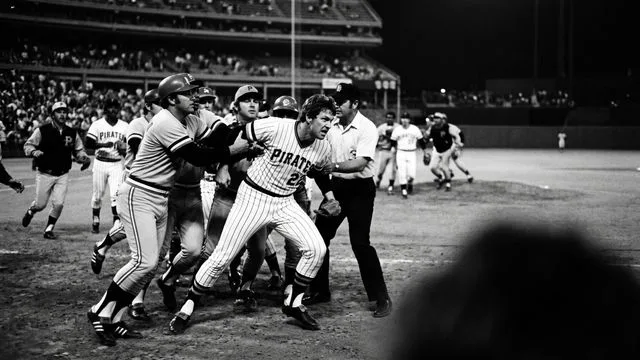
Bruce Kison: Baseball's Most Charged Pitcher
Bruce Kison was charged four times—tied with Pedro Martinez. Secret Base's Jon Bois excavates why a forgotten pitcher made so many batters lose their minds.

The Giants' Walk Rate Is Historically Bad in 2026
The SF Giants have a 5.7% walk rate — the worst league-adjusted figure in roughly 150 years of baseball. Here's what the numbers actually mean.

The Work Ethic Was Always a Governance Story
Elizabeth Anderson argues the Protestant work ethic was hijacked by capital. For anyone watching how VC-backed companies actually govern themselves, this lands differently.

Mark Cuban on Why NBA Ownership Isn't Fun Anymore
Mark Cuban explains how private equity reshaped NBA ownership, why he sold the Mavericks, and what NIL, Vegas expansion, and prop bets mean for pro sports.

MLB Proposes Five-Year Contract Cap in New CBA Talks
MLB's latest CBA proposal caps free agent contracts at five years and raises minimum salaries—but the fine print reveals a much bigger ask from the league.
Exploring Baseball's Complex Steroid Era
A deep dive into baseball's Steroid Era, its cultural impact, and MLB's growth amid controversy.

Financial Crises Follow Patterns — But Not for Everyone
Kuran Francis maps four recurring patterns behind every major financial crisis. The framework is solid. What it leaves out is the story of who pays when the system breaks.

Gen Z's Dating Retreat Is Also an Economy Story
Gen Z isn't just retreating from dating—they're optimizing themselves for a labor market logic that's colonized their bodies. Christine Emba unpacks what's actually happening.