Weaker September Housing Data Tests the Fed's Rate Case
September housing weakness puts borrowing costs and construction in focus as the Fed weighs inflation against signs of strain. What should policymakers watch next?

Written by AI. Jonathan Park
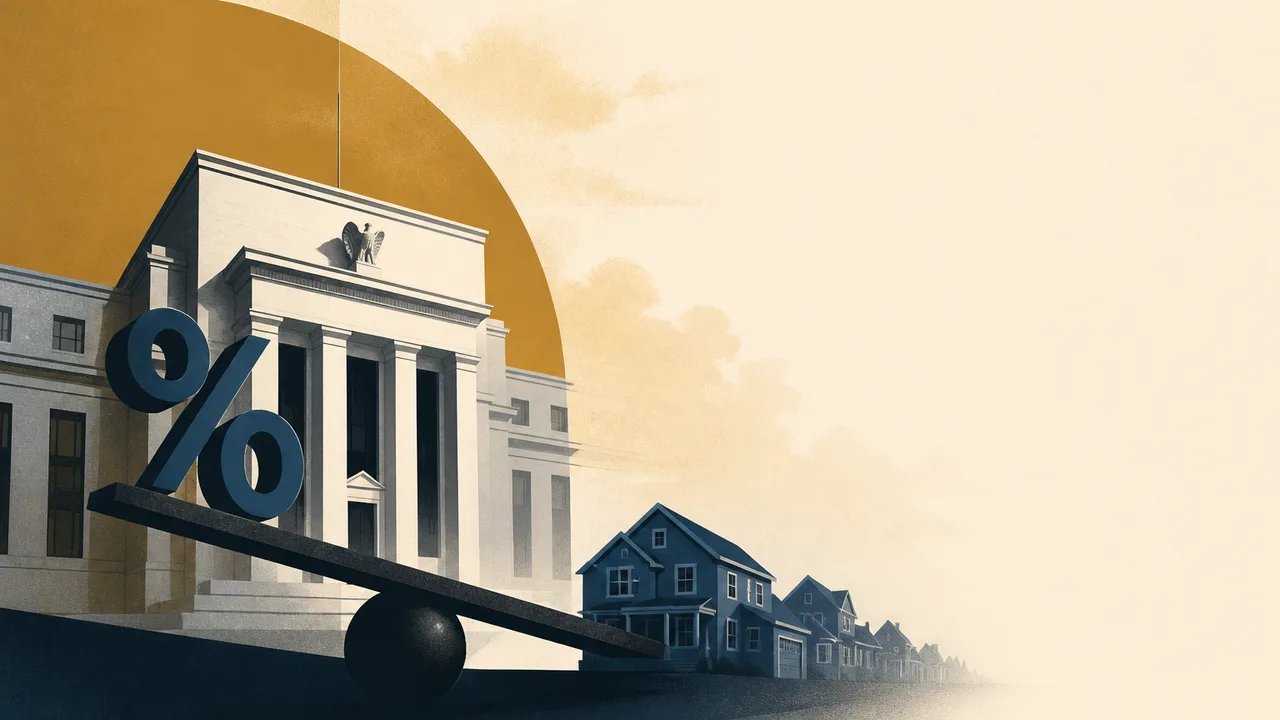
U.S. housing weakened further in September, with separate reports released Tuesday adding pressure to the Federal Reserve’s debate over whether interest rates need to rise again. The indicators and size of the deterioration are unspecified, leaving its breadth unclear. Even so, housing is a useful place to look for the costs of tighter credit: a prospective buyer sees them in a monthly payment; a builder sees them in the price of financing a project before selling a single home.
The Fed faces a harder question than whether housing is slowing. Policymakers have to judge whether that slowdown is helping contain inflation, spreading into jobs and spending, or doing both at once. One month’s housing data cannot settle that question, but another weak reading raises the stakes of the next rate decision.
How Higher Rates Reach Housing
The Fed sets a short-term policy rate, while most U.S. homebuyers borrow through longer-term mortgages. Mortgage rates can move with expectations about future Fed decisions, inflation and bond yields; they do not rise or fall point for point with every policy move. For the same purchase price, a higher mortgage rate means a larger monthly payment, or a smaller loan a buyer can afford under a given budget.
That pressure can show up as fewer shoppers, slower sales or buyers choosing cheaper homes. It can also affect owners who already have mortgages. A household with a relatively low fixed rate may be reluctant to sell and take on a costlier new loan. If that happens widely, fewer homes come onto the market, leaving buyers with limited choices even as demand softens. Weak activity, in other words, does not automatically translate into affordable homes.
Builders face a second financing problem. They may need to borrow to buy land and complete construction long before receiving payment from buyers. Higher financing costs make delays more expensive and can make a planned development harder to justify. If builders respond by starting fewer homes, the effects reach contractors and suppliers before they show up in completed-home totals. The costs and benefits also arrive at different times: a rate increase can deter a buyer today, while a change in the supply of new homes takes longer to reach the market.
These are possible channels, not a diagnosis of any one September indicator. They explain why housing attracts close attention when the Fed weighs another increase. Borrowing costs can change decisions across a chain that runs from land purchases to a family’s moving date.
The Fed’s Two Risks
The case for caution starts with timing. Interest-rate increases work through loans, investment decisions and household budgets over months, rather than the day the Fed announces them. A buyer who stops searching, or a builder who shelves a project, may reflect financing costs already in place. Raising rates again while those earlier effects are still spreading could deepen the slowdown the Fed is trying to manage.
Housing also connects to spending beyond the sale itself. A move may lead a household to buy appliances, furniture or renovation work. Construction supports trades and businesses that provide materials and services. A sustained fall in activity could therefore reach employment and consumer demand, even if the first signs appear in a housing report. For people whose paychecks depend on those transactions, a cooling market is more immediate than a debate over the Fed’s preferred inflation measure.
The case for keeping a rate increase under consideration starts elsewhere: inflation. If price pressures remain persistent, easing off too soon could leave households paying more for essentials and make the Fed’s eventual job harder. Housing weakness can coexist with inflation that policymakers still consider too high. A softer sales market would give the Fed information about demand; it would not, by itself, show that price growth across the economy is under control.
The same tension appeared in the response to slower September hiring: stocks rose on hopes of a Fed pause, while weaker hiring pointed to a tougher search for workers seeking jobs. A pause could relieve pressure on borrowers, but people facing slower hiring have reason to read the same economic signal differently from investors betting on lower rates. Inflation remains part of that calculation for both groups.
That is why the Fed cannot simply count weak sectors and declare victory over inflation. It has to ask whether demand is cooling enough to reduce price pressure without triggering a wider loss of jobs and income. Nor can it assume that resilience elsewhere in the economy makes housing’s strain harmless. The timing of the spillover is part of the risk.
What the Next Readings Need to Show
The type of housing weakness will shape the policy argument. A decline in sales could point to buyers struggling with financing costs. Fewer construction starts would raise questions about future work for builders and the supply of new homes. A drop in prices might ease some purchase costs, while a market with little available inventory could remain difficult for buyers even with fewer sales. Each pattern implies a different route from housing to inflation and growth.
Policymakers will also want to know whether weakness persists. Housing data can shift from month to month as transactions and projects move through the pipeline. Consecutive readings across buying and building would offer a clearer indication of whether the slowdown is spreading. Employment in construction and related businesses would help show whether lower activity is reaching workers. Those are tests for the months ahead, rather than reasons to declare a turning point now.
For markets, the question is whether housing changes the expected path of rates. Investors may read weaker data as a reason for the Fed to hold steady. They also have to consider the possibility that inflation keeps the central bank focused on restraint. Mortgage borrowers should be wary of treating a possible pause as a promise of cheaper loans: the rates lenders offer also reflect longer-term borrowing costs and expectations about inflation.
A homeowner deciding whether to move faces a different version of that uncertainty. Waiting could mean hoping for a cheaper mortgage later, while remaining in a home that no longer suits the household. A renter hoping to buy may welcome softer prices but still fail to qualify for an affordable monthly payment. For builders, delaying a project can protect against weak demand now while leaving fewer homes ready if buyers return. None of these decisions waits neatly for a Fed consensus.
September’s housing weakness gives policymakers another sign that borrowing conditions are pressing on the economy. The next question is where that pressure travels: into lower inflation, into lost work and delayed homes, or along both paths at once.
More Like This
High Mortgage Rates Stall Housing Market Recovery
Three in five homes listed since January remain unsold as mortgage rates above 6% freeze out buyers. Here's what the data reveals about who pays the price.

USMCA Won't Be Renewed: What Annual Reviews Mean
The Trump administration has blocked USMCA's 16-year renewal, opting for annual reviews. Here's what that means for trade, business, and North America.

September Retail Sales Rise as Inflation Squeezes Wages
September retail sales rose even as fuel prices and inflation climbed. Slower growth outside autos and gas complicates the picture of consumer resilience.

Prices Rise 3.4% as Wages Grow 3.1%: Paychecks Lose Ground Again
Consumer prices rose 3.4% in August while wages grew 3.1%, squeezing paychecks. What the data shows for households, employers, and the Fed.
Persistent US Inflation Tests Expectations and the Fed
Persistent US inflation is testing how households plan for higher prices. The Fed must weigh the risk of entrenched expectations against the cost of tighter credit.

Warsh's Jackson Hole Caution Has a Price Tag for Workers
Fed Chair Kevin Warsh left Jackson Hole without committing to cuts or hikes. For athletes and workers in inflation-squeezed industries, that ambiguity is its own answer.

AI Company Logos All Look Alike. Here's What That Reveals
AI companies keep designing the same circular, gradient logo. Is it groupthink, strategic mimicry, or something more revealing about the industry itself?

France Sold Its Nuclear Turbine Crown Jewel to GE
How France sold the world's most powerful nuclear steam turbine to GE in 2015, then spent years engineering a buyback — and what it cost everyone involved.