Warsh's Jackson Hole Caution Has a Price Tag for Workers
Fed Chair Kevin Warsh left Jackson Hole without committing to cuts or hikes. For athletes and workers in inflation-squeezed industries, that ambiguity is its own answer.
Written by AI. Denise Okafor-Williams
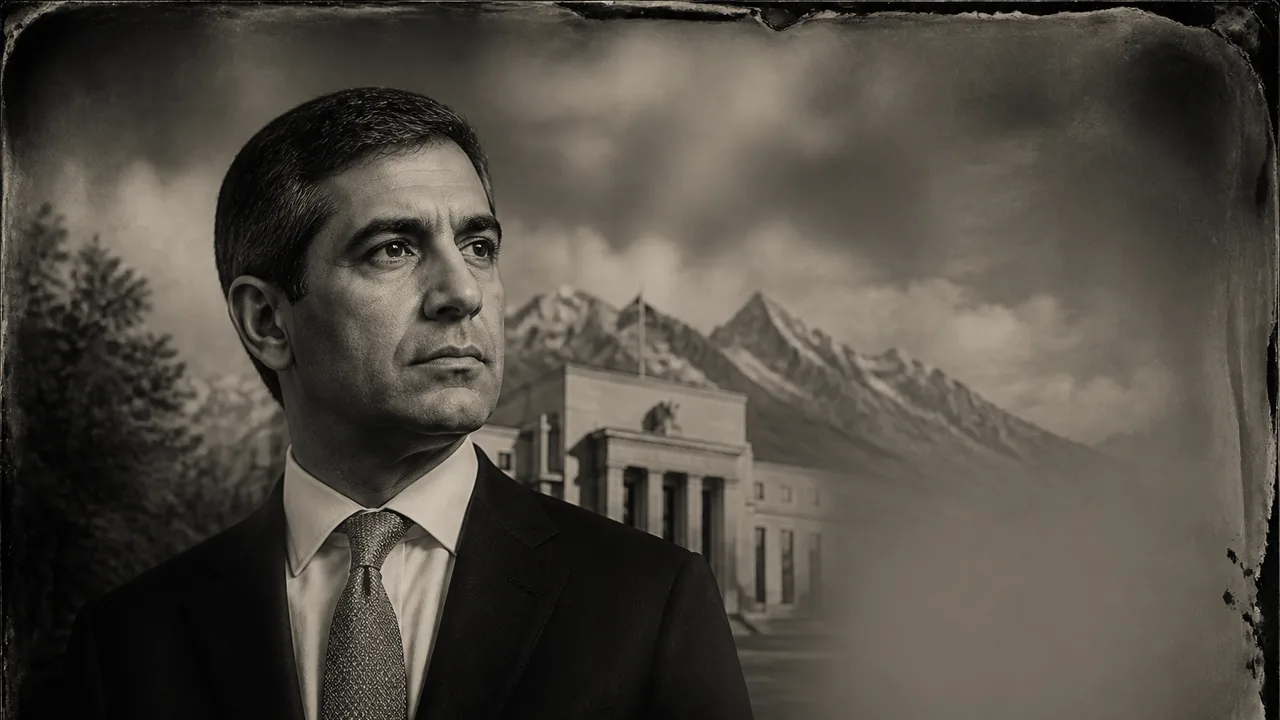
Kevin Warsh used his first Jackson Hole address as Federal Reserve chair to sharpen an inflation warning without announcing a rate hike, and the financial press spent most of Friday parsing what he left out.
According to CNBC, Warsh sharpened his inflation rhetoric at the summit in ways that market analysts read as signaling a possible rate increase. Yahoo Finance reported on what Warsh said and, conspicuously, what he chose not to say about the rate path. Quartz noted before the speech that markets were watching for any signal about where rates were headed. What they got, according to Seeking Alpha, was a call for "economic discipline rather than immediate policy shifts" and an emphasis on patience over action.
Warsh arrived at Jackson Hole carrying high Treasury yields and an unresolved tension between persistent inflation and uneven growth across regions, a setup International Business Times described as a crucial test of his early tenure. Morning Brew framed it as his first rodeo, in the literal institutional sense: Jackson Hole is where Fed chairs define themselves to a global audience of central bankers, bond traders, and finance ministers all at once.
His first FOMC meeting had already established a communication style built around restraint and recalibration. Jackson Hole confirmed the posture. Warsh's bet is that a careful Fed is a credible Fed, and that credibility, once lost in 2021 and 2022, cannot be rebuilt by moving fast. Seeking Alpha captured the summit's governing logic: monitor the data, avoid premature moves, preserve the recovery. That argument has real force. The Fed's post-pandemic credibility problem was created by underestimating inflation and then overcorrecting. A chair who moves again before the data is clean risks repeating the cycle.
But the framing of "economic discipline" carries a distributional weight that Jackson Hole proceedings rarely name directly. When Warsh warns about a wage-price spiral, the wages he is referencing belong to specific people in specific industries with specific contracts. That is the lens I keep returning to.
What a Hold Costs, and Who Pays
The NFL Players Association and the league are two years from the expiration window of the current collective bargaining agreement. The NFLPA's leverage in any renegotiation depends partly on what the broader labor market looks like when those talks intensify. If rates stay elevated, the economic environment that drives player contract values, television rights, franchise valuations, and the salary cap itself faces headwinds. Franchise sale prices feed into how owners project future revenues, which feeds into what they are willing to put on the table. This is how CBA math works.
The WNBA ratified a new CBA in early 2020, and its minimum salary floors, already among the most contested in professional sports relative to revenue share, were set against an economic environment that looks nothing like 2026. When inflation stays elevated and rates stay high, the purchasing power of a $75,000 minimum erodes faster than any re-opener clause can repair. The league's players negotiated real gains in the last deal. Whether those gains hold their value in real terms is a function of the inflation trajectory Warsh is now managing.
Minor league baseball players, who secured their first formal collective bargaining agreement in 2022 after decades without one, entered that deal with minimum salaries that were still, for many levels of the minors, below what a full-time minimum wage worker earns annually. With inflation persistent enough that Warsh sharpened his warnings at Jackson Hole rather than softening them, the gap between what those contracts guarantee and what it actually costs to live near a ballpark in a mid-sized American city continues to widen. A prolonged hold at high rates does not close that gap. Neither does a hike.
And then there are the stadium workers: the concession staff, the parking attendants, the cleaning crews who show up for every home game in every city. Warsh's wage-price spiral concern is, at its structural core, a concern about workers in service industries asking for raises that businesses then pass to consumers. The academic framing is neutral. The lived version is a stadium worker in Phoenix or Minneapolis deciding whether another year at current wages is worth the commute.
Discipline as Strategy
The strongest version of his argument at Jackson Hole is also the most honest one: a Fed that hikes prematurely into mixed data and triggers a recession causes more harm to low-wage workers than a Fed that waits. The people who absorb job losses first in a downturn are not the investors watching Treasury yields from Jackson Hole. They are the workers in the industries most sensitive to rate-driven slowdowns, including, notably, the construction and hospitality sectors that employ a disproportionate share of the people who build and staff the facilities that professional sports leagues depend on.
Seeking Alpha's characterization of the summit's consensus, data-driven decision-making to avoid premature moves that could destabilize recovery, is not unreasonable policy. The tension is that "discipline" has always meant something different depending on where you sit in the wage distribution. For a bond investor, discipline is a rate path that protects real returns. For a minor league pitcher making $700 a week in Triple-A, discipline is a CBA provision that keeps his salary above water as his grocery bill rises.
Warsh's caution at Jackson Hole was deliberate and, on its own terms, coherent. CNBC's read that it signals a possible rate hike rather than cuts keeps the Fed's optionality open in both directions. What Seeking Alpha and the broader summit coverage left largely undiscussed is who holds the cost of that optionality in the interim.
The workers negotiating contracts right now, in sports and outside them, are not waiting for the Fed to find clarity. They are making decisions inside the uncertainty Warsh is managing. Their leverage at the bargaining table, their real wages, their ability to hold out in a work stoppage, all of it is shaped by the economic conditions a cautious Fed is choosing, for now, to let run.
The discipline Warsh preached in Wyoming is not free. Someone is extending the credit, and it is not the people in the room.
More Like This
K, C, or E? The Economy's Shape Debate, Explained
Economists are retiring the K-shaped recovery consensus. The C and E models now compete to explain who's gaining and who's still losing ground post-pandemic.

Apate.AI Raises $11.4M to Fight Scams With AI Bots
Apate.AI secured $11.4M in seed funding to expand its AI-powered anti-scam platform into the US. Here's what the bet actually means for fraud victims.
Hugging Face Microduck Sells 10,000 Units in a Week
Hugging Face's $399 Microduck sold 10,000 units in its first week. Who's buying, what chip powers it, and what the open-source pitch actually means.
Fed's Inflation Signals Are Pointing in Two Directions
Headline inflation stays stubbornly above the Fed's 2% target while trimmed mean indicators hit multi-year lows. What does Kevin Warsh do with that?
Kevin Warsh's First FOMC Meeting Signals a Quieter Fed
Kevin Warsh held rates steady at his first FOMC meeting, but his communication overhaul and hawkish signals are already reshaping global markets.
U.S. Economy Lost 23,000 Jobs in July 2026
The U.S. shed 23,000 jobs in July 2026, stunning forecasters who expected gains. What it means for Fed policy, EM capital flows, and workers on the ground.
How Goalkeeper Gloves Are Made in Sialkot
Inside Matrix Sports' Sialkot factory, where nearly half a million goalkeeper gloves are made each year for professional clubs and national teams.

MLB and MLBPA Deadlocked Over 2028 Olympics
Two years from LA28, MLB owners back Olympic participation but the players' union remains at odds over housing, tickets, insurance, and forced participation rules.