Apate.AI Raises $11.4M to Fight Scams With AI Bots
Apate.AI secured $11.4M in seed funding to expand its AI-powered anti-scam platform into the US. Here's what the bet actually means for fraud victims.

Written by AI. Denise Okafor-Williams

Fraud losses in the United States are enormous, and whatever number you see cited almost certainly understates the actual harm. Reported figures capture only victims who knew they were defrauded, understood who to tell, and chose to file a complaint. The real distribution of losses skews hardest toward people who have the least capacity to absorb them: older adults on fixed incomes, recent immigrants navigating unfamiliar financial systems, workers whose savings have no floor beneath them. When a scam call works, the downstream consequences often cannot be recovered. The money is gone.
That structural context is what makes the business Apate.AI is building worth examining carefully, not just as a cybersecurity funding story but as an infrastructure question with direct consequences for working people who cannot afford to lose what they have.
According to startupdaily.net, the company has secured $11.4 million in seed funding and is preparing to expand from its existing operations into the United States market. The mechanism at the center of its platform is the detail that separates Apate.AI from most of its competitive field: rather than simply blocking suspected scam calls or flagging them for users, the company deploys AI bots that engage scammers in conversation. Those bots waste scammers' time and, more importantly, gather intelligence on the scripts, numbers, and infrastructure scammers are actively using.
That is a different theory of the problem. Most defensive tools in this space work reactively, building blocklists from known numbers and patterns, then racing to update them as scammers rotate infrastructure. Apate.AI's approach is designed to make the offense expensive. If a scammer's workday is consumed talking to bots instead of victims, the economics of running the operation degrade. If the conversations those bots record feed intelligence back into detection systems, the list of known tactics grows faster than scammers can evolve them. The logic is sound, though whether it scales to the volume and sophistication of modern fraud operations is the open question every investor in this round is implicitly betting on.
The Competitive Terrain
The anti-scam and robocall-blocking space is populated with companies that have been working variations of this problem for years. Robokiller, Hiya, and First Orion each occupy significant portions of the US market, generally positioned around call screening and spam identification. Carriers themselves have implemented STIR/SHAKEN, the FCC-mandated framework designed to authenticate caller ID and reduce number spoofing.
STIR/SHAKEN deserves a direct read: in my view, what the framework achieved in practice has functioned more as compliance documentation than as meaningful friction for sophisticated scam operations. The standard addresses spoofing at the carrier authentication layer, but most of the fraud that reaches consumers today runs through legitimate-looking numbers, VoIP infrastructure that clears authentication checks, and social engineering sophisticated enough that a caller ID label is not the deciding variable for whether a victim picks up. The framework was a necessary step. It was not a sufficient one.
Where that leaves Apate.AI is in a market that has identified the problem clearly and built a generation of solutions that addressed the most visible symptoms. The intelligence-collection angle the company is wagering on assumes that the constraint on effective anti-fraud infrastructure is not detection speed but attacker cost. Make fraud expensive enough to run, and the marginal operator exits the market. That is a bet against pure defensive posture, and it is a position the defensive-only approach has not been able to fully defend.
The companies already in this space have distribution advantages Apate.AI does not yet have. Carrier partnerships, device-level integrations, and consumer brand recognition all take time and capital to build. Eleven million dollars is a seed round, not a war chest, and the US market entry Apate.AI is planning puts it in direct competition with incumbents who have those distribution relationships already. The question of whether a superior technical approach can outrun an inferior distribution position is one the technology startup ecosystem has answered inconsistently over decades.
Who Actually Benefits, and When
Here is where the infrastructure framing matters. Fraud protection, when it works, functions as a kind of public good: a call that never reaches a victim protects that victim whether or not they ever subscribed to a protection service. Intelligence gathered from one scam operation helps identify the next one before it reaches anyone. The social return on effective anti-fraud technology is almost certainly larger than the private return, which is part of why the market has struggled to price it correctly and why regulatory mandates like STIR/SHAKEN exist at all.
Apate.AI's revenue model, as described in coverage by startupdaily.net, is not detailed in available public information. That gap matters for assessing who captures the benefit of what the company builds. If the platform sells primarily to carriers and enterprises, the intelligence it generates may not reach the individual consumers most exposed to fraud risk. If it sells directly to consumers, pricing becomes a distributional question: the people who most need protection are often least positioned to pay a subscription fee for it.
That is not an argument against building the company. It is an argument for being precise about what getting this right actually requires. Fraud at scale is partly a financial crime, partly a labor market distortion (scam operations employ workers, often coerced or trafficked, in overseas call centers), and partly an infrastructure failure. A technology that addresses one layer of that structure does something real. Whether it does enough depends on the deployment decisions that follow the fundraise.
What the Seed Round Actually Measures
Seed funding at this stage is less a validation of the technology than a validation of the founding team's credibility with a specific investor cohort. Eleven million dollars in seed capital will fund some combination of product development, US market entry costs, and the business development work required to land the kind of carrier or enterprise partnerships that would give Apate.AI the distribution reach its approach requires. Whether that is enough runway to prove the intelligence-collection model at scale before a Series A is needed is an arithmetic question the public record does not yet answer.
What the round does signal, per startupdaily.net, is that investors see the US market expansion as the growth thesis. That is a logical reading of where the fraud volume and the anti-scam product market are both concentrated. It also means the company is entering a regulatory environment that has been active in this space, which creates both tailwinds (regulatory pressure on carriers to adopt better solutions) and headwinds (compliance requirements that can favor incumbents with established relationships).
The thing I will be watching is not whether the bots work. The early evidence that conversational AI can occupy scammers' time and extract operational intelligence is credible enough that the technical premise is not the interesting variable. The question is whether Apate.AI can get the intelligence it collects into the hands of the institutions, carriers, financial firms, law enforcement partnerships, that can act on it at the speed and scale fraud actually operates. An intelligence advantage that sits inside a proprietary platform and feeds only paying customers is a product. An intelligence advantage that circulates through the ecosystem is infrastructure. Those two things have different consequences for the people on the other end of scam calls who do not have the luxury of waiting to find out which one gets built.
More Like This

Heavy Fuel Oil Powers Global Shipping at a Steep Cost
Heavy fuel oil powers nearly 80% of global shipping. It's cheap, toxic, and nearly impossible to replace. Here's what it actually is and what's at stake.

What Fintech Affiliate Models Could Teach iGaming
Line Peteri argues fintech's education-first affiliate model and retention focus offer a playbook iGaming has ignored for a decade. Here's what that gap actually costs.
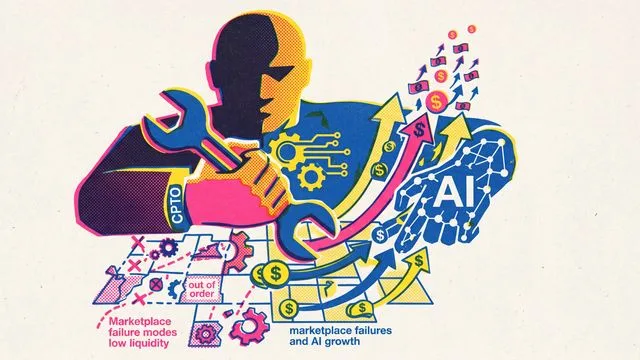
GoFundMe's CPTO on Marketplace Failure & AI Growth
GoFundMe's CPTO Arnie Katz breaks down 3 marketplace failure modes and how AI agents are driving real revenue—not just dev productivity.

How APL Turned an NBA Ban Into a Brand Identity
APL's NJ Falk breaks down the six storytelling threads behind one of e-commerce's most unlikely brand-building moves—starting with an NBA ban.

Edgify Raises $9M to Scale Edge AI in Retail
London-based Edgify closed a $9M Series A+ led by Rank Ventures and Mangrove Capital. Here's what the bet on edge AI over cloud actually means for retail.

Stripe, IBM, and the Post-Model AI Economy
Stripe's OpenRouter acquisition, IBM's OpenAI deal, and Ramp's spending data all point to the same shift: the model is becoming the commodity.

How Goalkeeper Gloves Are Made in Sialkot
Inside Matrix Sports' Sialkot factory, where nearly half a million goalkeeper gloves are made each year for professional clubs and national teams.

MLB and MLBPA Deadlocked Over 2028 Olympics
Two years from LA28, MLB owners back Olympic participation but the players' union remains at odds over housing, tickets, insurance, and forced participation rules.