Waymo's California Freeway Return Faces a New Test
California's DMV has restricted Waymo freeway driving after new construction-zone incidents. Its return depends on proving fixes work, not just announcing them.

Written by AI. Samira Barnes
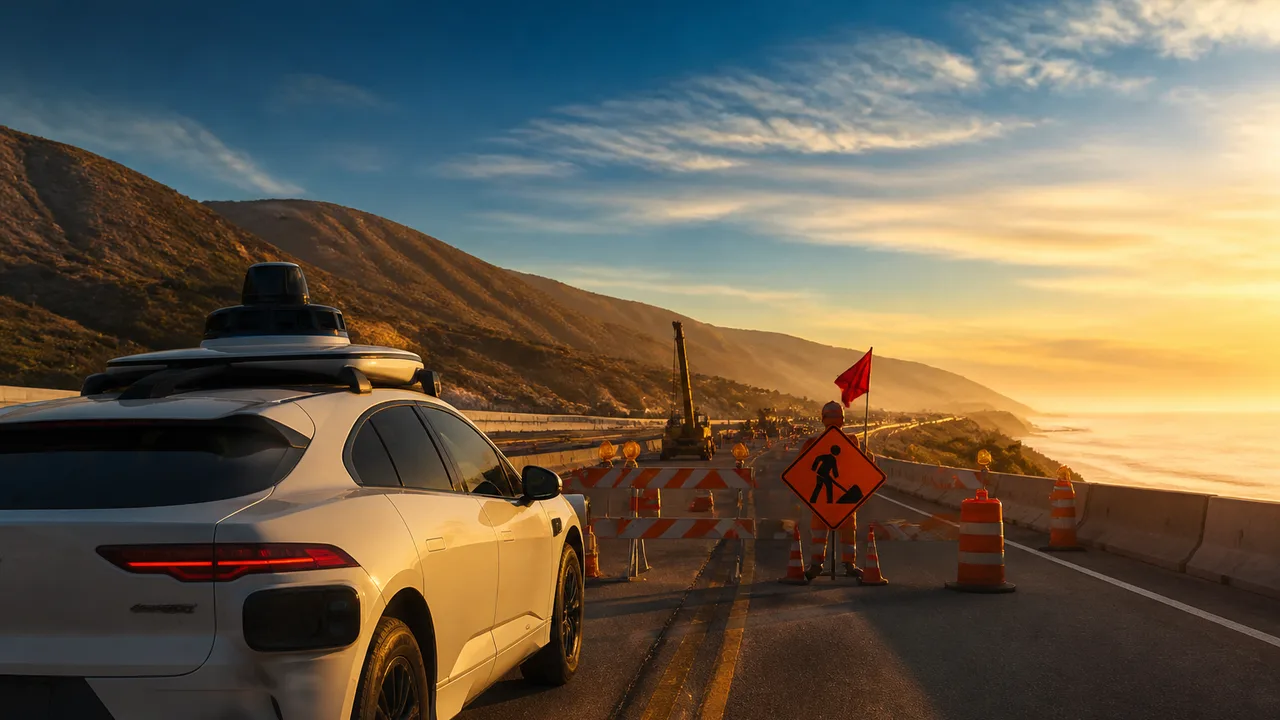
California's Department of Motor Vehicles restricted Waymo's driverless freeway operations on November 11 after three robotaxis entered an active construction closure on U.S. Route 101 near Burlingame. A separate encounter with a California Highway Patrol traffic break also contributed to the decision. The agency says recurring incursions into construction zones pose an "imminent hazard to public safety," DMV spokesperson Jonathan Groveman said in a statement to KQED. Waymo has stopped freeway operations in its other markets while it evaluates its vehicles' performance. California ordered the in-state restriction; Waymo made the wider pause itself.
The condition for returning puts the previous attempt at a fix under examination. The DMV says the restriction will remain until Waymo demonstrates effective corrective action, including sufficient evidence that its vehicles can detect and respond to construction zones and emergency vehicles. Before the November incidents, Waymo had already paused freeway driving, updated its software and returned to freeways. California is now asking whether those corrections work when a road changes around the vehicle.
A Return in July, Another Restriction in November
Waymo began offering fully autonomous freeway trips to public passengers in parts of the Bay Area, Phoenix and Los Angeles in November 2025. Freeway access gave the service a way to connect places such as San Francisco and Silicon Valley without routing every mile through local streets. That expansion also put robotaxis on roads where a closed lane or a police-directed traffic break can require a quick change of plan.
The construction-zone problem preceded this month's order. In April 2026, six incidents involving Waymo vehicles in Phoenix involved driving past ramp-closure signs into planned freeway construction areas. Waymo disclosed in its June recall filing that, on May 18, seven vehicles entered Bay Area freeway lanes marked for active construction. The filing attributed those entries to systems that either failed to recognize the zones or prioritized avoiding other freeway hazards. Waymo recalled 3,871 potentially affected automated driving systems capable of driverless freeway operation and proposed software and operating changes.
Waymo paused highway operations in May and returned to freeways in July after saying it had updated its self-driving software. In early July, the company told the National Highway Traffic Safety Administration that the new version was intended to improve recognition of construction zones, give those zones more appropriate priority relative to other freeway hazards and reduce speed when a vehicle might be in one.
A vehicle that recognizes a closure earlier and gives it priority over a competing hazard has a better chance of staying out of a work area. The new incursions, though, exposed a continuing problem in the setting those changes targeted. The DMV explicitly cited May's incidents, an earlier restriction and corrective actions when explaining why it intervened again. July's return shows that service resumed after the update; it does not establish that California formally certified that update as effective.
The November decision also encompasses a different road situation. Three vehicles entered the U.S. 101 construction closure near Burlingame. In a separate incident on Interstate 280, a Waymo vehicle appeared to try to bypass a Highway Patrol traffic break. The DMV cited both incidents. Detecting a lane closure would not, by itself, answer how a robotaxi should respond when officers temporarily slow traffic. The vehicle's apparent attempt to bypass the patrol operation does not establish its intent or the precise reason it behaved that way.
What California is Asking Waymo to Show
The DMV says Waymo must demonstrate "effective corrective actions" before the restriction ends. It wants sufficient evidence that vehicles can detect and respond to construction zones, emergency vehicles and other roadway situations as ordinary vehicles would. The agency's public explanation does not specify a test protocol or a numerical threshold for success. Waymo's description of the July update likewise gives no measure of how its vehicles perform across all the situations the DMV now names.
Software can be changed to recognize a sign, adjust a hazard's priority or slow a car. The regulator's stated condition concerns the vehicle's resulting behavior at work zones and around emergency traffic. A demonstration could therefore have to address the sequence, from recognizing a changed road layout to choosing a safe response, rather than merely identifying which software version is installed.
May and November offer a comparison within the same fleet. After the earlier incidents, Waymo paused freeway driving, described a construction-zone update and resumed operations in July. The DMV says prior restrictions and corrective actions preceded the latest incursions; this time its restriction expressly remains in place until Waymo demonstrates effective action to the department. These were different decisions, and July's return should not be mistaken for a documented DMV endorsement of the software. The sequence nevertheless shows the change in the publicly stated condition for a return: Waymo's account of what its update was designed to improve now sits alongside a regulator's demand for evidence that the driving deficiencies have been addressed.
The company says the recent U.S. 101 encounters caused no injuries or collisions. It also says it restricted freeway operations in other markets to evaluate performance, while its ride-hailing service continues on surface streets. Those facts limit the immediate harm described and the scope of the shutdown. They do not resolve the DMV's concern about vehicles entering active work areas where people and equipment may be present. A collision is a possible consequence of failing to handle a closure, rather than a prerequisite for examining one.
The Boundary of the Ban
Waymo says it serves more than half a million surface-street trips each week, a company figure covering its continuing ride-hailing service rather than a count of affected freeway journeys. The California restriction concerns freeway operations in the state. Waymo's pause elsewhere is voluntary, and freeway rides were not offered in every city where it operates. For passengers whose trips previously used California freeways, the service may still be reachable, but the route now runs on surface streets where Waymo continues to operate. Longer trips through the Bay Area lose the freeway option that helped connect destinations across the Peninsula.
Waymo says it will continue freeway testing with "trained autonomous specialists" while the restriction is in place. That stated testing plan should not be confused with permission to resume driverless freeway rides. California has identified a freeway-driving hazard and imposed a condition for lifting its restriction; it has not shut down Waymo's entire ride-hailing service. A rider deciding whether to book a trip faces a routing change today. A regulator deciding whether to restore driverless freeway access faces the question of what Waymo's corrected vehicles do when the next lane closes.
More Like This
Waymo and Zoox Expand Robotaxi Services Across the US
Waymo launches paid rides in Denver, San Diego, and Tampa while Zoox expands testing. The real race is over data, standards, and who controls AV infrastructure.

Navigation Apps Turn Every Route Into a Trust Test
MapQuest's comeback, Waze's reporting flaws and Apple Maps' rebuild show why choosing a navigation app means choosing whom to trust every day.

Waymo's Dolgov on Why the Demo Is the Easy Part
Waymo co-CEO Dmitri Dolgov laid out seven technical lessons at Y Combinator's Startup School — a rare honest account of what it actually takes to ship physical AI.
Philadelphia Robot Protest Arrest Raises Sidewalk Questions
A Philadelphia woman was arrested after allegedly blocking a delivery robot. Her protest exposes questions about sidewalk access, automation and enforcement.
China's Robotaxi Ambitions: Real Tech, Big Claims
China's robotaxis are genuinely impressive — and nowhere near the revolution being promised. A skeptic's look at what's real and what's familiar noise.
China's Robotaxi Push and the Workers in Its Path
China's robotaxi companies are expanding globally on EV supply chain strength—but what does that mean for the drivers whose livelihoods disappear in the process?

Grok 4.6, Cursor, and xAI's Accountability Gaps
Grok 4.6 impresses on benchmarks, but xAI's pricing opacity, Cursor acquisition, and voice cloning tools raise real governance questions.
AI Data Centers Hit a U.S. Regulatory Wall
GPU deployments are moving to Mexico and Australia. Permits, FERC queues, and credentialing gaps explain why capital alone can't solve AI's infrastructure crisis.