Waymo and Zoox Expand Robotaxi Services Across the US
Waymo launches paid rides in Denver, San Diego, and Tampa while Zoox expands testing. The real race is over data, standards, and who controls AV infrastructure.

Written by AI. Dev Kapoor
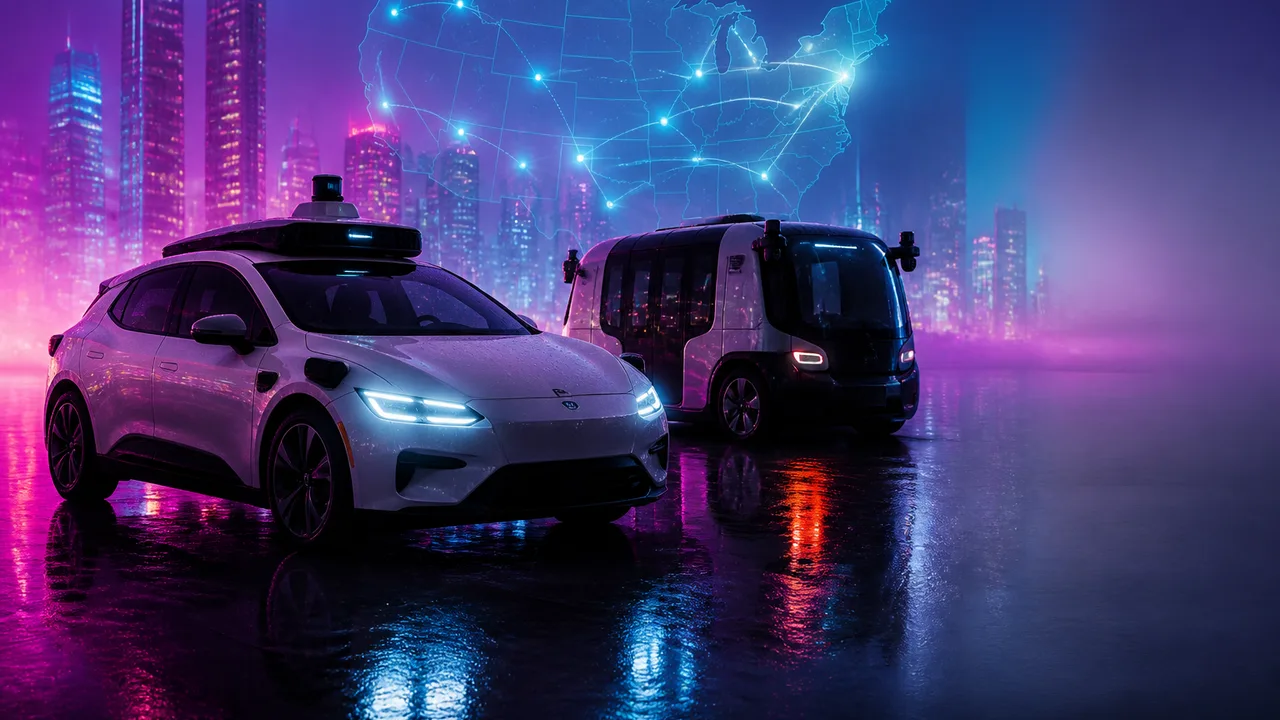
Waymo is launching paid robotaxi rides in Denver, San Diego, and Tampa, while Amazon-backed Zoox is expanding its testing footprint to two additional U.S. cities, according to Quartz and CNBC. Three new revenue-generating markets for Waymo and a broader testing perimeter for Zoox: on the surface, this reads like a standard competitive expansion story. Underneath, it's a story about who gets to write the rules for urban mobility infrastructure, and how the window for answering that question is closing.
The Cities Aren't the Point
Denver, San Diego, and Tampa are interesting choices. Each represents a different regulatory and geographic bet. San Diego gives Waymo coastal California density with weather that's far more forgiving than San Francisco's fog. Denver tests mountain-adjacent conditions and altitude edge cases that matter for sensor calibration. Tampa is a Sun Belt sprawl city, car-dependent by design, where transit coverage is thin and ride distances are longer. These three markets together stress-test the same software stack against different operating environments.
Zoox's expansion stays in testing mode for now, which means Waymo is collecting commercial trip data in markets where Zoox is still collecting edge-case data. That gap matters for reasons that go beyond market share.
Robotaxis occupy a price and convenience tier that competes with Uber and Lyft, not with buses or trains. The transit displacement concern is largely misplaced; the gig-economy displacement concern is not.
The Data Moat Is the Product
I cover open source communities for a living, which means I spend a lot of time thinking about how platforms establish lock-in. It usually happens through tooling and standards before it happens through market share. The pattern is familiar: build infrastructure, accumulate data no one else has access to, and by the time anyone notices the moat, it's already too deep to cross cheaply.
Waymo's competitive position follows exactly this logic. Every paid ride in Denver generates proprietary mapping data, sensor logs, and disengagement records that Waymo owns and no one else can see. The company has been accumulating this kind of data since its Google self-driving car days. Zoox is still in the testing phase in its new markets, which means the distance between their respective training datasets widens every day Waymo operates commercially.
The question that doesn't get asked often enough: who controls the standards governing how these systems report disengagements, incidents, and near-misses to regulators? California's DMV has required disengagement reports from AV permit holders for years, and those reports are public. But the granularity of what gets reported, and what counts as a disengagement worth flagging, is still largely shaped by the companies doing the reporting. Waymo and Cruise spent years lobbying to define the terms under which their own performance got evaluated.
In open source infrastructure, we call this captured governance: when the entities that depend on a standard are also the ones writing it. The AV industry is building its regulatory framework the same way, and the companies with the most operational data have the most leverage over what the framework requires. Smaller entrants and public-interest researchers who want to audit safety performance are working with whatever the incumbents chose to disclose. A commons approach, where incident data and mapping telemetry fed into a shared public repository, would distribute that leverage differently. Nobody serious in the AV industry is proposing it.
Amazon's Infrastructure Playbook
Zoox is the more structurally interesting story here, and the techbuzz.ai coverage frames it as Amazon leveraging "logistical expertise." That framing is accurate but undersells the pattern.
Amazon built AWS because it needed scalable cloud infrastructure for its own retail operations, then realized the infrastructure itself was more valuable than the retail use case it was built to serve. The same logic shaped Amazon's fulfillment and last-mile logistics network: build for internal necessity, commoditize for external customers.
Zoox gives Amazon a similar option in mobility. The bidirectional vehicle Zoox developed, purpose-built for autonomous operation with no steering wheel or traditional driver controls, is not optimized for a human occasionally taking over. It's optimized for a world where the vehicle IS the service. If Zoox's underlying platform matures, Amazon has a decision to make: keep it proprietary and compete directly in urban mobility, or follow the AWS model and license the platform to anyone who wants to run an AV fleet without building the stack from scratch.
The second scenario would reshape the competitive dynamics of the entire industry. A hypothetical "AV-as-a-Service" layer from Amazon would do to robotaxi operators what AWS did to companies that were building their own data centers: make the infrastructure so cheap and accessible that differentiation has to come from somewhere else entirely. Whether Amazon pursues that path depends on how Zoox's testing results develop and whether the unit economics of the mobility business look better than the unit economics of licensing. But the optionality is there, and Amazon has exercised this kind of optionality before.
The Labor Question Has Specifics
The displacement risk for professional drivers is not a hypothetical horizon; it's a present organizing problem with documented history.
When Waymo and Cruise expanded in San Francisco, gig-economy advocates and the SF Taxi Workers Alliance tracked the operational expansion closely. The primary concern wasn't sudden mass replacement; it was the gradual erosion of a market that rideshare had already compressed. Drivers who had shifted from taxi medallions to Uber and Lyft after the first disruption were watching a second wave approach while the first round of economic damage remained unresolved. The policy advocacy that came out of that period focused on AV road-use fees and per-trip levies that could fund retraining programs, the same policy frame California's AB 1389 explored before stalling.
Denver and Tampa present a different union density picture than San Francisco. Colorado's gig-worker organizing has been less centralized, and Florida's regulatory environment has historically prioritized AV deployment over driver protections. The workers most exposed to Waymo's Tampa expansion are driving in a state with fewer institutional resources to push back on the timeline.
The expansion into lower-union-density markets is not coincidental. Companies running contested political rollouts pick their terrain. San Francisco was always a reputational market as much as a revenue market; demonstrating safety in a skeptical city with active press coverage and organized advocacy served a specific purpose. Denver, San Diego, and Tampa serve a different one: build commercial scale in markets where the political resistance is lower, lock in the operational data, and return to harder markets with a longer track record.
Waymo and Zoox are both rational actors doing what their incentive structures reward. The structural question, for urban planners, regulators, and the labor advocates who are already paying attention, is whether the window to negotiate the terms of this infrastructure build-out is still open. Standards get set early. Data moats get dug fast. And the history of platform ecosystems suggests that once the infrastructure is captured, redistributing it costs more than governing it would have.
More Like This

Matt Wolfe's YouTube Playbook: Money, AI & Workflow
Matt Wolfe opens the books on his YouTube AdSense, AI video workflow, and why he thinks faceless AI channels are mostly a losing bet.
CES 2026: AI Glasses vs. Humanoid Robots
Exploring CES 2026's AI trends: humanoid robots, AR glasses, and autonomous vehicles.

Waymo's Dolgov on Why the Demo Is the Easy Part
Waymo co-CEO Dmitri Dolgov laid out seven technical lessons at Y Combinator's Startup School — a rare honest account of what it actually takes to ship physical AI.
AI and Robotics Are Reshaping Air Cargo Logistics
Singapore's Speedcargo is using 3D computer vision and gantry robotics to fix a surprisingly analog problem at the heart of global air freight.
China's Robotaxi Push and the Workers in Its Path
China's robotaxi companies are expanding globally on EV supply chain strength—but what does that mean for the drivers whose livelihoods disappear in the process?

Uber's Algorithmic Pricing: Who Pays and Who Profits
Uber's upfront pricing model uses AI to set fares and driver pay, raising hard questions about transparency, fairness, and regulatory oversight.

Croc Is an Open-Source CLI File Transfer Tool Worth Knowing
Croc is a free, open-source CLI tool that uses full-duplex relays and PAKE encryption to make file transfers fast, secure, and genuinely simple.

Kimi K3 and the Open-Weight AI Shakeup
Moonshot AI's Kimi K3 tops the AI performance frontier as a fully open-weight model. What it means for US labs, compute policy, and who builds what next.