What vidIQ's Channel Audit Gets Wrong About Niche Creators
vidIQ audited Fast Freddy RC's small YouTube channel. The advice is technically sound—but it asks the wrong question entirely about niche creator value.

Written by AI. Dev Kapoor

Photo: AI. Yuna Blackwood
Fast Freddy RC has published roughly 1,000 videos about building remote control cars. Not the ones you grab off a shelf at Walmart—the ones where you're sourcing parts, following multi-step assembly instructions, and watching someone else's hands for the technique you can't quite get from the manual. He has about 4,000 subscribers. Some videos clock under 100 views.
By YouTube's metrics, this is a channel in distress. By mine, it looks like something else entirely: a solo maintainer running a niche documentation project, mostly for people who've already found him, wondering why his README isn't getting indexed.
vidIQ—a company that sells YouTube analytics and optimization tools—recently picked up Fast Freddy's channel for a public audit. The hosts, identified in the transcript only as the main presenter and his co-host Dan, walked through four areas: channel direction, titles, thumbnails, and content strategy. Their scores, pulled directly from the video: channel direction a seven out of ten, titles a five, thumbnails a five. The unboxing intro they clocked at 52 seconds before Freddy started talking—past the 30-second threshold YouTube reportedly treats as critical for viewer retention.
The advice they offer is not wrong, exactly. The title for the Tamiya Big Wig unboxing—"History of Unboxing the Tamiya Big Wig 2025 Re-release: What's the Big Deal"—is long enough to get cut off in search results, front-loads the least interesting word ("History"), and buries the actual hook. The Impact font on thumbnails does read like a meme from 2011. And their observation about the hook problem is sharp: one video opens with 52 seconds of b-roll before Freddy appears, while a build series drops you directly into Step 12 with zero context. As Dan puts it: "In one video it took too long to get to delivering the value and then in this one, the viewer has no parachute."
Good notes. But I want to sit with the frame around them, because the frame is doing a lot of work that doesn't get examined.
vidIQ is not a disinterested party in this conversation. The company sells creator optimization tools. Their audit concludes—as their audits tend to—that the path forward involves optimizing harder: better titles, cleaner thumbnails, more content buckets, beginner-friendly videos, a restructured upload schedule. The audit's implicit premise is that Freddy's goal should be a bigger audience, and that a bigger audience is straightforwardly good for him.
That premise is worth questioning, and the hosts actually get close to questioning it before pulling back. Early in the audit, one of them scores channel direction a nine out of ten—"rock solid"—before Dan talks him down to a seven because the content is "hyper-specific" with a "low ceiling in terms of views." The nine-to-seven negotiation is telling. The quality of the content and the size of the potential audience are treated as the same axis, and they're not.
Here's what I see when I look at Fast Freddy's channel through a different lens: the people who find him probably need him. The hosts themselves say it: "Imagine if this channel went away tomorrow and you—the only reason you're into the hobby is because these videos exist and you're able to easily build along with this creator." That sentence lands and then the conversation moves on, but it's actually the most important thing said in the entire audit. It's a description of critical infrastructure. It's the same thing I'd say about a well-maintained open source library with 200 GitHub stars that half a dozen production systems quietly depend on.
The problem vidIQ is diagnosing—hyper-specific content, no onboarding for newcomers, deeply technical language that assumes prior context—is the exact problem open source communities have been solving (or failing to solve) for decades. We call it the curse of expertise. We call it writing docs for the people already in the room. The solution in OSS isn't "make your project appeal to a broader audience" as a general imperative. It's more surgical: write a good README, create an onboarding path, separate your "getting started" documentation from your deep technical reference. The goal isn't to change what you're building. It's to lower the cost of entry for people who would benefit from it.
vidIQ's version of this advice—add beginner videos, show off your collection, do a "getting into the hobby" series—is actually pretty close to the same thing. But the framing is growth-as-success rather than access-as-service, and that framing matters for how Freddy would have to spend his energy. Building an entire beginner pipeline is a lot of work. Writing a better title for the video you already made is not.
The most structurally interesting recommendation in the audit is the one about compiling multi-part build series into single long-form videos. Dan makes the case: "I promise you the results from that over time will be better than all of the individual videos combined because it's so much easier to navigate one video versus a playlist of videos that were all uploaded across different times." They note this is common in gaming content—though it's worth flagging that this is asserted in the video as received wisdom rather than backed by data, and "the gaming community does this" is not the same as "this works for RC car build documentation."
But the underlying logic is sound, and it maps cleanly onto something any OSS contributor would recognize: a scattered commit history across twenty small PRs is harder to onboard into than a single well-organized branch. The fragmentation of Freddy's build series—uploaded across different times, not in order, no through-line for a new subscriber—is a contributor funnel problem. Someone who finds Step 12 without context is not going to subscribe. They're going to leave. Freddy is apparently uploading four or more videos a week to maintain a schedule, and that schedule is actively making the project harder to use.
The audit's thumbnail advice, I'll admit, lands cleanly. The before-and-after they demonstrate is genuinely striking: a screenshot pulled directly from the unboxing video—Freddy, the box, the product, no neon speedometer, no Impact font—reads immediately as more trustworthy than the produced thumbnail. "Almost by accident they've proved that they can make better thumbnails just from frames from videos," one host observes. That's the most useful single note in the audit, and it requires almost no additional labor from Freddy. It's the kind of change that actually respects where a creator's energy already is.
So what do I actually think of the audit? Mixed, and deliberately so.
The tactical notes—title length, font choice, hooking viewers in the first 30 seconds, compiling series—are sound and largely low-effort to implement. The structural recommendation to diversify content toward beginners is more debatable. It's not bad advice, but it comes with a real energy cost for a creator who is already publishing at high volume, and the audit doesn't grapple with that honestly. Freddy might not have the bandwidth to become both a documentation resource for existing hobbyists and an onboarding channel for newcomers. Maintainers who try to be everything to everyone are how you get burnout, not growth.
And the question that goes entirely unasked: does Freddy want a larger audience, or does he want the audience he serves to be able to find and use his content more easily? Those are different problems. The first one is vidIQ's business. The second one might actually be Freddy's.
The 1,000-video back catalog he's sitting on is not a liability. It's the whole point. What it needs is better signage, not a bigger building.
More Like This
Unraveling the Mysteries of Magic in Middle-earth
Explore how magic in Middle-earth defies traditional spells, rooted in nature, craft, and intent.
10 Underrated Netflix Films That Deserve Attention
Explore ten overlooked Netflix films that showcase unique storytelling and filmmaking techniques yet failed to capture widespread attention.
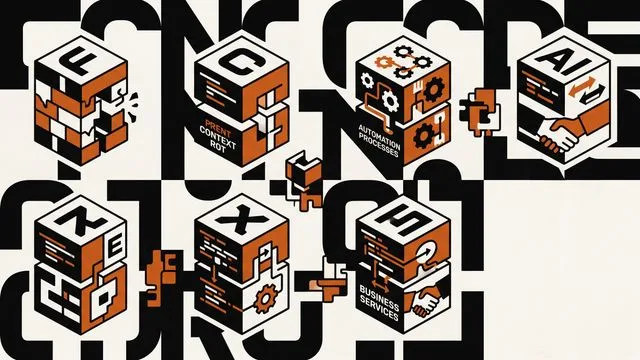
6 Claude Code Skills That Actually Sell to Businesses
Nate Herk spent 400 hours in Claude Code and found 6 skills businesses keep paying for. Here's what they do—and what to verify before trusting the hype.
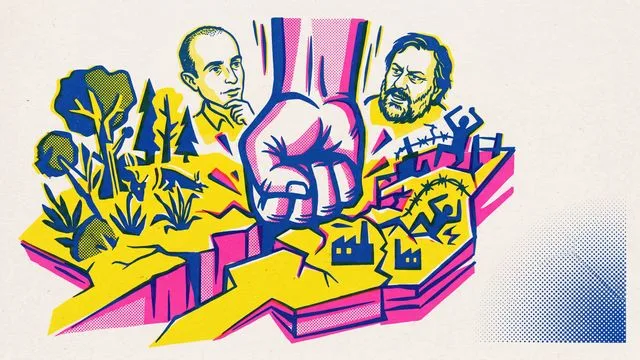
Is Nature Good? Harari and Žižek Say No
Yuval Noah Harari and Slavoj Žižek agree: nature isn't inherently good. Their debate reveals why "natural" is almost always a political argument in disguise.
Inside Matt Wolfe's AI Creator Operation
Matt Wolfe breaks down the real costs, team structure, and AI workflows behind one of YouTube's biggest AI channels. The numbers are surprising.

The Algorithm Knows You Better Than You Think
Crash Course's Hank Green explains how recommendation algorithms exploit our worst impulses—and what it costs creators who refuse to play along.

Quantum Computing Basics: Qubits, Gates, and Qiskit
Dr. Katie McCormick's Qiskit primer walks beginners through qubits, superposition, entanglement, and running real circuits on IBM quantum hardware.

Building a CRM With Claude Code for Local Businesses
A YouTuber built a working CRM using Claude Code, Astro, and Stripe for local business lead management. Here's what the stack actually looks like—and what to weigh.