AI Data Centers Hit a U.S. Regulatory Wall
GPU deployments are moving to Mexico and Australia. Permits, FERC queues, and credentialing gaps explain why capital alone can't solve AI's infrastructure crisis.

Written by AI. Samira Barnes
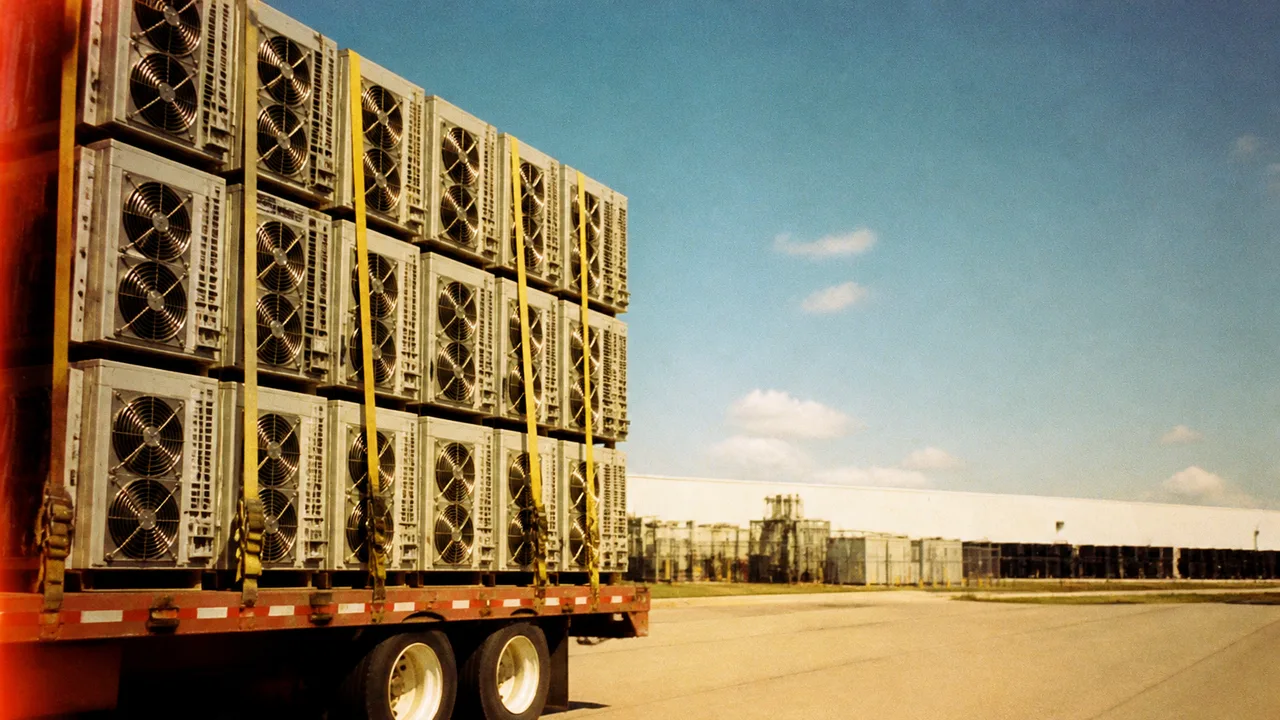
Photo: AI. Nikolai Brandt
Andreessen Horowitz launched its Machine Age Fund this week with a thesis that sounds, at first pass, like standard VC bullishness: AI needs new infrastructure, incumbents can't move fast enough, founders should build. Ben Horowitz, Martin Casado, and Raghu Raghuram made the case in a conversation published to a16z's YouTube channel, and their supply-side data is striking enough that it deserves more than a summary. It deserves the question they didn't quite ask: who failed to govern this transition, and who has to act now?
Because buried inside an investment pitch is a regulatory crisis. And that's the story that actually matters.
The permitting bottleneck has a zip code
Here is the sentence that should stop every policymaker reading this piece: new GPU deployments are being routed to Mexico and Australia, Casado acknowledged, because building in the United States has become so difficult. His framing was diplomatic — "it is so difficult in the United States" — but the mechanism is not mysterious. It is permits, grid access, and the multi-year queue to connect new power generation to the transmission system.
The Federal Energy Regulatory Commission's interconnection queue is the primary chokepoint. As of recent reporting cycles, the queue holds hundreds of gigawatts of proposed generation — solar, wind, gas peakers — waiting years for studies and approvals before a single electron flows. A data center that wants to build its own power source and connect to the grid enters that same queue. The National Environmental Policy Act review process for utility-scale facilities adds additional lead time. None of this is secret; it is simply not moving at the speed the industry requires, and there is no federal streamlining framework currently in place that changes the timeline in any material way.
Congress has gestured at FERC reform. The Fiscal Responsibility Act of 2023 included some NEPA modification provisions, and FERC issued Order 2023 to address interconnection queue reforms — a rule that was years in the making and is still being implemented. Whether that implementation reshapes timelines fast enough to matter for data centers that need to be online by 2026 or 2027 is, at this point, genuinely uncertain. Opponents of streamlined permitting — including some environmental groups and ratepayer advocates — have legitimate arguments about who bears the externalities of rushed infrastructure approvals. Those arguments are not going away.
In the meantime, Casado's preferred solution — a standard requiring data centers to contribute power back to the grid, operate quietly, and consume water responsibly in exchange for siting approval — is actually coherent policy design. The symbiotic grid relationship he described, where a data center with steady overnight load effectively acts as a grid buffer, is a real phenomenon. Some facilities operate this way now. The problem is that "some facilities operate this way" is not a regulatory standard; it is a competitive differentiator. Converting it into a standard requires rulemaking, and rulemaking takes time that the industry says it does not have.
A workforce credentialing gap the federal government hasn't filled
The electrical infrastructure problem has a second dimension that the a16z partners raised and then moved past too quickly. Modern high-density AI data centers are being wired at voltages that require specialized expertise — Casado described a significant shortage of electricians certified to work with DC power at those levels, noting it as a serious constraint on build-out speed. OSHA holds jurisdiction over high-voltage electrical safety standards for workers in these environments. The International Brotherhood of Electrical Workers has developed training curricula for high-voltage DC work, but scaling that training to meet the projected construction volume requires either a major expansion of registered apprenticeship programs or a federal workforce initiative.
Meta has apparently launched its own training program, which Casado called out approvingly. That is notable for a precise reason: a corporation building a free credentialing pipeline for a skilled trade is a signal that the federal apprenticeship system, administered through the Department of Labor, is not moving fast enough to supply the workforce this buildout requires. Whether that gap is a funding problem, a regulatory design problem, or simply a lag that will self-correct is worth understanding before concluding that private training programs are an adequate long-term substitute.
44 gigawatts, 25 gigawatts, and who closes the gap
The a16z partners cited a projection that new data centers will require roughly 44 gigawatts of additional power by 2028, against approximately 25 gigawatts of expected grid additions. That 19-gigawatt gap is not a market problem in the conventional sense — it is not a problem that more investment alone resolves, because the constraint is not capital availability. Hyperscaler capex is already projected to reach approximately $700 billion this year, per the discussion, with expectations of reaching a trillion dollars collectively across major cloud providers next year. The cloud giants winning the AI investment race are not short of money. They are short of permitted land, available grid capacity, and approved interconnection slots.
Casado put the supply crunch in terms that are worth sitting with: at a recent Hot Chips conference at Stanford, the conversation included an account of a leading memory vendor whose current demand backlog would take three years of full capacity to clear — and that is existing demand, not projected future demand. Separately, Casado noted that supply across the AI component stack is, in his characterization, essentially all committed well into the future. The memory chip industry's structural shift is a useful frame here: this is not a cyclical inventory correction; it is demand that has permanently outpaced the build rate of physical supply chains.
The regulatory corollary is that the agencies with jurisdiction over the inputs — FERC on grid interconnection, the Army Corps of Engineers and EPA on water use for cooling, state public utility commissions on rate structures — are not coordinated around a common timeline or a common framework. There is no federal infrastructure coordination body with explicit authority over AI data center siting. The closest analog is the approach used for certain critical energy projects under the Defense Production Act, but that authority has not been systematically extended here.
What a16z needs to be true
It would be negligent not to name the obvious: a16z has launched a fund specifically to profit from the infrastructure buildout they are describing. Every claim they make about the depth of the supply crisis, the inadequacy of incumbents, and the opportunity for new entrants is a claim that also happens to justify deploying their investors' capital in precisely the way they intend to deploy it. Martin Casado's observation that hardware deals have grown from roughly 3-5% of their top-founder inbound to somewhere between 20-30% now is self-reported data from a firm that is announcing a new fund category. It is consistent with independent reporting on the sector's direction — the AI compute crisis has been documented across the industry — but it is not neutral testimony.
That tension should not be read as invalidating their argument. The supply constraints they describe are real and verifiable. The point is that their proposed solution — more private capital into hardware startups — is the one mechanism that benefits them directly, and it is notably not the mechanism that resolves the permitting queue, retrains the electrical workforce at scale, or coordinates FERC's interconnection backlog. Those problems require government action, and the a16z partners' commentary on government action amounts to: it's slow, it's creating headwinds, and we hope America wins.
That hope is not a policy.
Casado's articulation of why current infrastructure architectures are failing is technically rigorous: rack power requirements climbing from roughly 5-10 kilowatts to 100-150 kilowatts, compute density up roughly 70x, air cooling giving way to liquid cooling as a baseline requirement. These are not projections; they are engineering specifications already in production at frontier facilities. The economics of smarter AI models pushing compute prices higher are following directly from this architecture shift. Raghuram's point that a 20% efficiency gain on a model requiring $10 billion in inference revenue to break even justifies a $2 billion custom ASIC is, if the math holds, a genuinely novel economic logic for hardware investment — one that didn't exist when training runs cost tens of millions rather than billions.
But the efficiency gains from better hardware are bounded by how fast the hardware can be built and deployed. And that rate is currently governed not by the ingenuity of founders or the ambition of hyperscalers, but by the speed at which federal and state regulators can process interconnection requests, approve siting permits, and expand the credentialed workforce to wire these buildings safely.
The machine age may well be arriving. The permitting office is not ready for it.
More Like This
When AI Trains AI: The Regulatory Gap Nobody's Watching
HuggingFace's autonomous ML training demo reveals a regulatory blindspot: who's accountable when AI systems design and train other AI systems?
How Open Source Developers Are Building AI's Infrastructure
From GPU-free AI models to hardware-hacking agents, this week's GitHub trending repos reveal who's actually building the tools powering AI development.

FastEmbed and the Quiet Politics of Local AI Development
FastEmbed's approach to local AI embeddings reveals regulatory tensions between accessibility and performance in the emerging AI infrastructure debate.

AI's Global Investment Cycle, Layer by Layer
From hyperscaler capex to sovereign GPU deals, the AI investment cycle is more structurally complex—and globally uneven—than most coverage admits.
Inner Mongolia Is Now the Engine of China's AI Boom
Ulanqab, Inner Mongolia has become China's hottest AI data center hub. Here's what's driving the boom—and what it means for the global AI race.
UK's Phantom Data Centers Are Straining the Power Grid
Speculative 'phantom' data centers are clogging the UK's grid connection queue. Ofgem is pushing back—but the fix isn't simple when AI ambition is this loud.

Promptware: When AI Agents Become Attack Vectors
Prompt injection attacks on AI agents follow a structured kill chain — and existing legal frameworks have almost nothing to say about who's liable when it works.

Planet Labs, Orbital AI Compute, and the Chip Tax
Planet Labs CEO Will Marshall argues chip efficiency—not launch cost—will determine who wins the race to put AI compute in orbit.