Philadelphia Robot Protest Arrest Raises Sidewalk Questions
A Philadelphia woman was arrested after allegedly blocking a delivery robot. Her protest exposes questions about sidewalk access, automation and enforcement.

Written by AI. Yuki Okonkwo
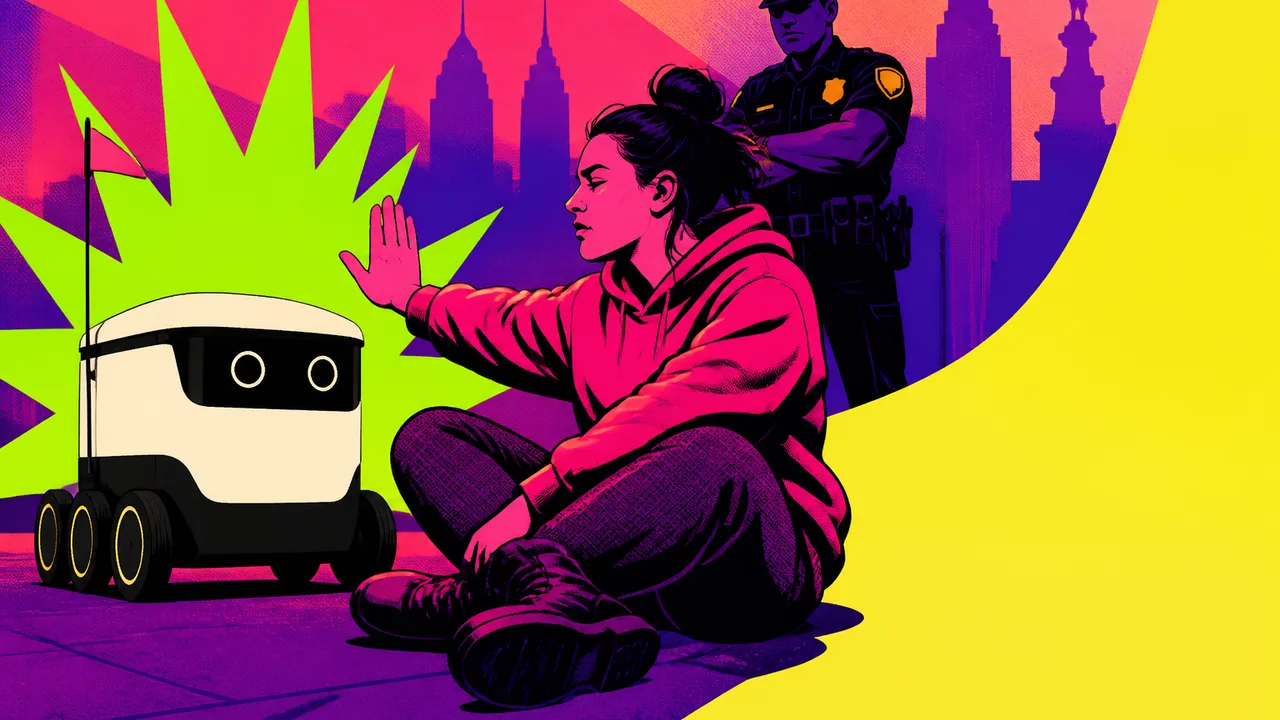
A Philadelphia woman was arrested and charged with disorderly conduct after allegedly blocking a delivery robot and refusing to move. She told a local television outlet that she was protesting the robots because she believes they take jobs from human delivery workers.
The robot was making a delivery connected to Uber Eats. That detail puts the dispute in familiar territory: someone orders food, a platform arranges the trip, and a small machine travels along a sidewalk that everyone else still needs to use. The arrest brought a disagreement about future work into a place where people had to decide who could pass.
The precise conduct behind the charge, the case’s status, the robot’s ownership and the frequency of similar confrontations remain unknown. Blocking a device and holding a view about automation are different things for an officer responding to an obstruction. For someone worried about delivery work, though, stopping the device may be the most visible way to challenge a business decision made elsewhere.
What Work Could a Robot Replace?
The woman’s argument has a straightforward economic logic. A delivery that a robot completes is a delivery a person does not complete on that trip. If companies substitute machines for paid couriers at scale, workers who depend on those orders could lose opportunities. That concern deserves a better answer than a promise that technology always creates new jobs eventually. A courier cannot necessarily switch to maintaining a robot, and a new role elsewhere does not pay the bill that a missed shift would have paid.
A robot might take an order that would otherwise have gone to a courier. It might handle a short trip that a platform struggled to staff, or serve demand that would not have produced a delivery at the same price. Those possibilities have different consequences for workers, and none can be read off a single robot’s route.
Even the phrase “the robot did the delivery” compresses a lot. A device may navigate part of a trip while people prepare food, load it, maintain the machine, handle customer problems or intervene when something goes wrong. Those tasks still count as work. They may also be performed by different people, in different places, under different pay arrangements. Counting jobs created and lost would require looking at hours and earnings, not simply comparing the number of couriers with the number of machines.
For customers and businesses, a workable sidewalk delivery service could offer another way to complete short trips. For a courier, the same service could mean fewer offers during the hours they want to work. Both outcomes can occur within one platform. The useful public question is how an operator measures that change and who can examine the measurement.
A Sidewalk Has More than One User
A delivery app can describe a route as a line between a restaurant and a customer. On the ground, that line crosses other people’s routes. Pedestrians may be walking to work, using mobility aids, pushing strollers or unloading goods. A robot needs room to travel and sometimes to wait. Space used for either purpose comes from a sidewalk shared by people who never agreed to become part of a delivery system.
That makes access a practical issue before anyone reaches a grand theory of automation. A device that pauses in a narrow passage can make someone turn around or enter the street. A person who deliberately prevents it from moving can also create a blockage.
Cities already make choices about how sidewalks accommodate commerce, from outdoor dining to bicycle parking. Delivery robots add a mobile use of that space. A city considering them could ask where they may operate, how fast they may travel, when they must yield and what happens when they cannot safely continue. Those are design and policy decisions, not problems a machine can solve solely by getting better at spotting obstacles.
The technical vocabulary can obscure the human decision. A robot may use sensors and software to identify a route, but its behavior follows choices about priorities. Should it wait indefinitely when the path is blocked? Should a remote human be able to move it? Should it abandon the trip? Each option affects pedestrians, customers and workers differently. Better navigation may reduce awkward encounters; it cannot decide whose claim to a crowded sidewalk should prevail.
When Protest Meets Enforcement
The arrest puts two separate questions beside each other. One concerns the woman’s alleged conduct and the disorderly conduct charge. The other concerns how residents can challenge a company’s use of public space without having to physically stop a device. Treating every objection as permission to obstruct would leave pedestrians and deliveries vulnerable to anyone willing to stand in the way. Treating obstruction as the only issue would leave the underlying complaint to circulate without a clear place to land.
Imagine a resident repeatedly finds a robot waiting at a difficult crossing. A useful process would tell them who operates it, how to report the location and time, and what response to expect. If a person needs immediate passage, the process also needs an answer faster than a customer-service email. An operator could be asked to explain how a stalled machine is moved and who can authorize that move. A city could make those procedures part of the conditions for using its sidewalks.
Labor concerns need a different channel. A phone number for reporting blocked pavement cannot answer whether delivery workers are losing hours. Platforms and city officials could be pressed for figures on robot deliveries, where they occur and how work offered to couriers changes over time. That would still require careful interpretation: seasonal demand and changing order volumes can move earnings independently of robots. It would at least give workers and residents something more concrete to debate than the sight of a machine rolling past.
Public oversight also raises an awkward jurisdiction question. The sidewalk belongs to the public, while the delivery service operates through private contracts and software. A city can consider conditions for street access; it may have much less visibility into how a platform assigns orders. If a permit addresses only speed and size, it may leave the woman’s employment concern untouched. If the conversation focuses only on jobs, it may miss the person who needs an unobstructed route home.
In Philadelphia, one alleged refusal to move ended in an arrest. The next decision about delivery robots need not wait for another person and a machine to meet in the middle of a sidewalk.
More Like This
AI Agents Are Getting Persistent—And That Changes Everything
Anthropic's Conway, Z.ai's GLM-5V-Turbo, and Alibaba's Qwen 3.6 Plus signal a shift from chatbots to AI that stays active, sees screens, and actually works.
VEED's AI Video Platform Reviewed: One Tool or Five?
VEED promises to replace your entire AI video stack with one platform. We break down what it actually does, what it doesn't, and who it's really built for.

GPT-6 Astra Leaks, Opus 5.1 Signals, and HY4
GPT-6 Astra demo leaks show one-shot game generation. Anthropic quietly tests Opus 5.1 while angering users with a rate limit cut disguised as a raise.

Salesforce's AI Layoff Gamble: A Cautionary Tale
Examining Salesforce's 4,000 layoffs for AI, and the lessons learned from their tech missteps.
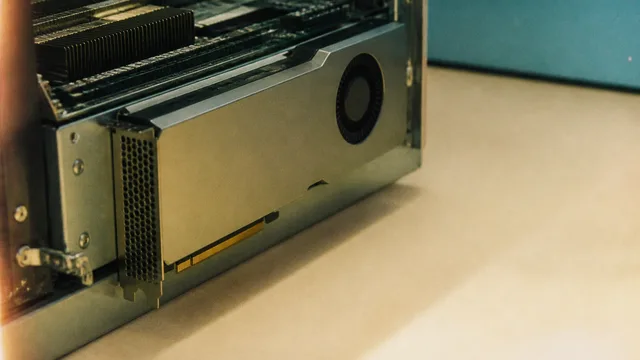
AMD Instinct MI350P: 144GB HBM3E in a PCIe GPU
AMD's Instinct MI350P brings 144GB of HBM3E and 3.6TB/s bandwidth to standard PCIe servers. Here's what it means for the mid-market AI infrastructure gap.

How Optimization Powers Modern AI and Engineering
From training ChatGPT to imaging black holes, optimization is the hidden engine behind modern AI and engineering. Steve Brunton's lecture explains how.