Waymo's Dolgov on Why the Demo Is the Easy Part
Waymo co-CEO Dmitri Dolgov laid out seven technical lessons at Y Combinator's Startup School — a rare honest account of what it actually takes to ship physical AI.

Written by AI. Bob Reynolds

Photo: AI. Tomoko Hayashi
The best autonomous driving moment, Waymo co-CEO Dmitri Dolgov told a Y Combinator audience recently, is one where nothing appears to happen. A car cuts in front of you. The Waymo Driver brakes, adjusts, keeps moving. The kids in the back seat don't even look up.
That framing — invisible competence as the measure of success — cuts against almost everything tech culture celebrates. We reward the demo. We fund the prototype. We write about the launch. What Dolgov spent nearly fifty minutes describing at Startup School 2026 is something more uncomfortable: the vast, unglamorous distance between a system that works once and one that works at scale, every time, with strangers' lives depending on it.
He's been working on this problem for close to two decades. The talk was structured as seven lessons. What follows is an attempt to take those lessons seriously rather than relay them.
The Demo Is Not the Product
This is the one that lands hardest on anyone who's watched a hype cycle up close, and Waymo has lived through several.
The project started in 2009. According to Dolgov — and consistent with earlier public accounts of Waymo's early history — the team set two initial benchmarks: drive 100,000 autonomous miles, and complete ten separate 100-mile routes across the Bay Area without human intervention. A team of about a dozen engineers hit both targets in roughly eighteen months.
By 2010, Dolgov says, they felt they'd solved autonomous driving. Day, night, traffic, pedestrians, cyclists, construction zones. "We were quote-unquote capability complete," he said, without apparent irony.
Then came fifteen years of actual work.
The product that followed took a decade to become a commercial service and another five years to reach 500,000 trips per week across fifteen cities. The math is clarifying: demo in eighteen months, product in fifteen years, exponential scaling only now.
The engineering principle underneath this is what Dolgov calls the "nines" problem. Getting to 90% reliability is the easy part — that's the demo. Each additional nine of reliability (99%, 99.9%, 99.99%) requires roughly ten times more effort than the last. So the gap between a demo and a safety-critical autonomous vehicle isn't linear. It's exponential, and it compounds with every new AI breakthrough. Better tools lower the floor for getting to 90%. They don't move the ceiling nearly as much.
"The recurring mistake of every cycle," Dolgov said, "is spending on the demo what you should be saving for the nines."
That's a sentence worth sitting with if you're watching the current wave of physical AI startups announce their prototypes.
Sensors and the Temptation of "Good Enough"
The sensor debate in autonomous vehicles has never really been about cameras versus LiDAR as a technical question. It's always been about what performance target you're optimizing for.
Humans drive with eyes. That proves the task is physically possible with vision alone. Dolgov's argument is that this proof of concept is only relevant if you're targeting human-level performance — which, he points out, is a fairly modest goal given how many people die on roads every year.
Waymo uses cameras, LiDAR, and radar. Not as backups to each other, but as complementary physics. Cameras deliver resolution and color; they degrade in darkness and glare. LiDAR gives direct 3D measurement of surrounding structure and works in pitch darkness. Radar punches through fog and rain and can measure velocity directly using the Doppler effect. The outputs are fused into a single representation of the world that is, by every available measure, richer than what any single sensor provides.
Dolgov showed several examples: a dust storm in Phoenix where the camera sees roughly what a human would — almost nothing — while LiDAR clearly detects a pedestrian at the roadside. Kids in complete darkness, chasing dogs chasing a bull, invisible to the camera and visible to LiDAR. A tree branch stuck to the windshield that wipers can't clear; because of sensor redundancy, the car detects the obstruction and navigates itself back to a depot rather than operating compromised.
Dolgov says Waymo is currently on its sixth hardware generation, and each generation has delivered both better capability and lower cost. Don't anchor your decisions to what components cost today. That number expires faster than most business plans.
Riding the Wave Without Drowning in It
Every major AI breakthrough of the last fifteen years — convolutional networks around 2013, transformers around 2017, vision-language models more recently — has found its way into the Waymo Driver. The harder organizational challenge isn't doing the research. It's taking bleeding-edge results into production in a safety-critical environment without regressions, and doing it without pausing the operational scaling that's already underway.
Dolgov's advice on this is specific: before launching a tiger team to pursue a new technology, decide what happens if the project succeeds. "I've seen a failure mode where a very difficult technical project succeeds and then there's a dead end." That's demoralizing and wasteful. New technology should earn its place by both improving performance and simplifying the overall system. If it adds capability but increases complexity, the bar hasn't been cleared.
The current expression of this philosophy is what Waymo calls its foundation model — a multimodal, end-to-end architecture that handles perception, prediction, and planning in a unified structure. Dolgov described it as a "system one / system two" design: a fast path that fuses raw sensor data for millisecond-level reactions (the lizard brain, as he put it), and a slower path for semantic reasoning — distinguishing a car that's geometrically passable because it's parked from a car that's on fire and should be routed around regardless of whether it blocks the path.
The foundation model runs across different hardware generations and different vehicle platforms. Moving complexity upstream to a large shared model makes the on-vehicle specialization layer lighter and faster to update. That's not just an architecture choice; it's a deployment strategy.
The Simulator You're Not Taking Seriously Enough
Building the agent is one AI problem. Building a simulator good enough to train and evaluate that agent is a separate AI problem of equal difficulty, and Dolgov was clear that most teams don't treat it that way.
The distinction he draws is between open-loop and closed-loop evaluation. Open-loop asks: given this situation, what would you do? Closed-loop asks: you did that — now what happened, and what do you do next? Only closed-loop captures the compound effects of decisions playing out in time. For a safety-critical system, open-loop evaluation is insufficient. You can't know whether your agent handles a stopped car on the freeway by asking it a hypothetical. You have to put it in that situation, in simulation, and watch what it does.
Waymo's behavioral world model — which Dolgov notes predates the popularization of the term "world model" by several years — generates synthetic scenarios at scale, including situations the fleet has never encountered in the real world. Planes landing on highways. Animals loose in intersections. Conditions that cannot be safely tested in the real world but absolutely must be accounted for.
The simulation quality has to be high enough not just to look realistic but to produce training and evaluation results that transfer reliably to physical deployment. That bar is where most simulators fall short.
The Flywheel, and What Steers It
Dolgov's sixth lesson is that you're not building one AI. You're building three: the agent that acts in the world, the simulator that creates synthetic experience, and the critic that evaluates performance and signals improvement. All three share the same underlying foundation model at Waymo. Real-world deployment generates data that grounds the simulator; the simulator generates harder edge cases; the critic scores them; the agent gets smarter; repeat.
The flywheel can spin in any direction, which is why the seventh lesson matters most: metrics and evaluation are not a reporting mechanism. They're the steering system.
"Build your eval before you build your technology," Dolgov said. "If you can't quantitatively define what good enough means, you're not really building a product. You're just iterating on your demo."
The best model architecture is nearly table stakes at this point. The ideas proliferate quickly. Data matters enormously, but without rigorous metrics, you can't evaluate what your data is actually buying you. Waymo calls its framework the "safety and readiness framework," and Dolgov considers it among the company's most important assets — not the model weights, not the algorithms, but the evaluation infrastructure that tells them when something is actually better rather than just different.
This is the discipline that most clearly separates companies that ship from ones that perpetually demo. I've watched the same dynamic in enterprise software markets: companies with mediocre models and rigorous measurement pipelines consistently outcompete companies with brilliant models and vague notions of what success looks like. What you can measure, you can improve. What you can prove, you can sell. Waymo publishes its safety data publicly, which isn't altruism — it's strategy. Models can be copied. Hundreds of millions of miles of audited autonomous operation cannot.
Dolgov closed with a prediction: the last decade of AI happened in the digital world, and the next decade will happen in the physical one. Whether or not you share his optimism about the timeline, the technical playbook he described is notable for what it insists on — that the hard part isn't building something impressive. It's building something that keeps working long after the audience has gone home.
More Like This
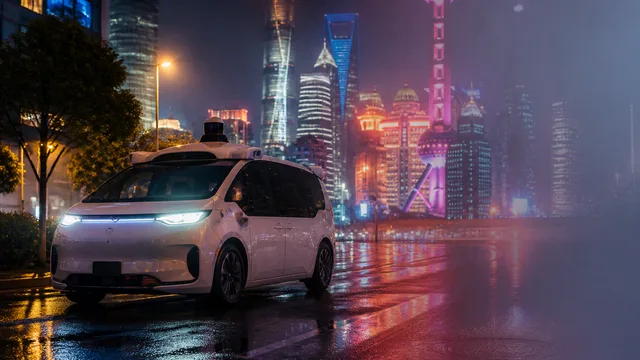
China's Robotaxi Ambitions: Real Tech, Big Claims
China's robotaxis are genuinely impressive — and nowhere near the revolution being promised. A skeptic's look at what's real and what's familiar noise.

Alexandr Wang on AI, Vision, and Building Frontier Labs
Scale AI founder Alexandr Wang argues AI's bottleneck is adoption, not capability. Here's what his argument gets right — and what it leaves unexamined.
AI Investments: Bold Moves and Uncertain Outcomes
Meta and Microsoft face diverging market reactions to AI investments, revealing deeper industry tensions.

Fei-Fei Li's World Labs Bets on Spatial AI for Robotics
World Labs acquired SceniX to build a real-to-sim-to-real pipeline for robots. Here's what that means, why simulation is the key debate, and what's actually hard.
AI Agents Need DMVs: A Reality Check on Autonomous Systems
IBM's Jeff Crume argues AI agents need governance infrastructure like cars. But the analogy reveals more about the problem than the solution.
NVIDIA's AI Revolutionizes Self-Driving Cars
NVIDIA's open AI improves self-driving cars by reasoning and handling rare scenarios, paving the way for safer autonomous driving.

A Custom GPU Cooling Mod Built Without Zip Ties
A PC builder refused the easy fix and designed a custom GPU fan bracket and PCB splitter instead. Here's what that obsession looks like in practice.

Python Backtesting Tools Promise a Lot. Know the Limits.
Zipline can simulate stock trading strategies in Python — but the leverage trap and survivorship bias can make bad strategies look brilliant. Here's what to watch.